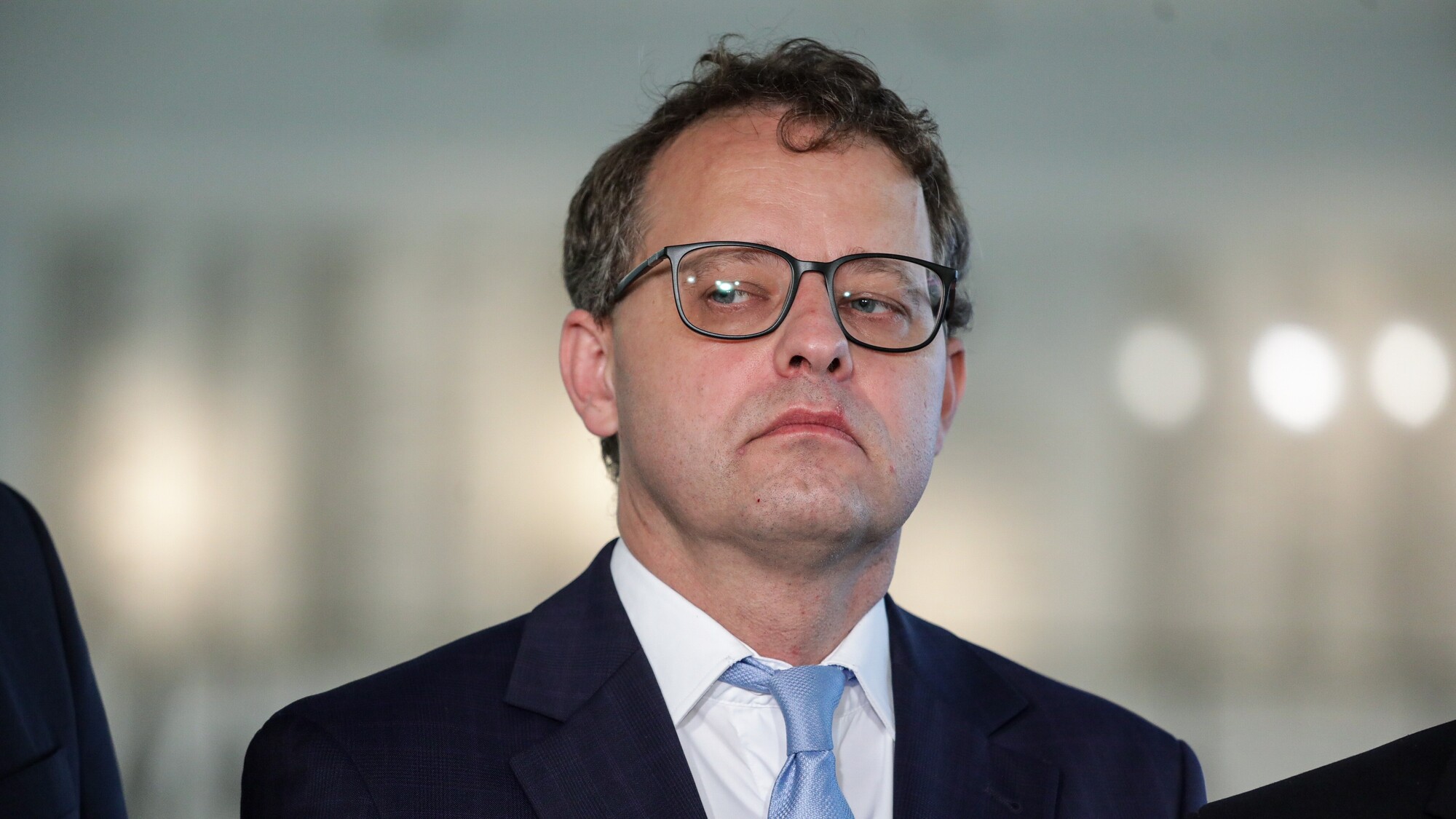
A statement from former Polish Deputy Justice Minister Marcin Romanowski, who is accused of corruption, has been filed with the District Court of Warsaw. The statement and the envelope in which it was sent came from Tiraspol – the capital of the unrecognized Transnistria, a separatist region of Moldova under de facto Russian control. This was reported by court spokesperson Anna Ptaszek.
In his statement, Romanowski requests the issuance of a so-called protective order. He undertakes to appear before the court or prosecutor within specified timeframes, but on the condition that his case be heard without him being taken into custody.
How a protective order works
A protective order in Poland allows a suspect to remain free during criminal proceedings on the condition of fulfilling obligations set by the court. The decision to issue it is made by the district court.
The court has already appointed a judge to review the application. On August 7, the judge turned to the prosecutor's office to obtain their position and case materials. After these are received, the judge will decide whether to grant Romanowski a protective order.
What the former official is suspected of
Romanowski is a suspect in a case involving misappropriation of Justice Fund money. The Polish prosecutor's office accuses him of participating in an organized criminal group and influencing the distribution of fund money through tender procedures.
Route through a "gray zone"
Transnistria is an unrecognized region of Moldova near the Ukrainian border that is under Russian military and political influence. It is effectively a "gray zone" that lies outside the effective jurisdiction of European states and is used to evade justice. Russia has used Transnistria for decades as a tool of influence and regional destabilization.
The fact that the appeal to the Polish court came from there raises questions about how a suspect in a corruption case and a citizen of an EU country ended up in an enclave to which official Warsaw or Brussels have no physical access.
- In December 2024, the court authorized Romanowski's arrest, after which he was declared wanted and a European arrest warrant was issued against him.
- It also became known at that time that Hungary, when Viktor Orbán was prime minister, had granted him political asylum.
- In July 2025, Hungarian authorities revoked his refugee status and annulled his travel documents.
The loss of Hungarian protection and the appearance of a letter from Tiraspol fit into one logical chain: if Budapest no longer shields the suspect, the next destination becomes territory where no European structure can reach him. The question is whether the Polish court will agree to consider the petition of a person managing his own freedom of movement from under Russian protection, and whether a refusal of the protective order would mean anything more than a formality for someone already beyond reach.