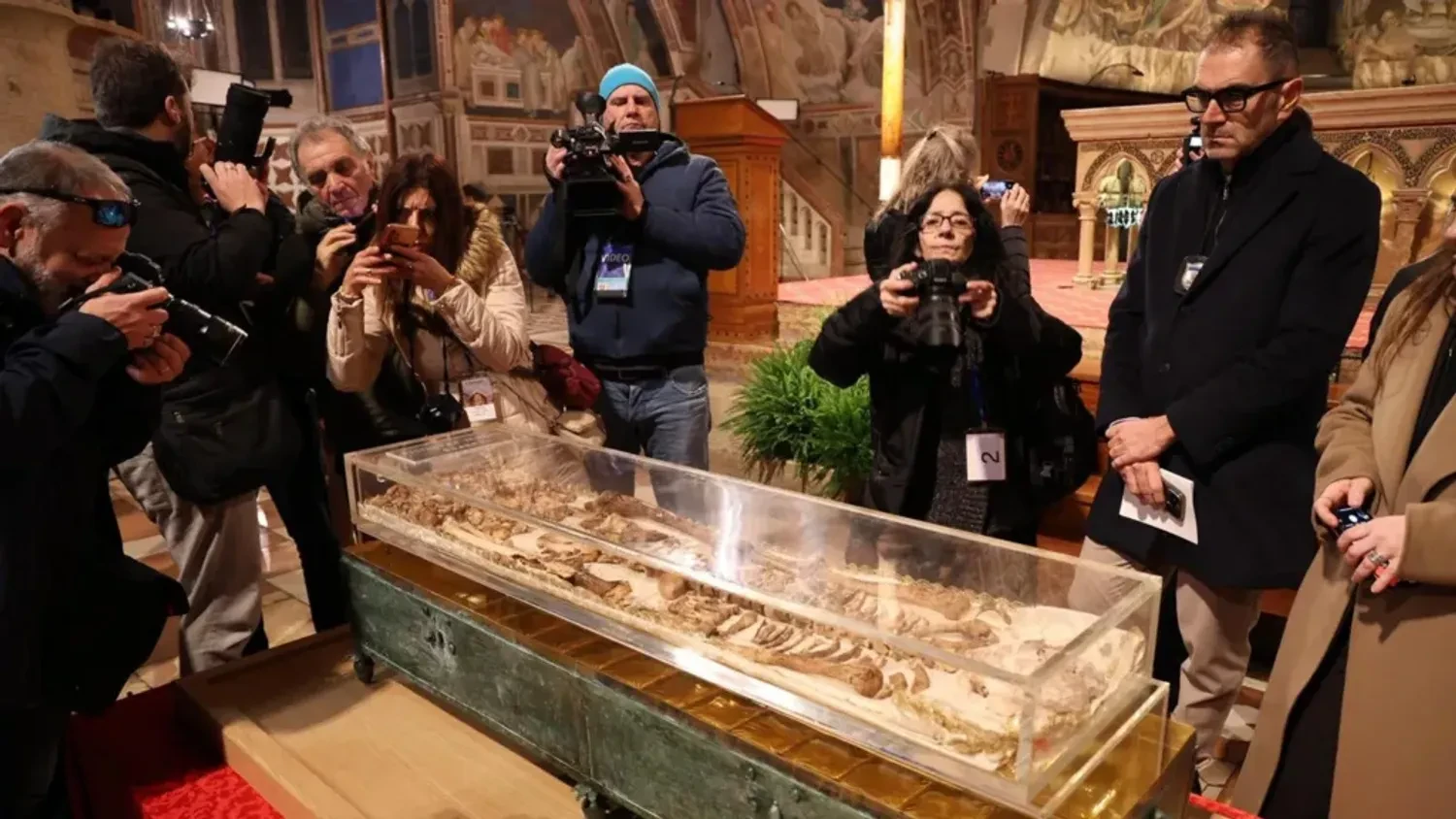
A rare unveiling has begun in the center of Assisi: as part of the 800th anniversary of the death of Saint Francis, his remains have been put on public display. Access will continue until March 22, and the event is being widely covered by international media, including the BBC.
About 400,000 people from around the world have reserved a place to see his remains in the central Italian town of Assisi
— Italian officials
Brief chronology and symbolic significance
Francis of Assisi — a 13th-century figure, founder of the Franciscan order, known for renouncing wealth and serving the poor. The saint’s remains are traditionally kept in the basilica’s crypt; a public display on this scale is taking place for the first time since 1978.
Beyond the religious dimension, Francis holds the status of patron saint of animals and the environment, and his figure attracts not only believers but also supporters of ecological initiatives. The event combines sacred heritage with contemporary themes — from climate responsibility to the preservation of cultural memory.
Pilgrimage organization and logistical challenges
Italian local authorities and church structures have implemented enhanced security measures and regulation of visitor flows. According to official figures, about 400,000 places have already been reserved — a test of large-scale coordination between religious institutions, the municipality, and security services.
The consequences are both practical and symbolic: in the short term this boosts the local economy and international interest in Assisi; in the long term it signals how the memory of prominent figures becomes a point of international unity and cultural diplomacy.
Why this may interest Ukrainian readers
Ukraine, which values the protection of cultural heritage in wartime, may see in this event an example: relics and memory not only preserve religious meaning, but also serve as a platform for international attention, solidarity, and exchange of values. The organization of such events demonstrates how to combine security, access, and preservation of artifacts.
What next
After March 22 the remains will be resealed in the basilica’s crypt. For religious communities and cultural institutions this is an opportunity to rethink the role of heritage in the contemporary world — from restoration projects to interfaith dialogue. Whether the surge of interest will turn into lasting initiatives is a question for local and international partners.
Sources
BBC reports, official statements from Italian authorities, and reviews by cultural experts.







