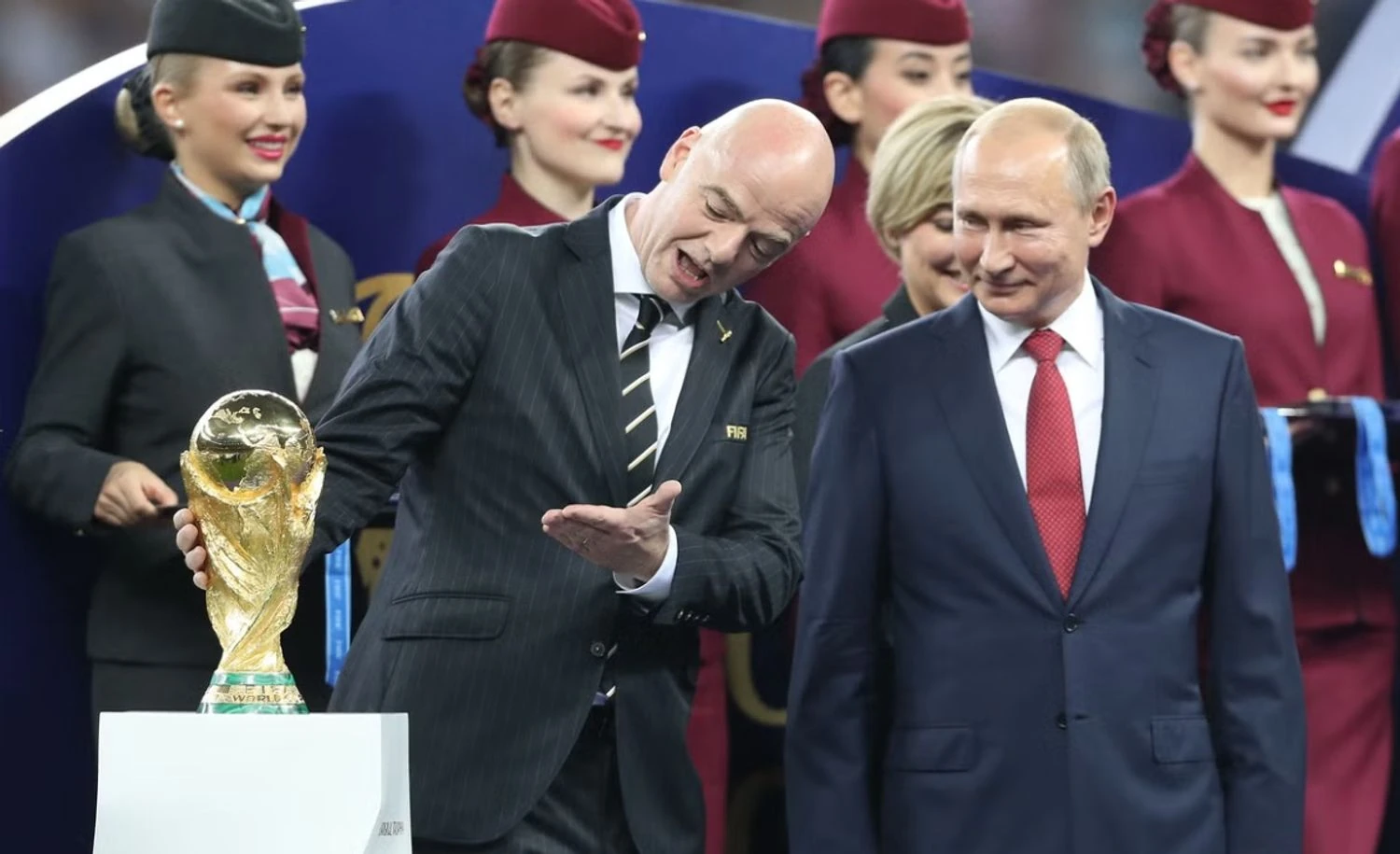
The FIFA Council approved the launch of new competitions for players under 15, open to all 211 member associations. According to official reports (link to UNN), festivals for boys are planned for 2026, for girls — for 2027. On paper this is the promotion of youth development. In practice — a mechanism that could facilitate the return of delegations from Russia and Belarus to international competitions after their suspension in 2022.
What was announced
FIFA confirmed the U15 festival format: short tournaments for boys and girls, open to all associations. The organisation also referred to IOC recommendations regarding the admission of young athletes from Russia and Belarus, including the possibility of participation under their national flags and anthem.
"Sport provides access to hope and a way to show that all athletes can respect the same rules and each other"
— Gianni Infantino, President of FIFA
Why this matters for Ukraine
The decision looks technical, but it carries strategic weight. Open formats for all associations create a legal and apolitical basis for admitting Russian teams — without the need to make separate political decisions. This strengthens the role of sporting institutions in issues that were previously dominated by politics.
Experts and analysts note: when sporting pathways are restored gradually — through youth programmes — the return of senior national teams becomes technically easier and politically more acceptable for part of the international community.
Resistance and practical barriers
The European football community remains sceptical. UEFA has publicly stated that a full return of Russia to international competitions is impossible until there is a political settlement. Aside from political resistance, practical obstacles remain, such as the threat of boycotts and difficulties obtaining visas for delegations.
Experience in 2023 showed that even attempts to reinstate youth teams can fail due to mass protests by European football associations. So theoretical admission and its implementation are different things.
What happens next — scenarios
Three realistic scenarios can be identified:
1) Delay or disruption. European associations and political partners will apply pressure — the festivals will take place without the participation of Russia/Belarus due to boycotts and visa restrictions.
2) Gradual reintegration. If the IOC and FIFA insist on "including youth", and political pressure eases, Russian juniors could reappear on the international stage under national symbols, setting a precedent for further steps.
3) Politically motivated decision. If partners (governments, federations) trade sporting "inclusion" for certain political concessions — this will change the balance of trust and solidarity in European football.
What this means for us
For Ukraine the issue is not only sporting — it is part of a broader front of diplomacy and information influence. Football can become a platform for normalising relations without a political settlement of the conflict, or conversely — a field for solidarity and pressure. It is important that partners clearly understand the risks and conditions: whether they will tie a return to international competitions to the fulfilment of specific conditions and guarantees.
"Return to competitions is not just a technical matter. It is a signal to the international community about which values we are prepared to defend"
— comment from a representative of one of the European football associations (on condition of anonymity to allow open remarks)
Now the move is up to partners: declarations of non-interference should be translated into clear political and legal guarantees. Whether governments and federations will agree to exchange principles for an argument about "preserving the rights of youth" — is the key question for the coming months.
Sources: official FIFA statements, IOC recommendations, UNN materials and public comments from UEFA.