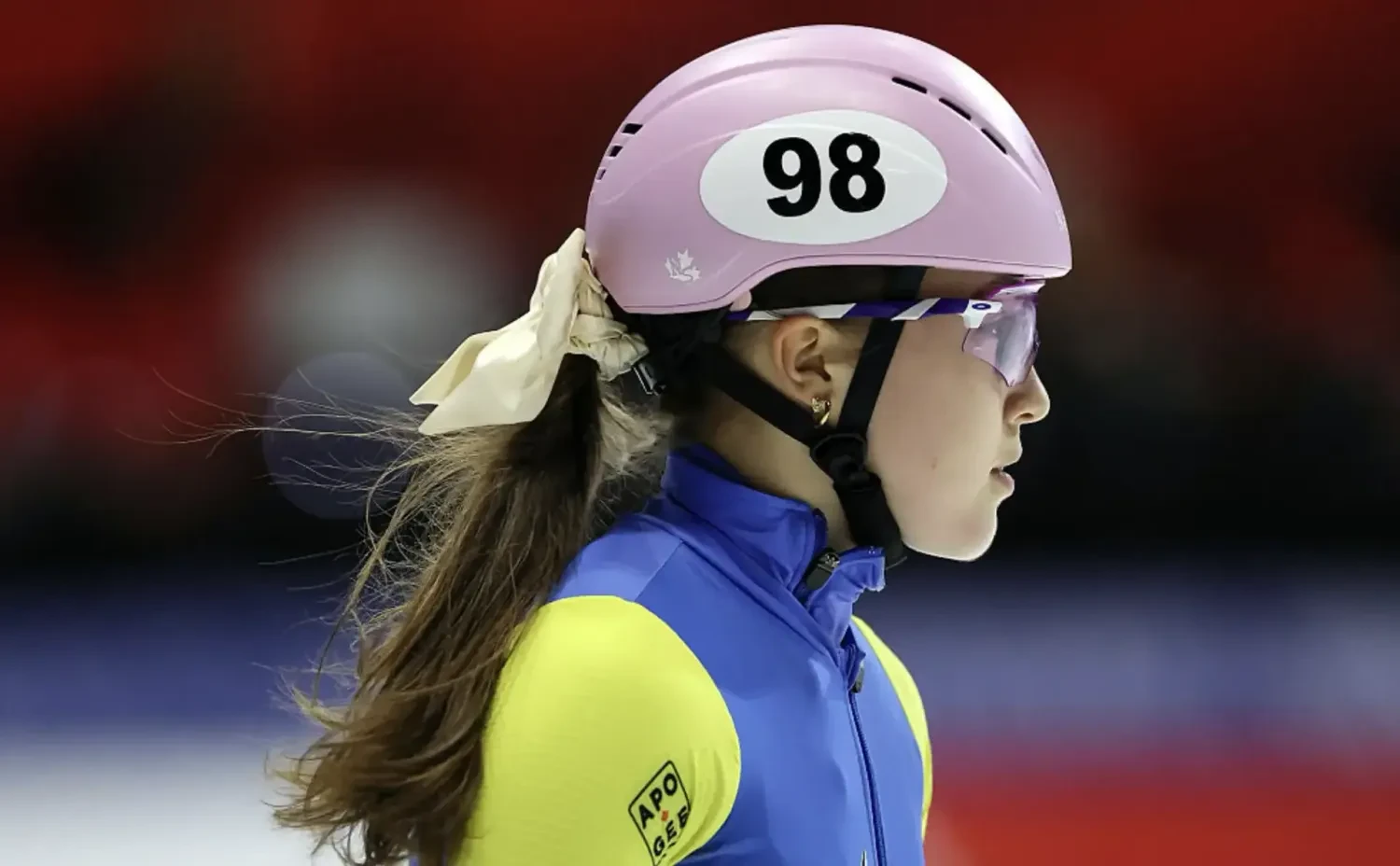
In Milan, Ukrainian short-track skater Yelyzaveta Sydiorko set a national record in the 500 metres — 43.337 seconds. Despite this, she did not advance to the quarterfinals: fourth place in her heat ended the athlete’s run, even though her time was competitive in the overall standings.
"Yelyzaveta Sydiorko set a national record in the 500 metres — 43.337 seconds."
— UNN (according to the official results of the 2026 Olympics)
Under the qualification format for the quarterfinals, the top two in each heat advanced, plus the four fastest third-placed skaters by time. Sydiorko finished fourth in her heat, so even a strong time did not earn her an extra spot.
The previous Ukrainian record at this distance was 43.5 seconds — meaning the athlete improved the mark by 0.163 s. In the 500 metres, differences measured in hundredths often decide outcomes and career prospects.
The situation also underlines the importance of the randomness of the start draw: in several heats the competition was tighter, and the distribution of skaters across heats determined who progressed. For example, South Korea’s Lee So-yon, who advanced from third place, posted a slower time than Sydiorko, but that did not override the rule of advancing by placing in the heat.
Qualification results — 500 m (women)
1. Hanne Desmet (Belgium) — 43.182.
2. Choi Min-jeong (South Korea) — 43.204.
3. Julie Letai (USA) — 43.275.
4. Yelyzaveta Sydiorko (Ukraine) — 43.337.
What this means
First, it is a clear indicator of progress in Ukrainian short-track: the record is proof that investment in preparation and coaches’ work yields results. Second, high-performance sport is not only about times but also about tactics, seeding and an element of luck with heat draws. Third, this result is an argument for the federation and sponsors: to turn such improvements into consistent performances at the highest level, systematic support is needed.
The next step is to use this record as a platform: technical work on the start and tactics, international training camps and competition experience can turn seconds into places in finals. Whether these 0.163 s will mark the beginning of a new wave for Ukrainian short-track is a question for sports leadership and those who shape athlete support.