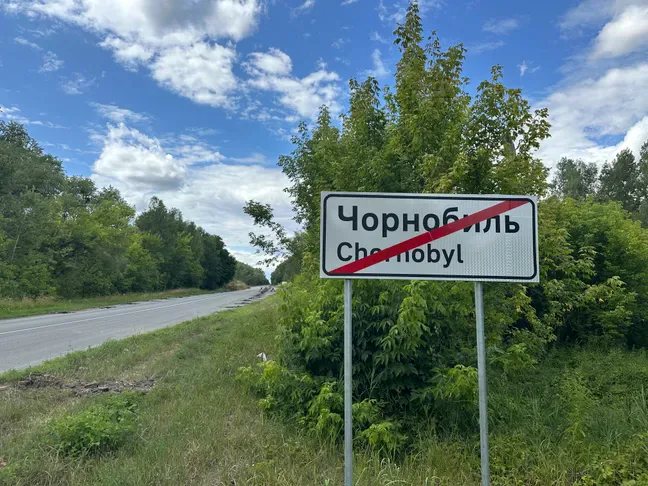
The Chornobyl zone is 30 kilometers of scorched earth where, for decades, no equipment except scientific expeditions was allowed to enter. Now excavators, bulldozers, and brigades digging trenches in sandy soil are moving in. The logic is simple: 15 kilometers to Belarus is a distance an FPV drone can cover in minutes, and a column of vehicles in an hour or two. That's why Chornobyl is being transformed not into a museum of catastrophe, but into a fortified defense line.
Why here exactly
Der Spiegel, which UNN cites, describes checkpoints every few kilometers, embankments at road intersections, and defensive galleries made from local pine forests. This is not improvisation — it's preparation for a scenario that already happened in February 2022, when Russian columns passed right through the zone and seized the station within hours.
A practical detail rarely mentioned: the sandy soils of the Chornobyl zone are among the easiest in Ukraine for digging fortifications. What makes the soil unsuitable for agriculture due to radioactive contamination of the surface layer simultaneously makes it convenient for deep engineering work — the contamination concentrates in the top centimeters, not the depths.
Anti-drone nets where drones and radiation are a double threat
Metal poles with plastic netting along the road are technology tested in the Donbas. But in the Chornobyl zone, it takes on additional significance: a shot-down drone that falls on contaminated territory is not just debris, but a potential source of radioactive dust dispersal. That's why intercepting drones in the air here is more important than anywhere else.
Analysts point to the geographical proximity of the Chornobyl zone to Belarus. The distance to Russia's ally is about 15 kilometers, so the territory remains within the range of FPV drones.
An object that cannot simply be reinforced with trenches
The protective shell over the fourth reactor unit is a separate matter, where fortifications won't help. The 2016 structure was designed for a hundred years of operation, but a drone attack in February 2025 caused a smoldering fire that destroyed the inner membrane. Ukrainian specialists patched the outer metal cladding, but functionally the structure no longer operates as planned in the design.
This creates a knot of contradictions: military forces are digging trenches around an object that, if struck again, won't withstand the impact as it should according to design. A program to decommission Chornobyl has already been proposed to extend until 2036 — not due to work pace, but because the baseline safety conditions have changed.
What this means next
If the fortifications in the zone withstand the test of time, Chornobyl will become an example of how dead territory transforms into a natural barrier — radiation and fortifications together complicate any rapid advance. If Russia makes this direction its bet due to its symbolic weight, the question will not be about trenches, but about how many more strikes the already-damaged shell over the reactor can endure.