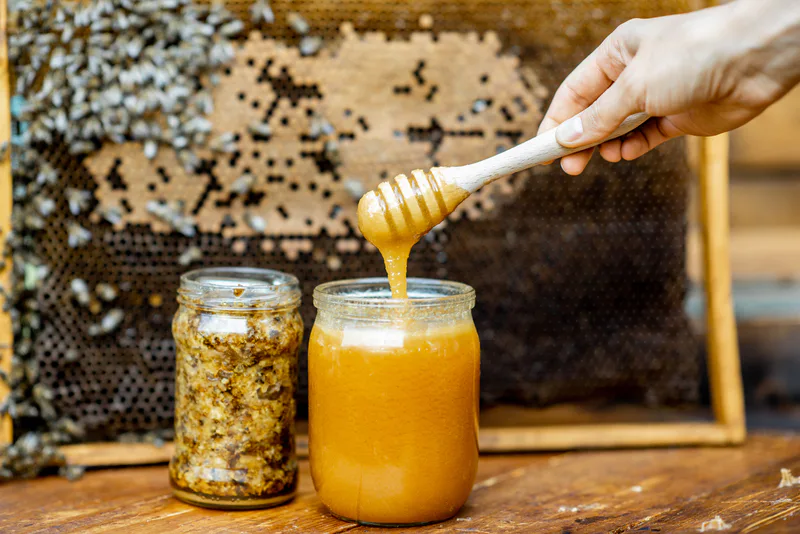
Honey is considered a product that "never spoils" — it is associated with eternal storage without refrigeration and expiration dates. This is a half-truth, and it is precisely that half that people take literally, costing them jars of spoiled honey in winter. Technician beekeeper Mykola Malyarchuk explained to UNN why honey can still ferment and what to do about it before the jar ends up in the kitchen.
The container matters more than it seems
The most common mistake is storing honey in plastic buckets, aluminum cans, or jars left over from old honey that haven't been washed thoroughly. According to Malyarchuk, any moisture that enters the container, even through a loosely closed lid, gradually changes the top layer of the product: it becomes fluffy and soft, while below the honey remains normal. In other words, "honey doesn't spoil" — this is a myth that only works with perfect hermeticity.
I would not recommend storing honey for long periods in plastic buckets or cans. Aluminum containers are also not the best option. Glass jars with hermetic lids are best suited for long-term storage
The practical conclusion is simple: glass, a dry clean jar, a tight lid. If there is old honey left in the dish — it must be completely removed, rather than pouring fresh honey on top, as this almost guarantees fermentation.
Freezer instead of basement
Surprising advice for those who love liquid honey: if you want to preserve the consistency of fresh honey for months rather than weeks, put the jar in the freezer before the honey starts to crystallize. According to the expert, it can remain liquid for a year or even two. This contradicts the usual intuition that "honey fears cold" — in reality, it fears moisture and temperature fluctuations, not low temperatures as such.
Fresh liquid honey can be placed in the freezer. In this case, it can remain liquid for a long time. It is important to do this before it starts to crystallize
How to recognize a problem before opening the jar
A sign of spoilage is a change specifically in the top layer, not the entire mass at once. In solid honey, the top becomes soft; in liquid honey, conversely, the product loses viscosity and becomes watery. The reason is often laid during the extraction stage: if the honey is immature, that is, actually nectar with high water content that the bees did not have time to "seal" in the honeycombs, it will ferment faster regardless of how well you store it at home.
- Glass dry hermetic container — minimum risks
- A cool place without direct sunlight — better than just "a dark cabinet"
- Straining through a sieve — for both your own and purchased honey
- Freezing — an option for those who value liquid consistency above all
A question you should ask yourself before buying honey at the market: do you know when it was extracted and did the beekeeper allow it to mature in the honeycombs? Because no ideal jar at home will save a product that was immature before it reached the shelf.