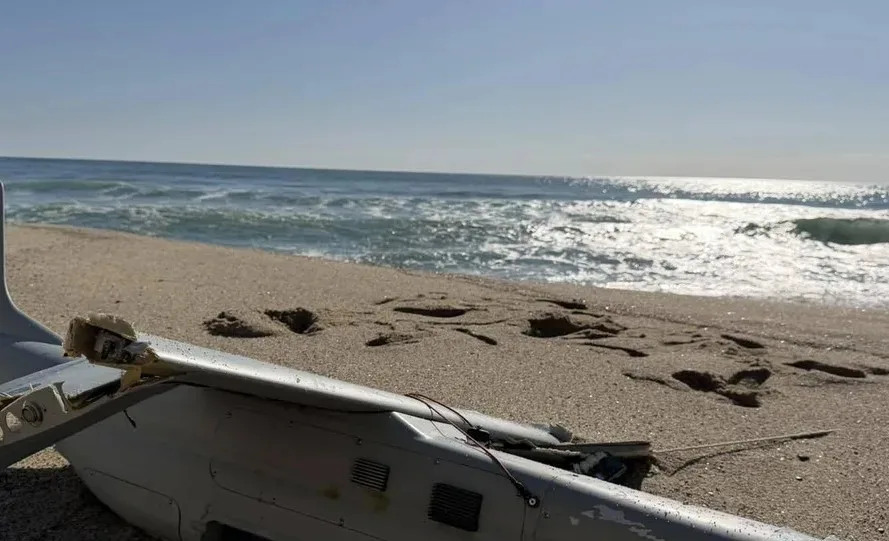
A tourist sunbathing on Lozenets beach hardly expected to find fragments of a military drone among the shells. But this is what summer 2026 looks like on the Bulgarian coast: specialized Black Sea Fleet teams discovered a reconnaissance drone and several of its fragments right near two resorts — Primorsko and Lozenets, according to BGNES.
The fragments were transported to naval bases in Varna and Burgas for investigation — following standard procedures for handling military equipment of unknown origin.
The Black Sea as a Risk Zone for Tourism
Formally, the military operation had one purpose — to remove a potentially dangerous object from an area where thousands of people swim daily. But the very fact that Bulgarian authorities created separate teams to search for drones on beaches says more than any official statement: the Black Sea has become transformed over recent years from a recreational zone into a dumping ground of war, where rocket fragments, mines, and drones have become as much a part of the summer season as beach loungers.
Bulgaria is a NATO country that is not at war, but is geographically bound to a sea where Russia and Ukraine regularly "dump" equipment as a result of shot-down or stray drones. Beach tourism is one of the country's key economic sectors, and each such discovery damages the reputation of resorts just as much as real danger would.
Who Is to Blame — An Open Question
The Ukrainian side responded immediately: the ambassador stated that the Defense Forces did not direct drones toward Bulgaria, and Kyiv is open to cooperation in the investigation. This is a standard formula that sounds after almost every similar incident in the region — and here is why it matters: determining the drone's origin is difficult, as fragments could have drifted at sea for weeks, changing course under the influence of currents.
Sofia for now limits itself to technical investigation, without public accusations against any party. This is logical: the country balances between NATO membership, energy dependence on the Black Sea region, and unwillingness to escalate relations with either side of the conflict.
What This Means for the Season
While some fragments are being investigated in Varna, no one can guarantee that tomorrow waves won't wash up another fragment near another resort. The question is not whether the situation will repeat — but whether Bulgaria will begin demanding clearer explanations from the conflicting parties after each such incident, or will continue to quietly clean military equipment from the sand.