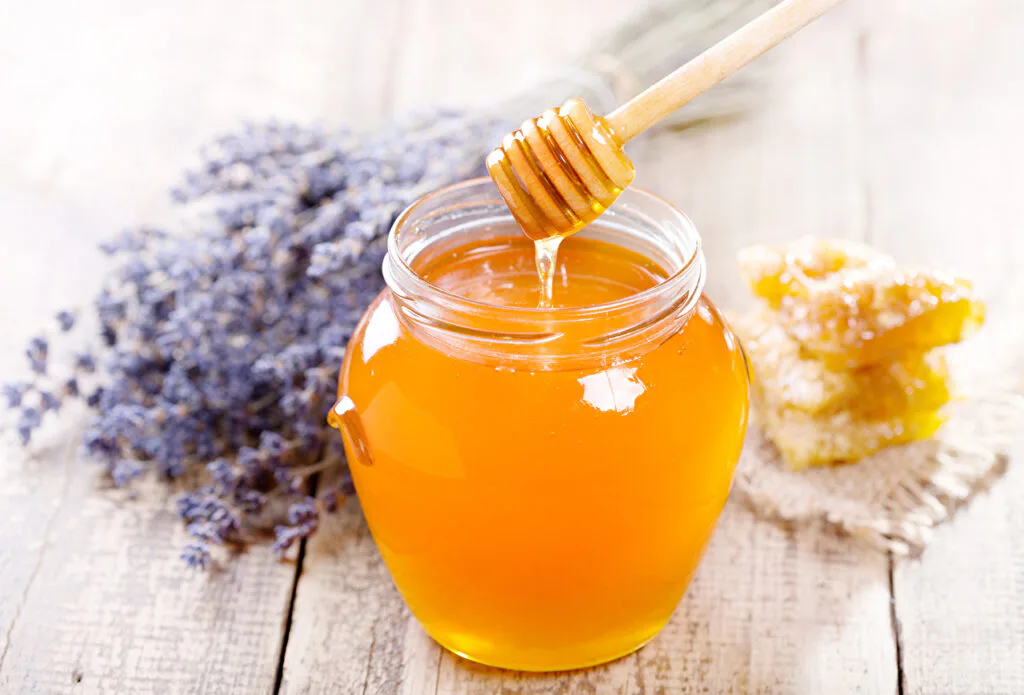
In autumn, markets and supermarkets begin a seasonal ritual: a buyer takes honey on a tasting spoon, holds it up to the light, sometimes even asks the seller "is this really natural?" — and in 90% of cases receives an answer that proves nothing. Beekeeper technician Mykola Malyarchuk, in a comment to UNN, proposes a simpler approach: don't ask, but verify it yourself using several physical characteristics that are difficult to counterfeit.
The 40-centimeter drop test
The main check — not color or taste, but how honey flows from a spoon. Fresh natural product pours in a continuous thin stream if you hold the spoon 30–40 centimeters above a plate. If honey drips in separate drops — this is a signal that the consistency is compromised, and according to Malyarchuk, the most common cause is added sugar syrup.
If it starts to drip, it means that sugar syrup may have been added. In that case, honey no longer has that viscosity
An important nuance: the test only works for liquid, not yet crystallized honey. Crystallized product should be thick throughout the entire jar, not just on top — otherwise this is also a sign of interference with the natural composition.
Why "graininess" is not always alarming
Many buyers are frightened when honey becomes grainy and perceive this as proof of counterfeiting. Malyarchuk explains: buckwheat honey naturally crystallizes with large or fine crystals, and this structure — not a sign of sugar, but a normal stage of maturation for a specific variety.
Fine-grained honey has a consistency similar to butter, while coarse-grained honey has noticeable granules. Such a structure does not mean that sugar was added to the honey
That is, appearance without reference to the variety is a misleading indicator: what would look suspicious for sunflower honey is normal for buckwheat honey.
Acacia as a test of patience
The most telling example is acacia honey. Pure product retains liquid consistency for up to six months and has a light, almost pale-green tint. If honey starts to thicken within 10–14 days, it means bees worked not only on acacia, but also on wildflowers or rapeseed — and the customer is not dealing with pure acacia, but a cheaper variety of it, which is often sold under the same name.
Another detail that is rarely checked: white thick foam near the lid. According to the beekeeper, its presence and color are an additional, though not independent, indicator of authenticity.
None of these characteristics works as a universal detector on its own — flow speed, color, foam, and patience are checked in combination. The question that remains open for the buyer is: is he ready to wait two weeks before drawing conclusions about the honey he already ate?