What happened
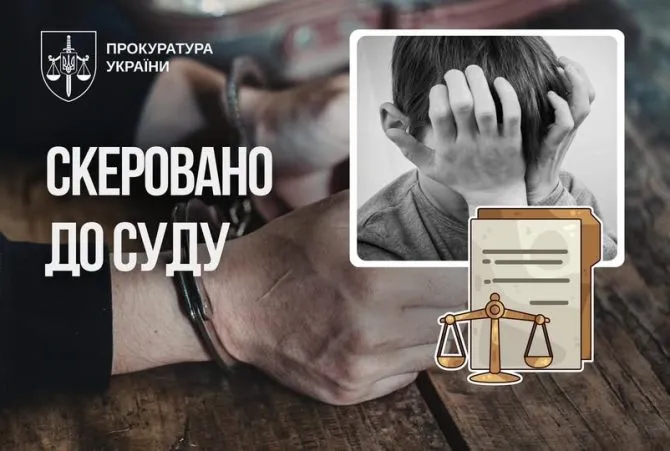
Juvenile prosecutors of the Desnianskyi District Prosecutor’s Office in Kyiv have sent an indictment to court against a 36-year-old resident of the capital. She is accused of systemic physical and psychological violence against her own 9-year-old son, the Office of the Prosecutor General reports.
Evidence and nature of the abuse
According to the investigation, over the course of roughly a year the mother regularly employed brutal methods: she locked the boy in a toilet overnight — sometimes without clothes; tied him up with a charging cable, restricting his movement; forced him to eat a stale piece of bread within one minute under the threat of hunger and fear. When the child failed to comply, she inflicted cuts on his head with a knife. One of the most severe abuses occurred when the mother placed the boy’s hand in a door and shut it, an injury that was discovered by school staff.
"Juvenile prosecutors have sent an indictment to court against a 36-year-old resident of the capital, who is accused of systemic violence and torture of her own 9-year-old son."
— Office of the Prosecutor General
The school's role and services' reaction
The injury was discovered by school staff — a classic example of a school performing an early-risk detection function. The boy is now in a family-type children's home. During the pre-trial investigation the mother denied guilt.
Why this matters
This case has several levels of significance for readers. First, it shows that brutal abuse can continue for a long time until external institutions notice it. Second, it raises questions about the effectiveness of preventive mechanisms — from school services to social inspectors. And third, it is a test for the legal system: will the child receive real protection, and will the guilty party receive a fair sentence?
What’s next
The indictment has been forwarded to court — the process will show whether all circumstances will be established and whether the case will truly become a precedent for strengthening child protection. Analysts and human rights advocates point to the need for systemic changes: rapid-response protocols for schools, access to psychological assistance for minors, and increased resources for juvenile prevention.
Cases of this kind require from society not emotional condemnation, but a well-organized institutional response — so that more children do not end up in similar situations. Now the ball is in the court: will the facts be turned into an evidentiary basis and will the case’s conclusions serve as a signal for systemic change?