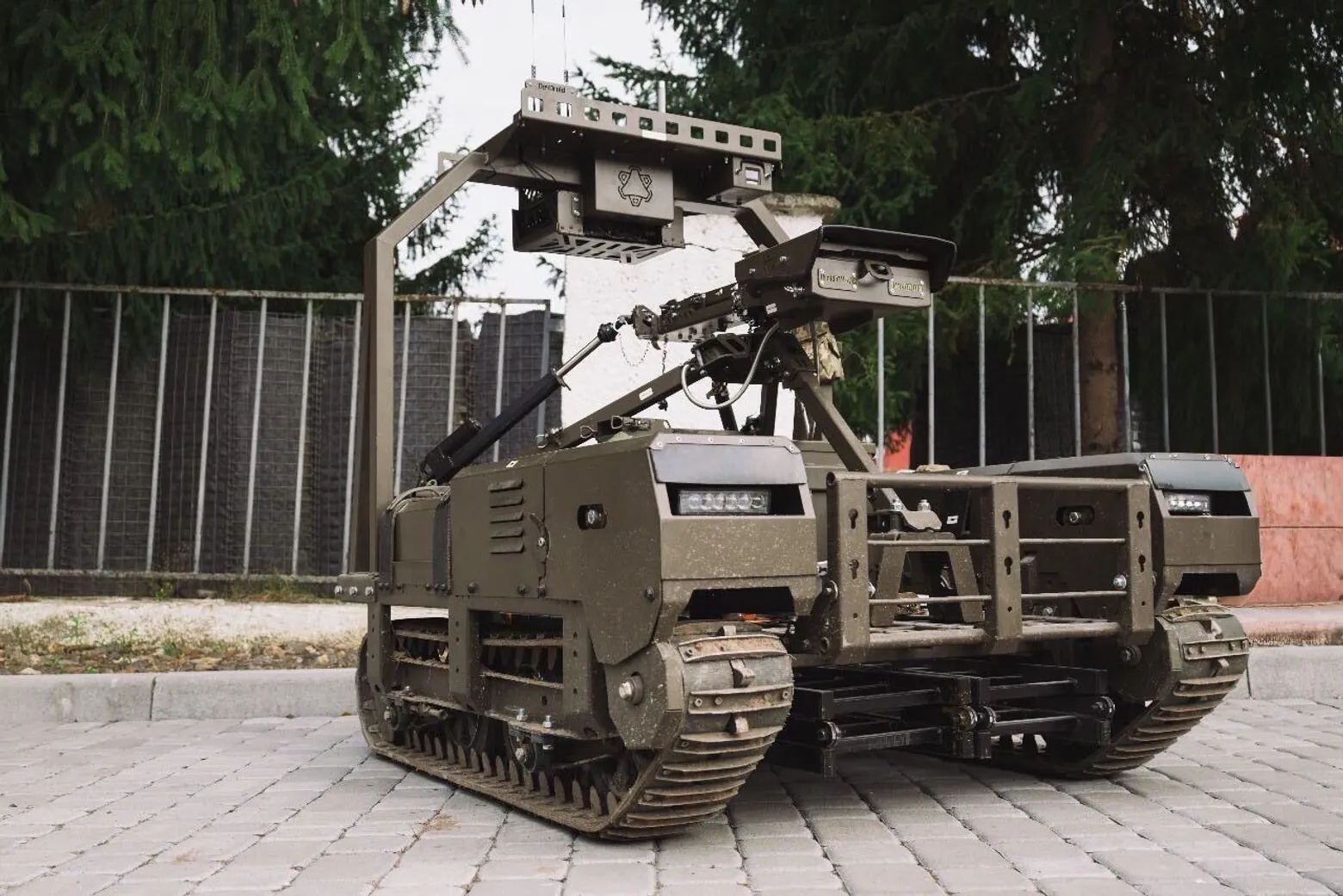
When the 3rd Assault Brigade describes the training school for ground-based robotic complex (GRC) operators, the first thing that stands out is the queue. People come to study before their units even have an official position for such a specialist. The demand for a specialist who formally doesn't yet exist is a precise marker that combat practice is outpacing the organizational structure of the military.
What a GRC operator actually does in the combat zone
In the "Revenge" tactical group—a GHUR unit—ground drones have long since gone beyond logistics. According to DevDroid, GRCs are used for assault and strike operations, including complexes equipped with combat modules and kamikaze vehicles. Deputy commander of the GRC section with the callsign Koka explains: an operator must assess terrain, plot routes in real time, and constantly account for enemy FPV-drone activity and reconnaissance.
This is not remote control from the rear. This is tactical decision-making under the threat of equipment destruction.
"Operation of GRCs with combat modules and GRC-kamikaze vehicles in combat conditions, teamwork with UAV pilots"
— from the official list of duties of a GRC operator, "Revenge" tactical group
Skills that don't exist in any charter
The actual profile of a GRC operator today encompasses several disciplines simultaneously:
- Terrain reading and route planning — taking into account cover, elevation, mud, obstacles, which real equipment overcomes with limited passability.
- Technical maintenance — replacing parts, adjusting tracks, basic mechanics. At the 3rd Assault Brigade school, this is a separate mandatory phase: cadets personally repair the vehicles.
- Multi-domain teamwork with UAVs — synchronizing ground complex operations with an aerial drone significantly increases accuracy and threat response.
- Countering enemy electronics — routes are planned with consideration of enemy FPV and reconnaissance drone coverage zones.
- Work with maps and software — route analysis and development using specialized programs, not hand-drawn on paper.
GRCs in 2025 — where UAVs were in 2023
Ground robotic complexes are currently at approximately the same stage where unmanned aerial vehicles were at the beginning of 2023: already in combat, but not yet scaled. According to DevDroid, the Droid TW 12.7 GRC operated by soldiers from NC13 company of the 3rd Assault Brigade completely replaced one infantry position and held it for a month and a half.
More than 150 military personnel—from the Armed Forces, GHUR, National Police, Border Service, and National Guard—have already completed training at the 3rd Assault Brigade school since the full course launch. The problem is not in the technology or lack of volunteers. The bottleneck is the absence of a systematic ecosystem: workshops, logistics, standardized training programs, and actual official positions.
If the military establishes the position of GRC operator in the staffing structure and standardized training appears for it—the field will gain conditions for the same breakthrough that UAVs achieved in two years. If not, units will continue to train operators on their own, already during combat operations.







