Irpin remembers: Karavan-Hala as a frontline and a symbol
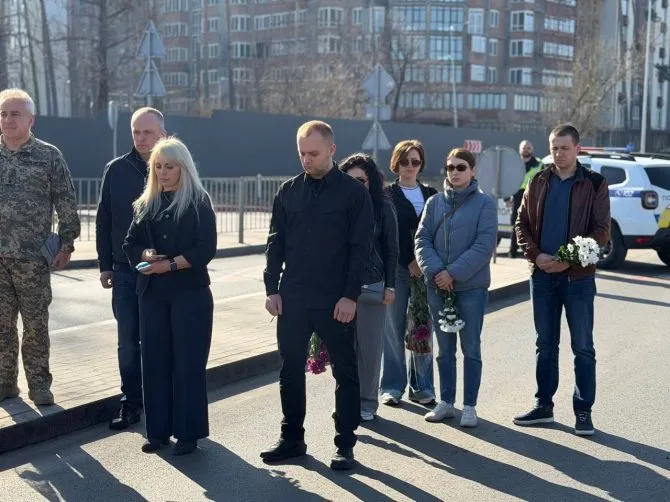
Today, on the fourth anniversary of Irpin’s liberation, residents gathered at the checkpoint "Karavan-Hala" — one of the city’s most difficult defensive sectors. It was not only an act of mourning: such a presence underlines that memory and reconstruction go hand in hand, influencing security and the community’s social climate.
Karavan-Hala — a frontline of memory
It was here, during fierce fighting, that Ukrainian service members and territorial defense fighters were killed as they held the line to the last and slowed the enemy’s advance. Today those present — residents, volunteers, veterans, and families of the fallen — honored their memory with a minute of silence. It is a reminder that the price of freedom has faces and names.
"We remember each of them. And our presence here is not only about memories; it is about deep gratitude. Thanks to them we can stand on this land and rebuild our city. Today Irpin lives and is being restored. But such places remain forever places of memory and strength. It is here that you especially feel the price we paid for freedom. We have no right to forget that price,"
— Serhiy Kanyura, Deputy Mayor of Irpin
Why this matters today
Commemoration at the site of the battles is not symbolism without consequence. It is an element of social resilience: memory consolidates the community and justifies the need for programs supporting families of the fallen, for memorial initiatives, and for educational projects. Experts in public memory stress: without recording these events in local and national history, the risk of forgetting grows.
Now the question for authorities and the community is: how to turn annual commemorations into lasting practices of remembrance — so that the stories of the fallen become part of the reconstruction process and of the support for those who remain? This is a simple but important investment in the future resilience of Irpin and the country as a whole.