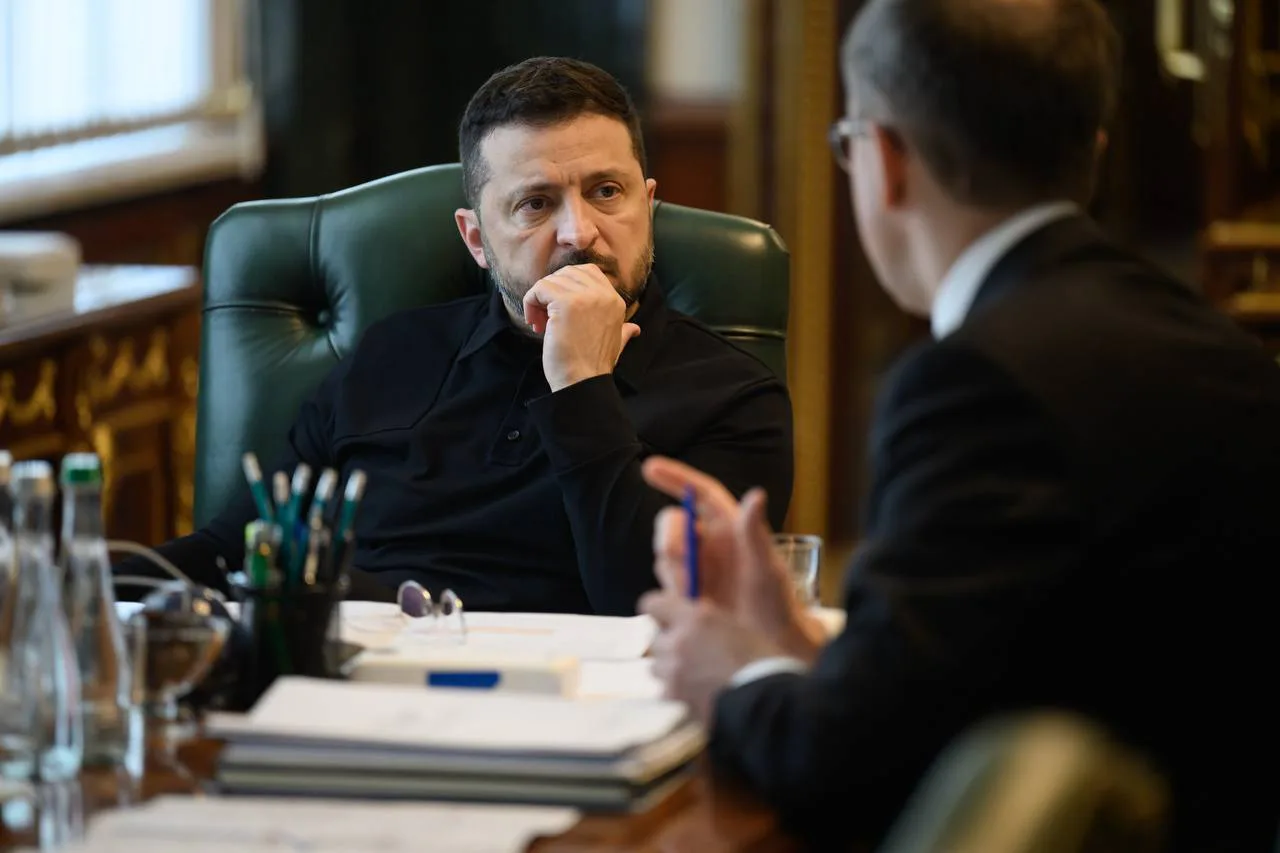
President Volodymyr Zelenskyy announced the introduction of two levels of air threat alerts — yellow and red. The decision was made following a report by Prime Minister Sergiy Koretsky on adapting to changes in Russian tactics: mass deployment of drones to exhaust civilian life and economic activity in Ukrainian cities.
What each level will mean
The basic principle outlined by Zelenskyy: yellow level — drone attacks, red — missile danger, including ballistic missiles, as well as mass attacks. The specific threat indicators that will fall under each level will be determined on a weekly basis by the General Staff and the Air Force of the Armed Forces of Ukraine jointly with the government, the Ministry of Defense, the Ministry of Internal Affairs, and the State Emergency Service.
People need to understand absolutely clearly what exactly to react to and how exactly to react
Along with the levels, the warning sirens will also change — each threat level will have a separate signal. One change has already been implemented: the siren will no longer sound a second time to mark the end of an alert; it will only sound at the moment the alert is announced.
Geography of alerts
Zelenskyy also ordered the development of clearer geographical differentiation — so that alerts are announced and people need to respond only in the part of the territory where the threat objectively exists, rather than across the entire region due to a target at the other end.
In parallel, the government is preparing new rules for transport, business, and curfew operations during prolonged alerts, and in Kyiv they are proposing to ease the curfew and allow movement on the green metro line during air threats.
What this changes in practice
The main stated goal is predictability. Currently, businesses and civilians respond the same way to a single departing "Shahed" drone and to a mass missile attack — work stops, the metro closes, traffic halts. A differentiated system will theoretically allow people to continue their daily activities during lower-level drone threats and take shelter only during actual missile danger.
The question lies in implementation: how quickly the General Staff will be able to classify the threat in real time when the situation changes by the minute, and whether the differentiation of levels will lead to a habit of ignoring the yellow signal in cases where the red one will follow.