Briefly
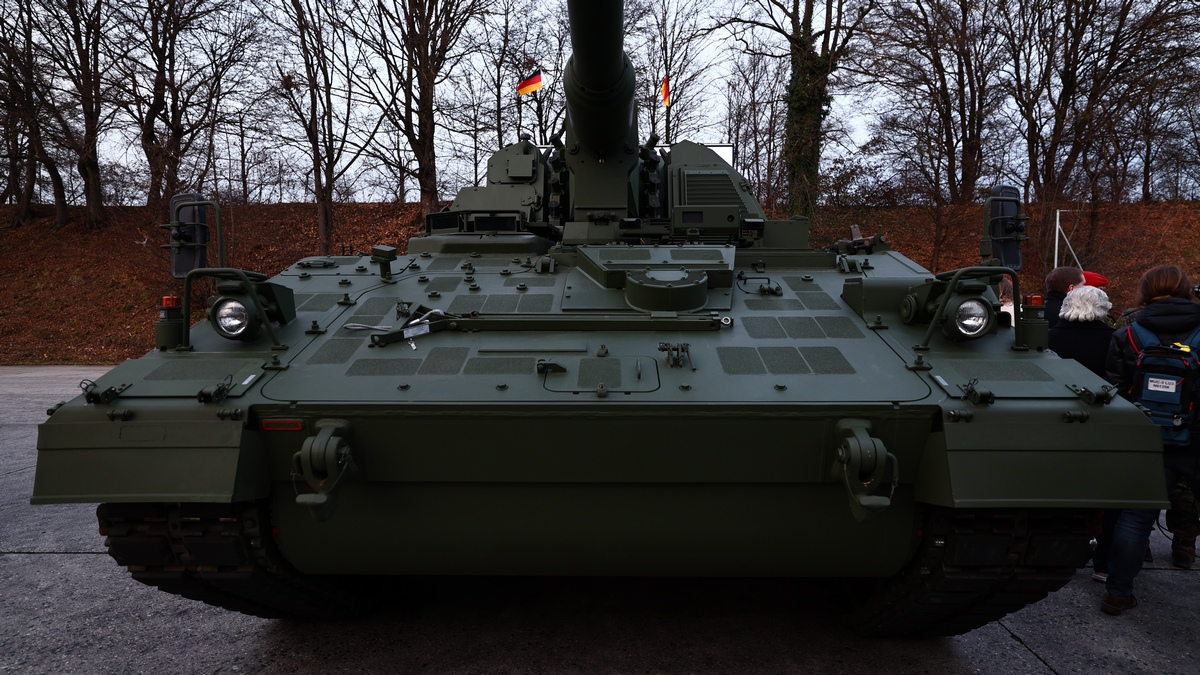
At the Davos forum Moritz Schularik, president of the Kiel Institute for the World Economy, pointed directly to a mismatch: Germany produces about 15,000 cars a day, but currently cannot produce even 40 tanks a year. According to him, this is a sign of the absence of industrial mobilization needed for the rapid strengthening of Europe’s defense capabilities.
What the expert said
"Just think about it: Germany as a country has powerful industrial clusters — it produces 15,000 cars a day, but today is unable to manufacture even 40 tanks a year. Something is clearly wrong"
— Moritz Schularik, president of the Kiel Institute for the World Economy
He added that the problem is not only capacity, but organization: the integration of civilian clusters into the defense manufacturing base and a technological lag that can be partially offset by cooperation with Ukrainian innovation teams.
Why this matters for Ukraine
The framing is simple: if Europe’s largest economy cannot quickly switch industry to defense tasks, the burden falls on partners — the United States, Ukrainian enterprises, and allied supply lines. For Ukraine, this means longer timelines for receiving equipment and technical integration, and therefore — greater risks at the front.
Facts to remember
In December Ukraine and Germany signed an agreement to produce 200 self-propelled artillery systems "Bohdana" on Mercedes‑Benz Zetros chassis with a total value of €750 million. This contract shows that cooperation is possible, but its scale is still too small to compensate for systemic gaps.
What could change the situation
Schularik proposes a three-part solution: 1) industrial mobilization — coordinated retooling of supply chains and production priorities; 2) technological integration — exchange of innovations with partners, including Ukrainian developments; 3) political will — a shift in mindset among military leadership and the government that would allow faster decisions and allocation of resources.
"Somewhere deep down our generals and our military still think: if there is danger, America will stand with us. And that, in itself, is an obstacle to focus and to proper and rapid response"
— Moritz Schularik, president of the Kiel Institute for the World Economy
Conclusion
Schularik’s stance is not criticism for criticism’s sake, but a call to reconfigure industrial logic. For Ukraine, it is an opportunity to secure more stable and faster supplies — but only if Berlin turns declarations into a concrete plan of action. The ball is now in the German government's court: is it ready to turn its capacities into a factor that accelerates our shared security?







