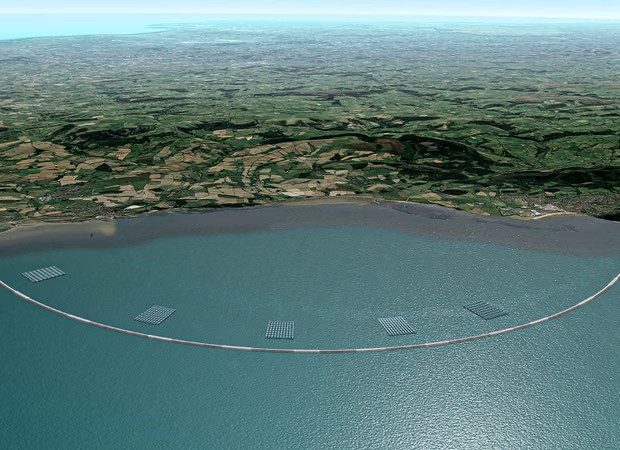
What was proposed and where the data come from
According to The Guardian, architect Julia Barfield has proposed building a tidal power plant more than 22 km long in the Bristol Channel — between Minehead and Watchet. The project is estimated at about £11 billion and would install 125 underwater turbines that would harness the power of the second-highest tidal range in the world.
Technical and economic parameters
The stated peak capacity is 2.5 GW, which is almost equivalent to the capacity of the nearby Hinkley Point C nuclear power station. The design foresees not only energy generation: the crest of the barrage would include paths for pedestrians and cyclists, a marina, an open-air swimming pool, an observation tower and infrastructure for water sports. It is proposed to house data centres inside the structure, which could use seawater for cheaper cooling.
Who is ready to invest and what keeps the project in limbo
Consortium chair Aidan Clegg says investors are ready to finance the project but are waiting for support from the UK government. As he notes:
"We need this to be taken seriously. This is not a hypothetical idea — we have a robust plan."
— Aidan Clegg, consortium chair (quote via The Guardian)
Why it matters — a rationale for the reader
First, the project illustrates how large infrastructure decisions combine energy security and investor appeal: 2.5 GW is a meaningful contribution to the grid and a marker of market confidence. Second, multifunctional infrastructure (energy + data centres + tourism) increases the project’s economic viability and reduces the risks of relying on a single revenue stream.
Lesson for Ukraine
Ukraine in summer 2025 approved the National Action Plan for Renewable Energy to 2030, which foresees development of the first offshore wind farms and geothermal power plants. The British case is not a recipe to copy, but it is valuable as a practical example of combining technologies, financing and multifunctional design.
Specific takeaways for Ukraine: investors respond to clear government signals and understandable business models; integrating seawater-cooled data centres can reduce OPEX for the digital economy; and combining energy projects with public-access infrastructure increases public acceptability.
What next?
Now the decision is up to governments: without political and regulatory support even technically attractive projects can be delayed. For Ukraine this is a reminder: plans must be accompanied by practical steps — from regulatory incentives to preparing supply chains and certifying marine technologies.
Source: The Guardian; additionally — the official mention of Ukraine’s National Action Plan for Renewable Energy (summer 2025).







