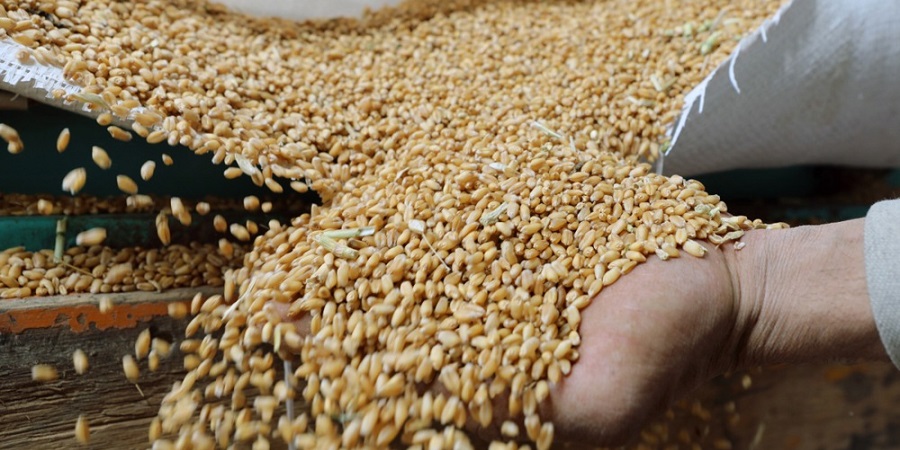
By the end of the marketing year, Ukraine could accumulate about 7 million tonnes of wheat, exceeding the 2021/22 season — when sea ports were blocked after Russia's invasion. This was stated by the Ukrainian Club of Agrarian Business (UCAB). The difference between the two situations is fundamental: back then the ports were physically idle; now the grain exists and ships are sailing, but export rates are still half of what was planned.
Where 45% of exports were lost
According to UCAB’s calculations, after 75% of the marketing year only 55% of the planned volumes have been exported. The average monthly figure for the last four months is 600,000 tonnes, while meeting the plan would have required twice that amount.
The reasons are structural. As Grain Central reports, ports are technically operating but not at full capacity due to blackouts and competition between crops: “corn is loaded first”, and wheat falls back in the queue. According to the outlet, the average monthly volume of grain exports in the first half of the 2025/26 marketing year fell to 2.5 million tonnes compared with 3.6 million tonnes a year earlier — and that is for all grains combined.
“The average export volume [of wheat] over the last four months is at the level of 600,000 tonnes.”
Ukrainian Club of Agrarian Business (UCAB)
According to the USDA, this year’s forecast for Ukraine’s new wheat harvest is 22.5 million tonnes, although the Grain Association already warns of a possible 10–15% reduction due to the May drought.
July: when old grain meets new
The problem is not just price. If by July elevators still hold 7 million tonnes of old wheat while the new harvest begins to arrive, a real question of physical storage space will arise. The total capacity of Ukraine’s operating grain storage facilities now stands at about 52.9 million tonnes — 3.7 million tonnes less than at the beginning of 2022, due to damage to the elevator sector, which over four years is estimated at $1.1 billion.
Formally there is no shortage: total grain and oilseed production fell from 106 million tonnes in 2021 to about 76 million tonnes in 2025, and capacities so far correspond to actual volumes. But that is an average across the board — regional imbalances and port queues are already forcing some grain to be stored in the open today.
- Pressure on prices: large carryover stocks are collapsing domestic purchase prices — farmers will receive less for the same tonne.
- Debt risk: according to Grain Central, the National Bank of Ukraine expects a further $1 billion reduction in foreign-currency inflows from agricultural exports in the first quarter of 2026.
- Sowing under threat: according to British agricultural analyst AHDB, without substantial state support 10–20% of Ukrainian farmers may not have funds for next season’s sowing.
The agricultural backbone of the wartime economy
Wheat is not just a statistic. According to Grain Central, agricultural products make up about 56% of all Ukrainian exports, and every month of slowed exports is hundreds of millions of dollars that neither the budget nor the defence sector will receive.
The paradox is that Ukraine grows more than it can export — and at the same time needs that money like never before. The logistical bottleneck has become financial.
If by the end of June the export pace does not rise to at least 1.2–1.5 million tonnes per month, the July junction of old stocks and the new harvest will turn into a test not only of elevator capacities but of how much the agricultural sector can endure another season without compensatory mechanisms from the state.







