What happened
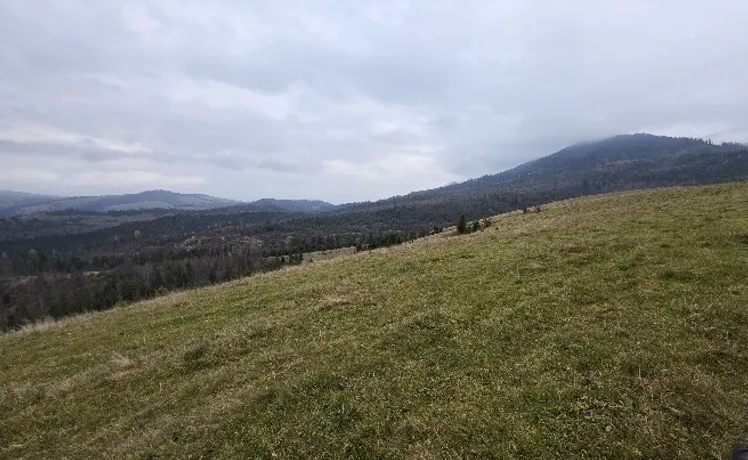
The National Agency for the Search and Management of Assets (ARMA) annulled the results of the auction for the sale of 460 hectares on the Borzhava polonyna (Zakarpattia Oblast). The auction took place on 8 January 2026; the decision was published on the agency’s website.
“Signs of relatedness were detected, which, by international asset recovery standards, could create a risk of the property effectively returning under the control of the former owners.”
— ARMA, statement on the agency’s website
Why it matters
A post-publication review of participants revealed risks that could nullify the purpose of the confiscation — returning the property to state ownership. This is not only a matter of legal technicalities: it is about preventing corrupt networks from regaining control over assets that should serve the state.
The expected value in ARMA’s drafts exceeded 1 billion UAH, while the final bid amounted to only 89.57 million UAH — a discrepancy that heightens suspicions about the transparency of the auction.
Who this concerns
Buyers were listed as Andriy Vingranovskyi (the husband of former MP Yuliya Lyovochkina, sister of MP Serhii Lyovochkin) and Ihor Vlasiuk — a co-founder of a company whose ultimate beneficiaries are named as Vingranovskyi and Renata Huseynova (the common‑law wife of the former head of the State Investment Project, Vladyslav Kaskiv). The lands were placed under ARMA’s management by the verdict of the High Anti‑Corruption Court dated 5 July 2024.
“With the support of MP Lyovochkin, Kaskiv is hatching plans to build an all‑season resort ‘Borzhava,’ the core of which was supposed to be these 460 hectares.”
— Bihus.Info
What will happen next
ARMA has referred the matter to the National Anti‑Corruption Bureau (NABU) and the Specialized Anti‑Corruption Prosecutor’s Office (SAP) for procedural evaluation. After their conclusions, the agency will carry out a new appraisal and organize a repeat auction.
Experts stress that this is a test for the asset recovery system — whether we can not only confiscate, but also retain and effectively manage the property. A transparent repeat auction and public justification of decisions are key to restoring trust and securing real economic benefits for communities.
Conclusion
The cancellation of the auction is not the end of the matter, but an opportunity to correct the process. The upcoming decisions by NABU, SAP and ARMA will determine whether declarations about returning assets translate into real benefits for the state, rather than a mechanism for restoring old corrupt schemes.







