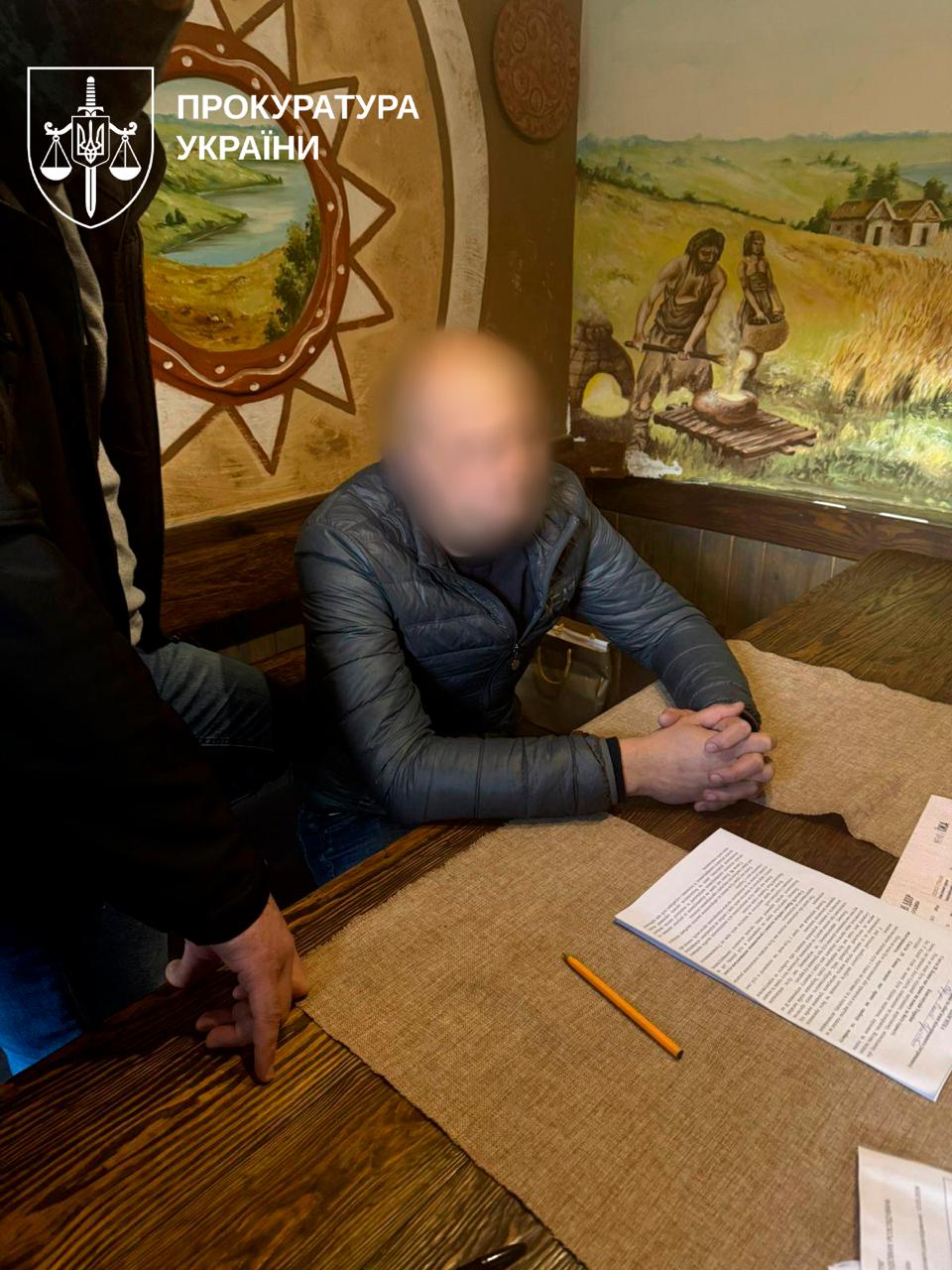
On April 8, the State Bureau of Investigation and the National Police detained the deputy director of the environmental safety department of Ukrzaliznytsia while receiving a bribe. The amount was $100,000. The detention was reported by the SBI, the Police Department of Strategic Investigations, and the Office of the General Prosecutor.
What was being sold
A mining enterprise in Khmelnytsky region faced a situation typical for the mining industry: one of the reserve bypass tracks of Ukrzaliznytsia was physically blocking the possibility of expanding the quarry. To remove the track, a demolition permit was needed — and this very permit turned out to be paid according to the unofficial price list of the official.
According to the investigation, the Ukrzaliznytsia manager demanded $100,000 for the approval procedure to be "expedited." In other words, the commodity was not the track itself or any exclusive resource — but time and a signature in a routine administrative process.
"A shameful fact that we are recording together with law enforcement agencies"
— Ukrzaliznytsia, official reaction to the detention
The mechanics of the scheme
The scheme described by the investigation is not new for monopolies with sprawling permit hierarchies. The key element is asymmetry of dependence: the enterprise cannot expand until it resolves the track issue; the track is owned by Ukrzaliznytsia; the decision on demolition is in the hands of a specific department. With such a configuration, a mid-level official gains market power disproportionate to his position.
- A permit to demolish a reserve track is a standard administrative procedure, but the timeframes for its completion are not rigidly fixed by law
- "Expediting" as a service is a classic entry point for corruption where there is discretion without control of deadlines
- The detention occurred in flagrante delicto, during direct receipt of funds
Context: Ukrzaliznytsia and corruption during the war
This is not the first high-profile case related to Ukrzaliznytsia. Previously, NABU and SAP referred to court a case concerning abuse of 64 million hryvnias during procurement of products for Ukrzaliznytsia under martial law. However, that case involved the level of deputy ministers. The current episode shows that the corruption hierarchy exists at much lower levels — at the level of functional departments where technical, inconspicuous decisions are made.
According to the SBI, only in 2025 the Bureau detained nearly 2,000 offenders — an average of six per day. An increase in the number of detentions is being recorded, but the question of whether this changes the systemic logic of monopolies with unclear regulations remains open.
If the investigation proves guilt and the case reaches a verdict — this will be the first public precedent of convicting a mid-level Ukrzaliznytsia manager specifically for permit corruption. Without this precedent, any company response will remain merely a statement about a "shameful fact."