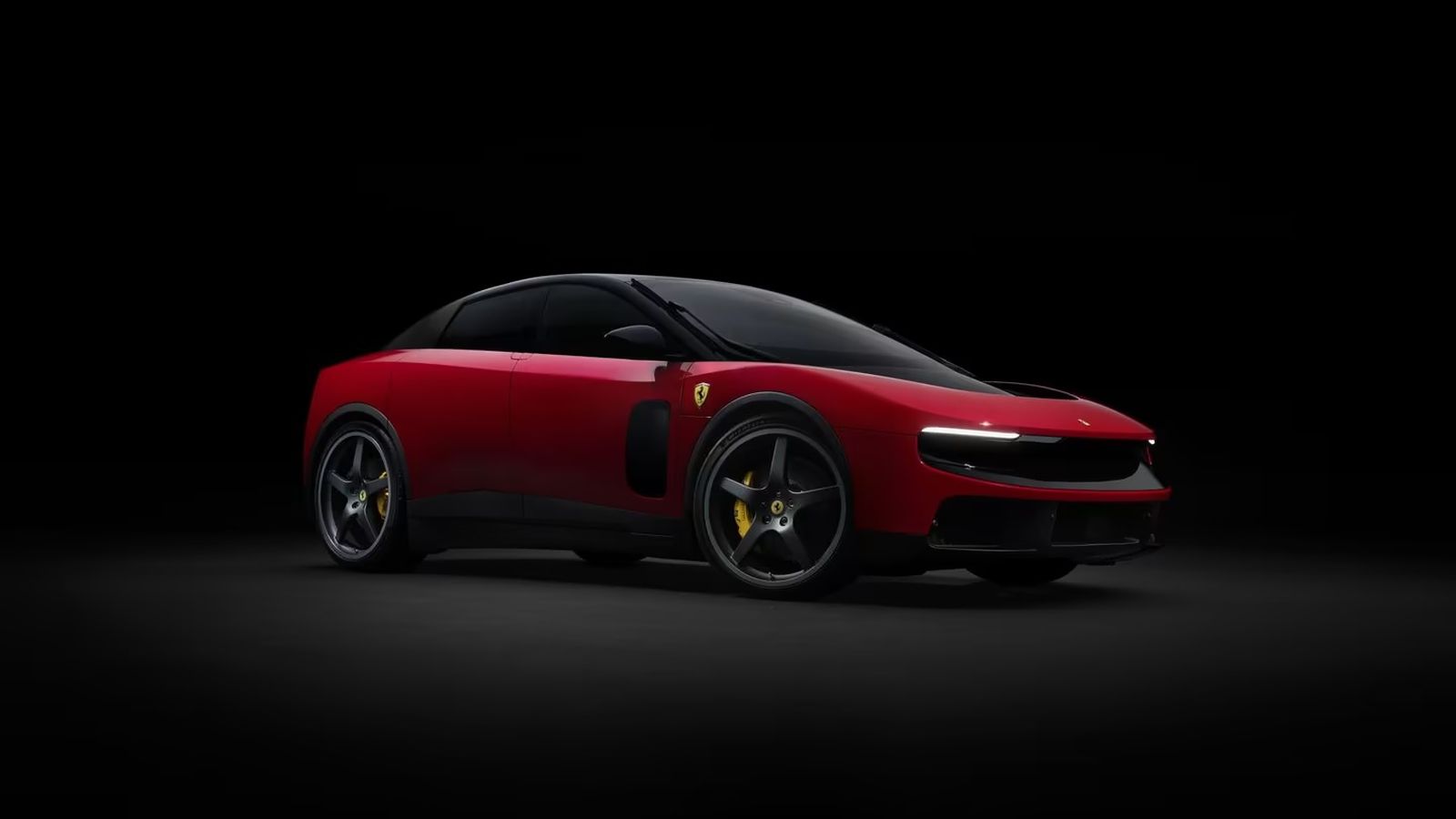
On May 25 in Rome, Ferrari presented its first serial electric vehicle — Luce (which means "light" in Italian). According to the company, the name reflects "electrification as a means, not an end." The starting price is €550,000. For comparison, the average annual salary in Ukraine is approximately €6,000. But Luce is not about mass appeal.
Five years, two designers, and no touchscreen
Ferrari engaged the LoveFrom studio in developing the interior — a creative collective of former Apple chief designer Jony Ive and industrial designer Marc Newson. Both, by the way, are Ferrari owners. The collaboration lasted five years.
The result turned out to be defiantly countercultural for the electric vehicle market: no massive touchscreens. The cabin is built around physical buttons, switches, and levers.
"There's a strange idea: if the energy source is electric, then the interface should be digital. This doesn't seem logical to me."
— Jony Ive, LoveFrom
The steering wheel — three spokes made from 19 parts of recycled aluminum, inspired by Nardi wooden wheels from the 1950s. It weighs almost 450 grams less than a standard Ferrari steering wheel.
Technical specifications: what you get for €550,000
- Engine: four electric motors (two per axle), all-wheel drive, ~1,000 hp
- Battery: 122 kWh, charging support up to 350 kW
- Range: over 530 km (WLTP)
- 0–100 acceleration: 2.5 seconds, maximum speed — over 310 km/h
- Layout: 4 doors, 5 seats — Ferrari's first five-seat serial production vehicle
The battery is positioned under the floor — this removed the central tunnel and made Luce the first Ferrari where rear passengers don't feel like they're sitting in the trunk.
Market context: Ferrari bets on exclusivity while competitors retreat
Lamborghini has abandoned plans for fully electric models in the short term, Porsche has lowered EV sales targets following weak demand — especially in China and the US. Ferrari is moving in the opposite direction, but with adjusted ambitions: according to Reuters, the share of electric vehicles in the brand's lineup by 2030 has been reduced from 40% to 20%.
MarketScreener analysts point out that Ferrari is launching Luce not for volume: "Ferrari is entering the market to prevent Chinese manufacturers — particularly BYD with the Yangwang U9 — from defining the image of a premium electric vehicle." Ferrari's quarterly deliveries have already fallen 4.4%, although margins remain above 39%.
Investor reaction was restrained: Ferrari shares (RACE) fell 3% on the day of the presentation. The market is uncertain whether a four-door electric vehicle without engine sound will find traditional Ferrari buyers.
Deliveries and availability
Orders in Europe will open later in 2025, deliveries in the US from the second quarter of 2027. Ferrari doesn't name specific production figures, but it's known that the Maranello plant currently produces around 14,000 vehicles per year and doesn't plan to significantly increase output.
If Ferrari can sell Luce as a new type of luxury object — not "Ferrari without an engine," but as an independent category — the €550,000 price won't be an obstacle for the target audience. The question is different: will the two-year waiting line characteristic of gasoline models be preserved when the first Luces reach buyers in 2027 — and will the premium EV market cool down even more by then?