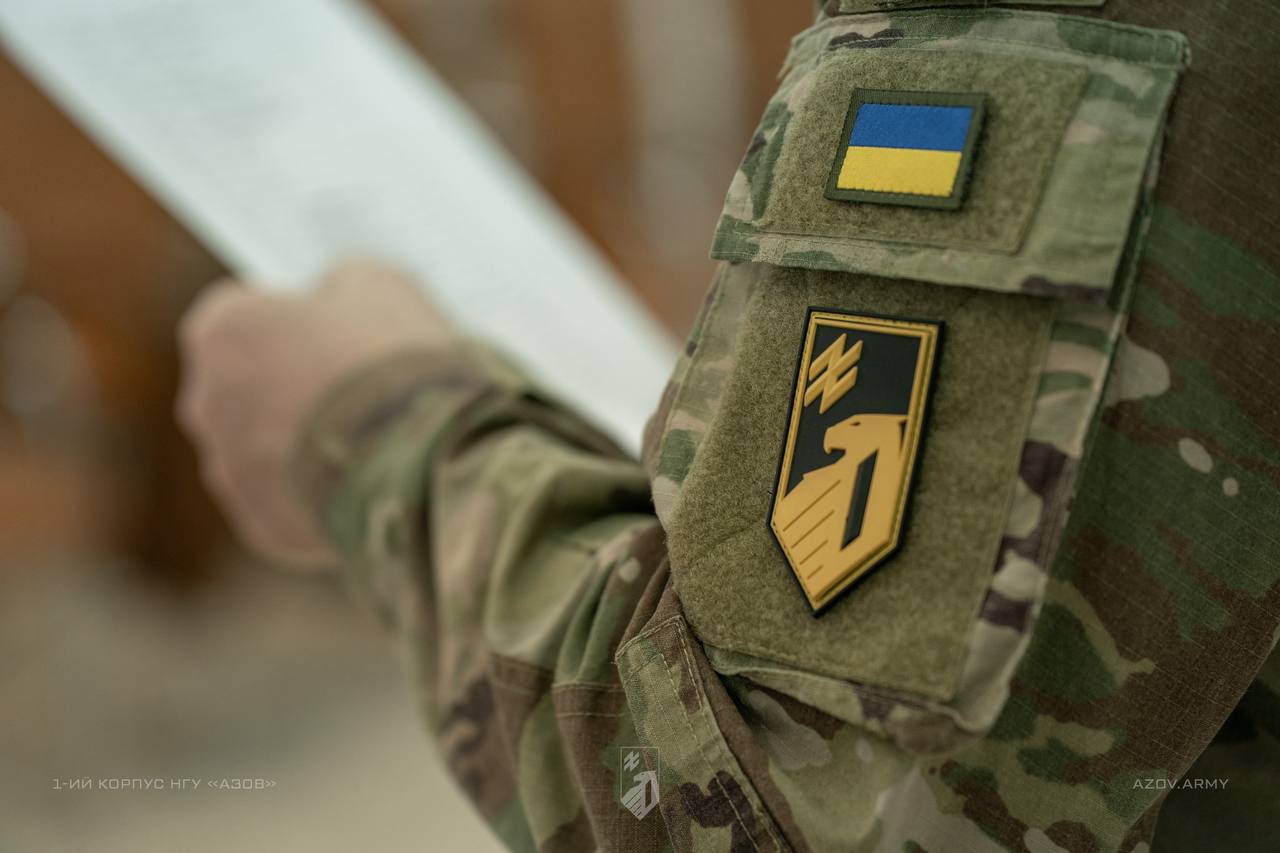
An officer of the 1st Corps of the National Guard "Azov," speaking anonymously, laid out priorities clearly: drone strikes on the occupiers' logistics in the south are not an operation against Crimea. Blocking supplies to the north of the peninsula, according to him, is "rather a pleasant bonus" if it occurs.
The real task is the systematic destruction of transport flows on two key axes: Mariupol–Taganrog and Mariupol–Volnovakha. The first route is the main artery supplying the entire Russian grouping in southern Ukraine — from Donetsk region to Kherson region.
"There will be no more safe Azov Sea for the occupiers"
1st Corps of the National Guard "Azov," Telegram
What is already happening in the field
Video reports from the corps document systematic strikes by pairs of UAVs on military trucks and fuel tankers. The 1st Corps of the National Guard "Azov" released video of UAV operators working on Russian targets on the Mariupol–Taganrog and Mariupol–Volnovakha highways and reported damage to the occupiers' logistics. Along with equipment, personnel are also destroyed.
The First Corps of the National Guard "Azov" confirms that their operators already control the land corridor to Crimea and are effectively returning to Mariupol. However, "control" here means fire superiority on the routes — not physical presence of troops.
According to the Institute for the Study of War (ISW), Ukrainian units conduct reconnaissance and attack the occupiers' ground supply lines in the Mariupol area — approximately 105 kilometers from the front line. ISW analysts note that this could become an important factor in future Ukrainian counteroffensives.
Range and real consequences
As of May 2025, Ukrainian drones already reach the Taganrog–Dzhankoy highway. This means that the theoretical "pleasant bonus" — impact on Crimean logistics — is already not so theoretical: the Rostov–Dzhankoy route spans over 500 kilometers, and at this distance the occupiers cannot ensure continuous coverage with electronic warfare or air defense systems.
Direct consequences are already being documented in occupied Mariupol: Kyiv Independent reports a diesel fuel shortage in the city amid strikes by the corps on logistics routes.
- Mariupol–Taganrog — the main axis supplying the occupiers' grouping throughout the south
- Mariupol–Volnovakha — a rear route for the Donetsk direction
- Taganrog–Dzhankoy — an artery between Russia and Crimea, already in the strike zone
According to Igor Lutsenko, a serviceman and co-founder of the Aerial Reconnaissance Support Center, similar tasks were previously handled mainly by special forces hunting for very important targets far from the front — now it is becoming routine for regular drone units.
Why the "bonus" is no less important than the main task
The land corridor through the Sea of Azov region is not only a logistics artery but also a political symbol: it is precisely this that turned Crimea from an island enclave into "eternally Russian" in the official Moscow narrative. Analyst Igor Lutsenko, commenting for LIGA.net, notes that completely stopping any ground logistics, knocking out locomotives, bombing rail cars and burning any vehicle is a completely realistic task for a corps that numbers several thousand drone operators constantly patrolling every road from the contact line to the Sea of Azov.
Thus, the question is not whether "Azov" can affect Crimean logistics. The question is when systematic hunting of fuel tankers will turn into a real shortage of ammunition and fuel for the grouping holding the front — and whether Russia will manage to rebuild alternative routes before the drone strike radius increases again.





