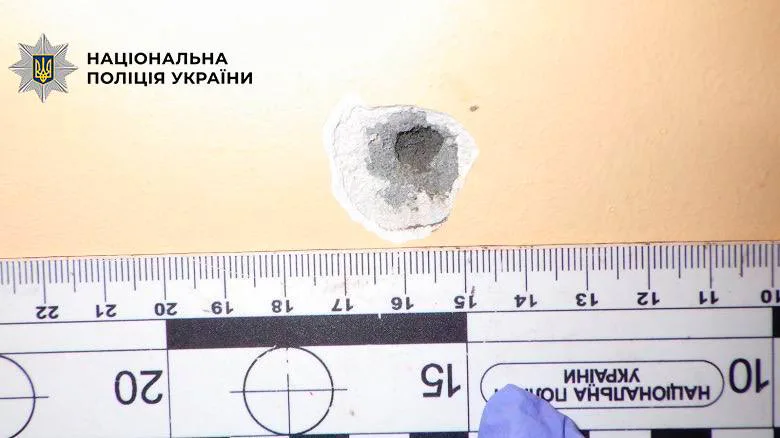
In Kyiv's Desnyansky district, a 39-year-old military serviceman opened fire on employees of the Military Police Service (VSP) who came to formalize his return to his unit. According to Kyiv police, the man unlawfully left his place of service in 2025 — and the moment of contact with the VSP became the point of escalation.
Two revolver shots — and a KORD operation
During a conversation with VSP representatives, the suspect fired two revolver shots in their direction. No one was injured. However, the response was appropriate: KORD special forces were involved in the detention. The man was notified of suspicion against him.
A striking aspect of this case is not the shot itself, but what preceded it. The VSP came not as a punitive structure, but as part of a standard search procedure: to establish contact, deliver a notice, and document status. But for a person who had been outside the system for an extended period and apparently was aware of the legal consequences, this visit meant the end of the possibility to "wait it out."
Context: the window closed on August 30
Until August 30, 2025, Ukraine had a mechanism that allowed military servicemen who unlawfully left their unit to return without criminal prosecution — provided they reported to the VSP within 24 hours after the amnesty decision. As lawyers note, after this date "the window of opportunity closed."
"The legislative mechanism that until August 30, 2025 allowed exemption from criminal liability applied exclusively to voluntary return."
Legal analysis published on lihachov.com.ua
For part of the Armed Forces of Ukraine, Part 5 of Article 407 of the Criminal Code of Ukraine applies with a statute of limitations of 10 years. In other words, "waiting it out" is not a strategy, but merely a postponement.
A man and the system
The Desnyansky incident is not about individual aggression in a vacuum. It is a moment when a person who stepped outside the military structure encountered it again — and responded with force. The police do not publicly track in aggregate data how many such confrontations occur after the amnesty window closes.
- The search for military servicemen in the Armed Forces is conducted by the VSP, SBU, and other bodies
- After detention — assignment to a reserve battalion or criminal proceedings
- Shooting at VSP representatives adds a separate charge — resistance or assault on military law enforcement
If the number of such incidents increases — the issue is not the severity of punishments, but whether the state has a mechanism to return people who have left the system without escalation to armed confrontation. The precedent from Desnyansky district poses a specific question: how many more VSP visits will end in gunfire if the only legal way out — to surrender — is perceived as a threat of worse punishment than resistance?







