TAD in America: what happened
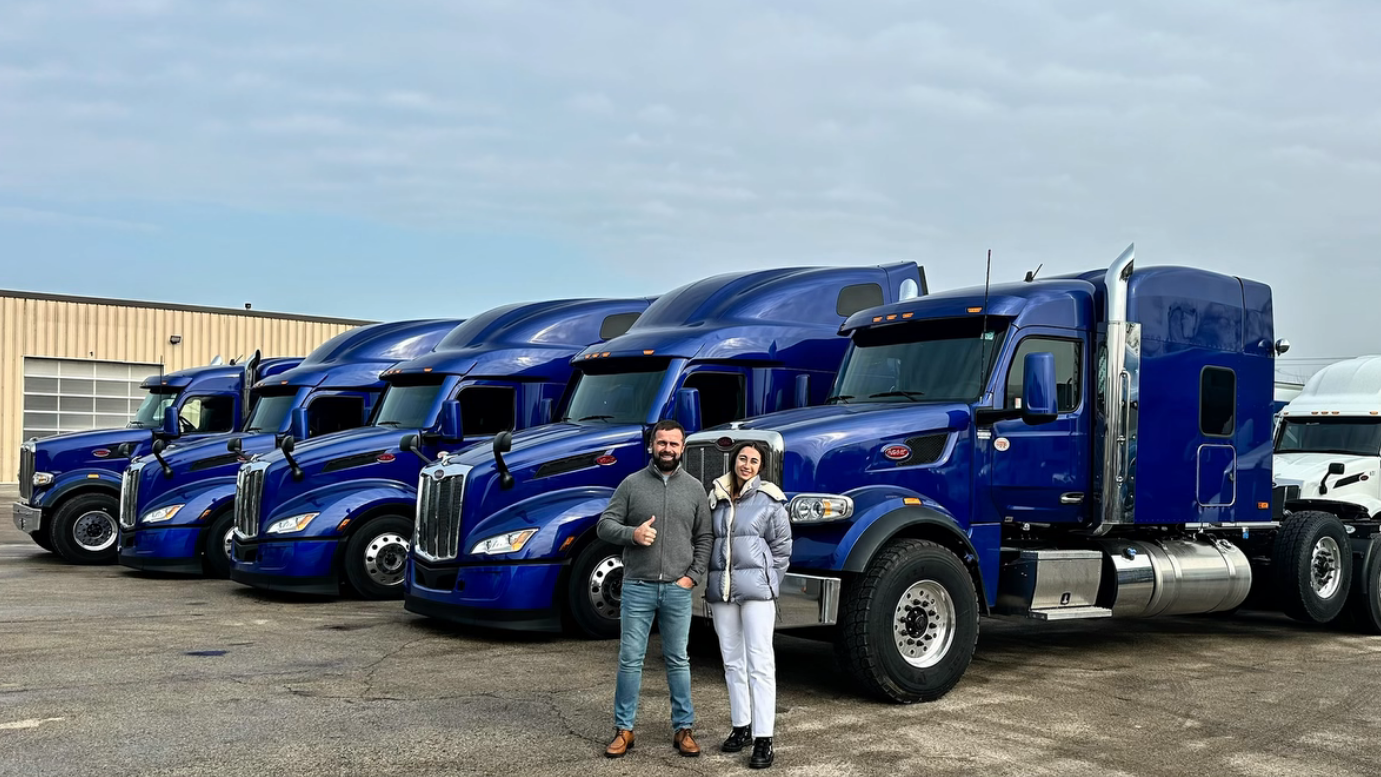
Ukrainian company TAD (Trans‑Auto‑D) from Khmelnytskyi region announced its entry into the US market. According to owner Vitaliy Melnyk, the first batch of equipment has already been shipped — five Peterbilt tractors (four‑ and three‑axle), and trailers RGN and step‑deck extendable trailers are expected to arrive soon. The company emphasizes that the equipment is new and supplied directly from the factories.
"The first five trucks have already arrived — the legendary Peterbilts, four‑ and three‑axle tractors in good specification, oriented toward oversized loads. Next week we expect delivery of the first trailers — RGN and step‑deck extendable trailers. All equipment is new, directly from the factories."
— Vitaliy Melnyk, owner of TAD
The first trailers, the company notes, are of American manufacture. At the same time, TAD is already working on bringing its own trailer brand to market: the first trailer in collaboration with an American company is being produced at the plant in Volochysk, and the first export is expected shortly.
"The first trailer in collaboration with an American company is already being produced at our plant. We will have the first export soon."
— Vitaliy Melnyk, owner of TAD
Facts important to remember
In 2025 TAD invested $8 million to expand production in Volochysk — a concrete capital injection to grow capacity and certify products for foreign markets. The company's press release also cites examples of other Ukrainian brands in the American market — from the Lviv Croissants chain to mentioning Kyivstar's appearance on Nasdaq (listed among successes that demonstrate investor interest in Ukrainian companies).
Why this matters
First, it signals diversification of Ukrainian exports: heavy equipment and trailers are a different, technologically demanding niche compared with agricultural exports or consumer goods. Second, local trailer production in collaboration with an American partner means transfer of standards and certifications, opening the way to larger contracts. Third, the investment and entry into the US create jobs in the region and increase the completeness of local supply chains.
Experts point to another aspect: the ability of Ukrainian manufacturers to work with oversize equipment is important not only for civilian logistics — it is also useful for restoring critical infrastructure after hostilities. Therefore, such exports have both economic and strategic dimensions.
What’s next
TAD has taken the first step: deliveries of tractors, launch of local trailer production, and $8 million in investment. The next stage — larger contracts, meeting American technical standards, and building long‑term partner supply chains. If the company can maintain quality and obtain the necessary certifications, this will become an example for other Ukrainian machine‑builders and investors.
Whether this success will turn into a powerful export driver for the region depends on the next steps: certification, partner bids, and the ability to work with American supply chains. And a question to the reader: which other Ukrainian industries could use a similar model to enter global markets today?







