The Big Picture
Financial Times describes an unusual practice in southern Chinese manufacturing hubs: drone-component suppliers arrange visits so that Ukrainian and Russian buyers never cross paths in the same factory or conference room. For Ukraine this matters not as a curiosity, but as an indicator of dependency and vulnerability in the supply chain.
"Our suppliers are making efforts to handle Ukrainian and Russian clients. They try to ensure that we are not at the same factory at the same time"
— Oleksandr Yakovenko, founder of TAF Industries
What exactly is happening
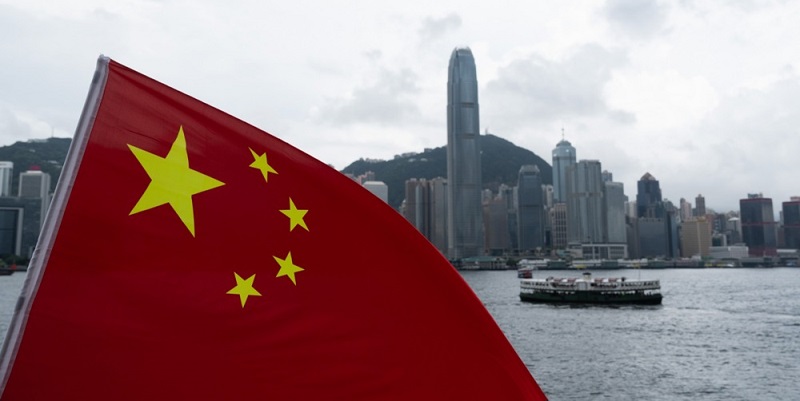
Thousands of miles from the front, Ukrainian and Russian procurement networks are meeting in industrial parks in Guangdong and Shenzhen. Small companies that make processors, cameras and motors coordinate visit schedules and even use side entrances so the parties do not meet in person. These are the components that determine flight range and image clarity, and Chinese equivalents often cost about a third less than Western ones.
"We can see a new video transmitter on Russian drones and immediately understand which company in China made it... They say: 'Fine, we can sell this to you too'"
— Oleksiy Babenko, Vyriy Drone
Why this matters for Ukraine
Drones are a key element of modern combat: by some estimates they account for about three quarters of losses at the front. At the same time Ukraine's industry, Yakovenko says, remains dependent on China for roughly 85% of simple FPV drones. That means technological progress and access to critical components are accelerating both sides of the conflict at once.
Additionally, sources in Western intelligence report that the Chinese government formally declares neutrality but allows commercial players to conduct operations that weaken the effectiveness of Western sanctions: Russians sometimes buy entire production lines to relocate to the Russian Federation.
How Ukraine is responding and what needs to be done
The official response is localization and diversification of supplies. Minister of Digital Transformation Mykhailo Fedorov on 20 January announced plans to obtain a Mavic equivalent from the Chinese company DJI, but that is a targeted action rather than a systemic overhaul of the supply chain.
What needs to be accelerated: investment in domestic manufacturing capacity, import-substitution programs for key components, coordination with partners on alternative suppliers, and diplomatic pressure on a range of practices that allow export controls to be undermined. Experts emphasize: technical autonomy is not only about producing housings, but above all independence from critical electronic components.
Conclusion
In this case China acts not simply as a market — it has become a node where competitors' interests intersect. This reinforces the need for Ukraine to turn short-term purchasing decisions into a long-term industrial strategy. Whether it will be possible to turn this dependence into an advantage depends not only on factories and investments, but also on how quickly and systematically we can involve partners and implement technological autonomy.