Briefly — why this matters
When the head of artificial intelligence at Microsoft announces a 12–18 month timeline for large-scale automation of office work, this is not just a forecast for tech blogs. It is a signal for businesses, governments and educational institutions: priorities must be set for workforce training, data protection and regulation. For Ukraine this is a question of job security, economic resilience and technological sovereignty.
What exactly did Microsoft say
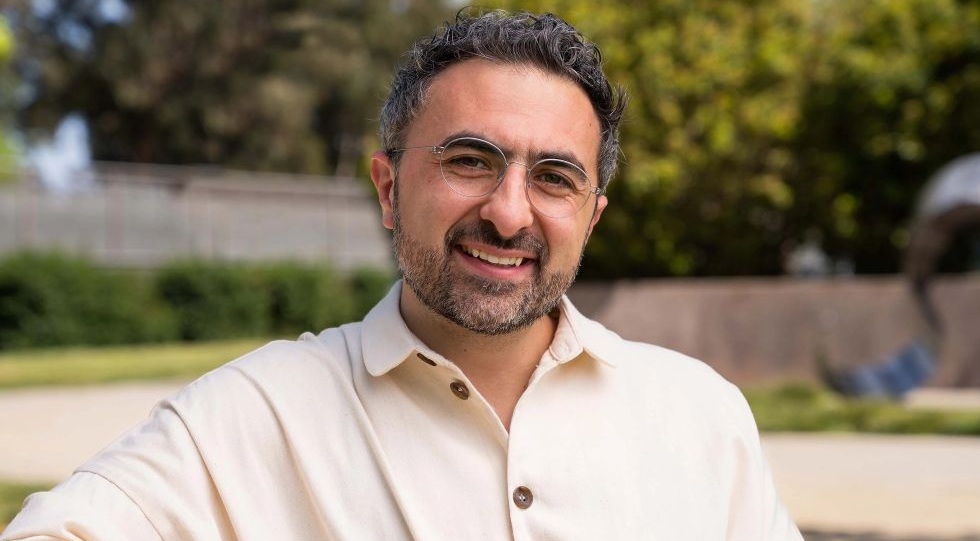
Financial Times quotes Mustafa Suleyman, Director of AI at Microsoft: in his view, “white-collar work — lawyers, accountants, project managers, marketers — most of these tasks will be fully automated by AI within the next 12–18 months.” He said AI-based agents will be able to coordinate better in large organizations and, over time, perform increasingly autonomous functions.
"White-collar work, where you sit at a computer — a lawyer, an accountant, a project manager or a marketer — most of these tasks will be fully automated by AI within the next 12–18 months"
— Mustafa Suleyman, Director of AI, Microsoft
Criticism: why skeptics advise not to rush to conclusions
Experts remind us that expert work is a set of heterogeneous tasks, many of which are difficult to fully automate. As the Finnish broadcaster Yle cites Associate Professor Joonas Tuhkuri from Stockholm University, in a 12–18 month horizon it is unlikely that there will be massive structural changes in the labor market.
"If we speak about the near future — a year or a year and a half — it is very unlikely that such a short period will see large-scale changes in occupational structure due to AI"
— Joonas Tuhkuri, Associate Professor of Economics, Stockholm University
Data and examples: what research says
Researchers at the Haas School of Business (University of California, Berkeley) found that implementing generative AI can not reduce but increase the volume of work — people perform more tasks at the same time, augmented by tools. This supports the argument that the transformation will be gradual and multidirectional, rather than an instantaneous replacement of personnel.
What this means for Ukraine — a brief analysis
1) Scenarios: the most likely — a hybrid model: some routine functions will be automated, while complex decisions will remain with humans. 2) Risks: concentration of technology in the hands of a few providers, threats to jobs in certain segments, and the need for new skills. 3) Opportunities: increased efficiency in defense, logistics and public administration, freeing experts for strategic tasks.
Practical steps (for business and government)
- Invest in retraining and STEM programs with an emphasis on critical thinking and management of AI systems.
- Support the development of local solutions and keep data within the national environment to minimize sovereignty risks.
- Develop rules for the use of AI in critical areas: law, auditing, public services, defense.
- Encourage businesses to implement AI in ways that ensure productivity gains are accompanied by strategies to preserve employment.
Conclusion
Microsoft’s forecast is a market signal: the technology is developing rapidly. But expert voices and research emphasize the complexity of moving from individual automated tasks to full replacement of professions. For Ukraine the question is not whether change will come, but what our response will be: will we build policy, education and infrastructure that turn risks into a competitive advantage, or remain passive consumers of others’ solutions?







