Brief
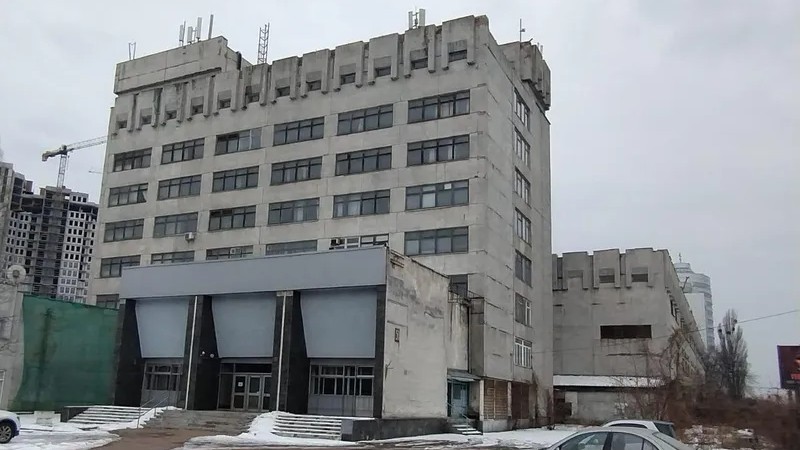
On February 17, the State Property Fund sold the sole asset complex of the state enterprise R&D Institute 'Orion' in the Shevchenkivskyi district of Kyiv. The winner was LLC 'Rushiy' with a bid of UAH 381 million — nine times the starting price, Prozorro.Sales reports.
The winner was LLC 'Rushiy', established in 2024, with a bid of UAH 381 million — nine times the starting price.
— Prozorro.Продажі
Why it matters
This concerns a complex of 38,632 sq. m across two locations in the city center, with production and administrative premises, five land plots totaling 4.14 ha, and infrastructure. These are not just buildings — they are part of a scientific-industrial legacy that worked with high-frequency devices and components, and which is located in a strategically valuable urban area.
Who bought it and what are the risks
According to YouControl, the owner of LLC 'Rushiy' is Volodymyr Tsybulskyi from Brovary; the company specializes in real estate leasing. If 'Rushiy' does not transfer the funds within the established deadline, the right to privatize will pass to the corporation 'Ukrinmash', which offered UAH 1 million less.
The owner of the company is Volodymyr Tsybulskyi from Brovary; the enterprise is engaged in leasing real estate.
— YouControl
What remains state-owned
There are two civil defense shelters on the complex’s grounds — they are not subject to privatization. This is an important fact for community safety amid a prolonged threat from the aggressor.
Context: privatization trend
This deal is part of a broader phenomenon: several similar sales have already taken place this month — from an unfinished grain-processing complex to abandoned factories. It shows that investors are eyeing assets in Ukraine even during the war — a marker of confidence, but also a factor in competition for the city and industrial sites.
Examples of recent auctions: February 6 — 'Sosnova Agro' purchased an unfinished grain-processing complex for UAH 6.9 million; February 5 — the 'Silmash' factory in Kolomyia was sold for UAH 42 million.
Analysis and possible consequences
Private investors’ interest in such an asset may follow several vectors: from restoring industrial production and preserving jobs to commercial renovation for real estate or offices. For readers, this means: the surrounding infrastructure may change, economic activity in the area could increase, but there is also a growing need for transparent guarantees to preserve strategic elements (shelters, potential production capacities).
Conclusion
The sale of R&D Institute 'Orion' for UAH 381 million is a signal: investors are willing to invest in large capital assets, including those with an industrial past. The next steps — whether the deal will be completed, what the new owner’s plans are, and how the state will ensure the preservation of critical infrastructure — matter for the city’s security and the future of its industrial potential. It is therefore worth watching how events unfold closely.







