Briefly
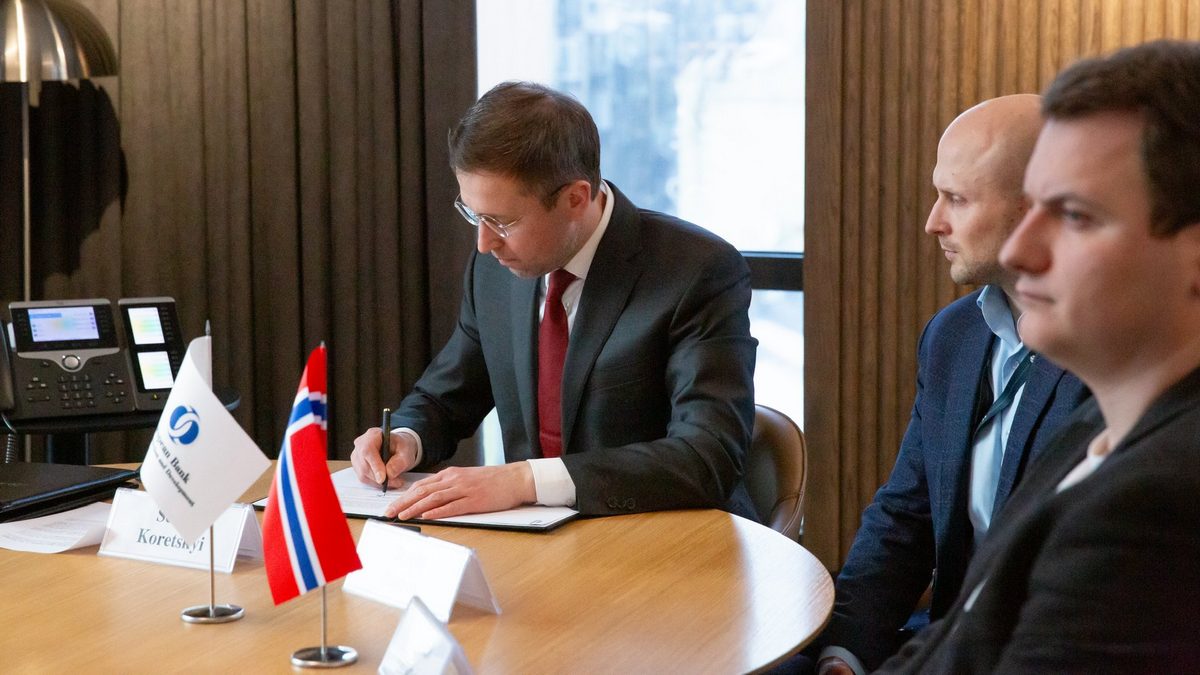
The Naftogaz group on Monday, February 16, signed a grant agreement with the European Bank for Reconstruction and Development (EBRD) for €85 million. The grant is provided by the government of Norway following agreements between Ukraine’s president Volodymyr Zelenskyy and Norway’s prime minister Jonas Gahr Støre. The funds are intended to purchase additional volumes of imported gas to partially compensate for losses in domestic production caused by Russian attacks on energy infrastructure.
"The signed agreement will allow the purchase of additional volumes of imported gas to partially compensate for losses in domestic production,"
— Serhii Koretskyi, chairman of the board of NJSC Naftogaz of Ukraine
Why now
This decision is not a one-off gesture of solidarity, but an element of operational energy security planning. After large-scale attacks on gas production infrastructure in Ukraine, domestic output has declined, and replacing the shortfall with imports became a critical task for uninterrupted supply and market stabilization ahead of the heating season.
Financial context: who is already helping
Since summer 2025 Naftogaz has raised hundreds of millions of euros from international financial institutions and banks. Its lenders include the EBRD, the European Investment Bank, and a number of Ukrainian banks (PrivatBank, Oschadbank, Ukrgasbank). This grant from Norway complements the existing pool of financing and eases pressure on state reserves.
- In 2025 Ukraine had to import nearly 6 billion cubic meters of gas.
- The first gas supplier from Greece is expected in March 2026, providing an additional alternative to Russian routes.
What this means for consumers and the market
Don’t expect immediate reductions in household bills: the grant’s impact on the market will be gradual and depend on contract terms, logistics, and the euro exchange rate. However, it is a direct positive for supporting reserves and reducing the risk of emergency outages — especially during cold spells or further attacks on infrastructure.
Risks and next steps
The grant solves part of the problem but not all of it: clear contracts with suppliers, effective logistics for storage and transportation, and transparent mechanisms for monitoring the use of funds are needed. Analysts stress that international assistance is a marker of trust, but it must be followed by completed deliveries and signed contracts.
Summary
€85 million from Norway via the EBRD is a practical step toward strengthening Ukraine’s energy resilience. The next important stage is turning declarations and grant agreements into real deliveries and preserved reserves. Now the focus is on implementation and oversight: will this money truly become a safety buffer this winter?







