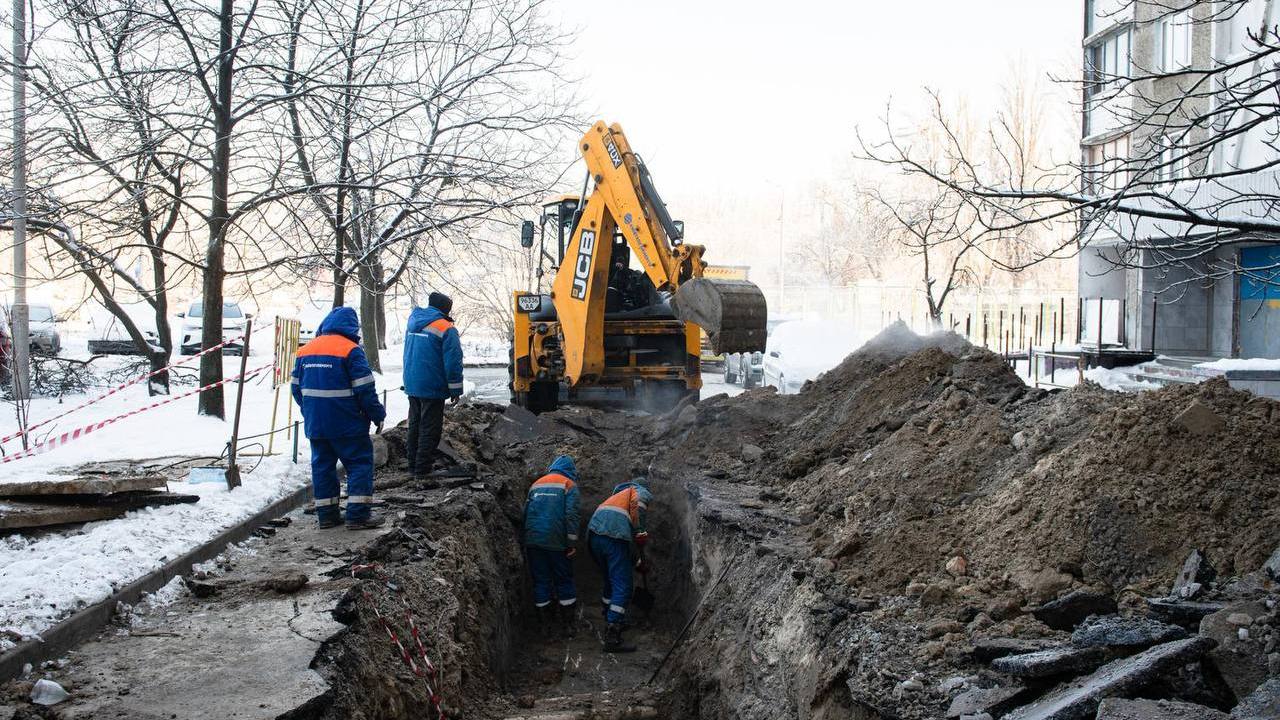
What happened
On January 20, Russian strikes on critical infrastructure complicated the energy situation in Kyiv and several regions. This is not only a technical issue — it is a matter of everyday safety for thousands of people, especially in cold weather. The government and city services report disruptions to electricity, heating and water supply.
Scale of outages
Kyiv: according to the government, about 5,635 buildings are currently without heating — roughly 46% of the city's housing stock; 12 of these buildings have been without heat since January 9. The Right Bank is operating at reduced pressure, and the Left Bank was temporarily left without water — about 3,500 residential buildings. In addition to the capital, Kharkiv, Sumy and Chernihiv regions were affected; in Dnipro and Zelenodolske more than 15,000 customers remained without heat.
"Because of the consequences of the shelling of Kyiv, in certain districts there are interruptions in water, heat and electricity supply. More than 5,000 buildings in the city are currently without heat. The situation remains difficult in Kharkiv, Sumy and Chernihiv regions."
— Yuliia Svyrydenko, Prime Minister (message on Telegram)
"The situation with water supply is also difficult. The Right Bank of Kyiv is operating at reduced pressure. The Left Bank is temporarily without water — about 3,500 residential buildings. We expect the supply to be restored during the day."
— Oleksii Kuleba, Vice Prime Minister
Who and how is restoring the networks
Forty emergency brigades of Ukrzaliznytsia and another 20 crews from other regions have been involved in the work; they are working around the clock together with city services. Earlier, the government announced the creation of headquarters to eliminate the consequences of strikes on energy facilities and signaled its intention to accelerate the construction of power transmission lines from west to east — changes that are expected to increase network resilience in the medium term.
Context and consequences
This wave of attacks shows that the war continues to target infrastructure to weaken the daily life of the civilian population. Energy analysts note that while emergency restoration work is underway, it is critically important to accelerate projects on power backup and network modernization.
What this means for Kyiv residents
Expectations of restoration during the day are good news, but the risks of repeated attacks and systemic vulnerabilities remain. City services and the government are coordinating the response; residents should follow official announcements, support neighbors in vulnerable groups, and prepare for temporary inconveniences.
Conclusion
Technical restoration often proceeds quickly thanks to the coordinated work of the crews. But a strategic response requires investment in network resilience and in planning energy transmission. The question is not only when the water will return today — but whether previous promises of modernization will turn into concrete projects that minimize such risks in the future.
"We discussed separately the situation in the Dnipro area, in Zaporizhzhia and the region, in Sumy, Chernihiv and Odesa. Restoration is ongoing in Rivne region."
— Volodymyr Zelenskyy, President







