In brief
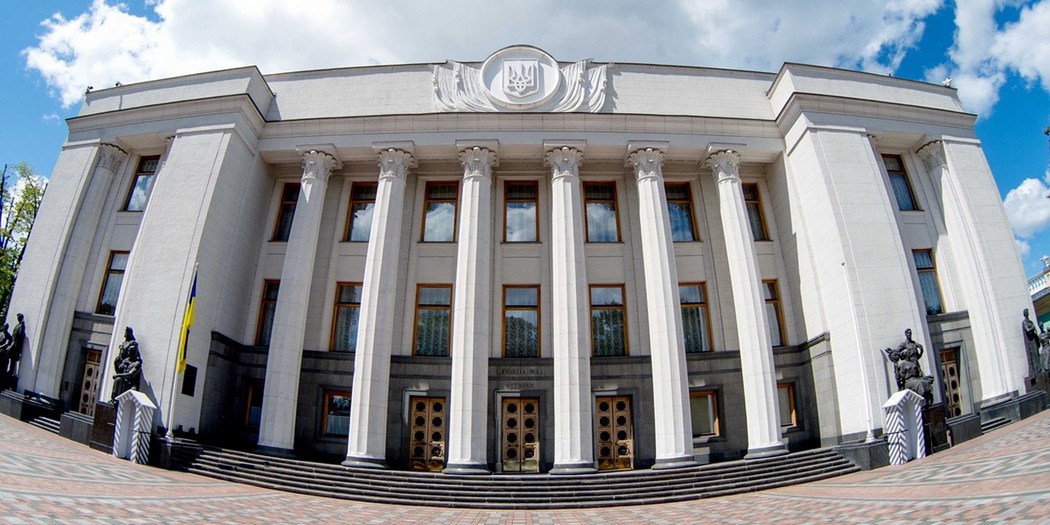
The Verkhovna Rada has temporarily, for the duration of martial law and for two years after its termination, raised the maximum age for civil servants and officials of local self-government bodies by 5 years — to 70 years. The corresponding amendment was adopted as part of draft law No. 13574; 243 deputies voted for the decision.
Considering that under martial law there are not always young people available for public service because they are serving in the Armed Forces, there is a certain category of persons who, even upon reaching the age of 70, can effectively perform their functions
— Fedir Venislavskyi, member of the Verkhovna Rada Committee on National Security, Defence and Intelligence
Why this was done
The reason is simple and pragmatic: a personnel shortage due to mobilization and military service reduces the ability to fill managerial and specialist positions. Raising the maximum age is a way to preserve institutional memory and ensure managerial stability while the war continues and systems for recruiting and training new personnel are being rebuilt.
Mechanism and limits
Until now, part four of Article 83 of the Law of Ukraine "On Civil Service" allowed keeping a civil servant after age 65 by decision of the appointing authority and with the person's consent. The news is that this limit has been raised to 70 years for the specified temporary period. The decision is made annually, but cannot be extended beyond the attainment of 70 years.
- Duration: during martial law plus 2 years after its termination.
- Principle: annual assessment and the employee's consent.
- Limitation: no more than up to 70 years of age.
Context: salaries and reforms
The diversification of approaches to age comes against a backdrop of personnel dissatisfaction — almost 80% of civil servants believe they are paid insufficiently. In 2025 a pay reform based on job classification was adopted, which separates fixed salary components and variable components (bonuses). Without improving pay attractiveness and transparent motivation mechanisms, simply extending terms will not solve the problem of personnel renewal.
Consequences and risks
Pros: preservation of experience, management stability in a crisis, continuity of public services. Cons: risk of slowing the career progress of young specialists, potential strengthening of patronage, and additional budgetary burden if extensions are implemented without a system for assessing effectiveness.
To minimize risks, experts recommend linking service extensions to open evaluation criteria, annual attestations, and a larger share of variable pay tied to results. Otherwise the temporary measure could turn into a mechanism that blocks renewal of the managerial vertical.
Summary
The Rada's decision is a response to a real personnel challenge during the war. However, its effectiveness will depend on whether extensions of terms can be combined with transparent evaluation mechanisms and adequate motivation. Whether the Cabinet of Ministers and the National Agency on Civil Service (NADS) can establish these rules is the question that will determine whether the change to the age limit becomes a temporary aid rather than a long-term obstacle to renewing the civil service.







