What happened
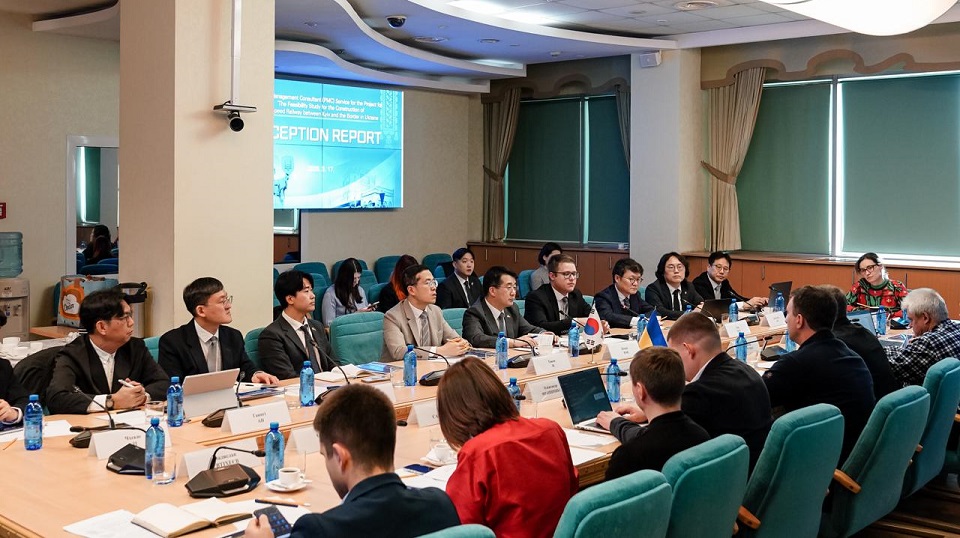
The government of the Republic of Korea has provided a $8 million grant to prepare a comprehensive technical and economic feasibility study (TEO) for a high-speed railway between Kyiv and the EU border. The Ministry of Development of Communities and Territories reported this following a meeting with a Korean delegation.
Partnership and signals of confidence
This is not just early-stage project financing — it is a diplomatic and economic signal: Korea is ready to engage in Ukraine’s infrastructure reconstruction on a long-term and comprehensive basis, from the TEO to the supply of rolling stock.
"We view the development of a high-speed railway not merely as an infrastructure project, but as part of the country's reconstruction, modernization and integration into the European transport space. We are sincerely grateful to the Korean side for the partnership, trust and willingness to invest in Ukraine’s future."
— Oleksiy Balesta, Deputy Minister of Development of Communities and Territories
"The Republic of Korea sees many opportunities to be involved in Ukraine's reconstruction. For us, this is not only about restoring what was destroyed but also about shaping Ukraine's future."
— Kichang Pak, Ambassador of the Republic of Korea to Ukraine
Project roadmap
Ukrzaliznytsia and the government agreed on next steps: engaging consultants for the TEO, assessing routes and technical solutions, and strategically linking with the TEN-T network. Negotiations on the procurement of rolling stock are also ongoing — Ukrzaliznytsia planned to purchase up to 20 Hyundai Rotem trains by 2028 and to seek partial localization of production in Ukraine.
In September 2025 the government asked the Korean side to provide a preferential concessional loan with a 25–40 year term to finance the purchase of these trains.
Additionally: in March 2026 Poland authorized trains to operate at up to 250 km/h after receiving a new safety authorization — an important element of cross-border compatibility.
What this gives Ukraine and Ukrainians
In short: faster, cheaper and strategically more important. A high-speed line will reduce travel times between Kyiv and the EU, increase labor mobility, relieve roads and airports, and act as a catalyst for jobs in manufacturing and construction.
From a security and geopolitical perspective, it is a step toward closer integration with the European transport system, reducing dependencies and increasing the resilience of logistics chains during reconstruction.
Risks and uncertainties
The TEO is only the start. Next will be project financing on the scale of hundreds of millions or billions, clear technical standards, guarantees of cross-border compatibility and the political will to implement it. Localizing production will require investments in manufacturing capacity and workforce training.
What’s next
The coming months are important: selecting consultants for the TEO, agreeing technical scenarios, securing financing and preparing for negotiations on supplies and localization. Success will depend on how quickly and transparently these steps turn political declarations into concrete contracts.
The small $8 million grant is more than money on paper. It is a test of our ability to convert external trust into real investments and infrastructure solutions. Will we be able to seize this opportunity and make it a point of no return for the Euro-integration of Ukraine’s transport network?







