When Jo Laing started crafting ceramic matchbox covers and selling them for £70, she didn't expect to need a waiting list. Now her limited editions appear in Harrods and, according to her, "sell so quickly that we can't keep up with restocking".
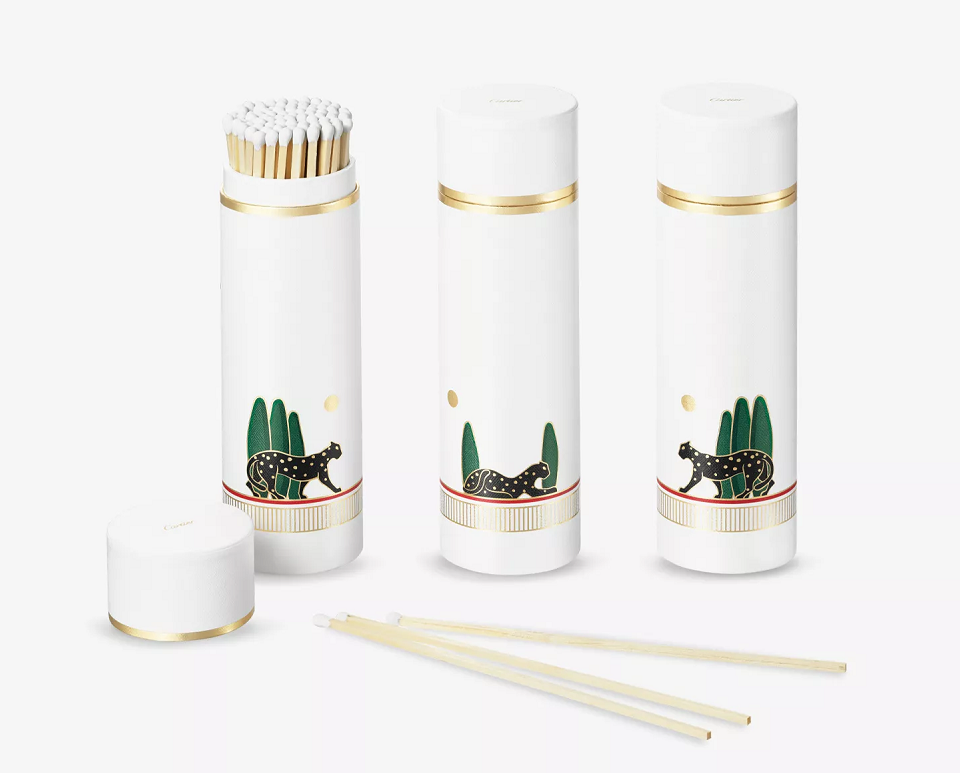
British retailer Selfridges recorded a 121% year-on-year surge in luxury matchstick sales and more than doubled its assortment — over 100 models priced from £5 to £235. The flagship of the line is the Cartier set: three cardboard tubes featuring panther designs, with 80 matchsticks each.
A Product Without Function — A New Class of Accessories
The paradox of designer matchsticks is that they are almost non-functional. Most buyers purchase them for decoration — on a mantelpiece or as a gift. That is, they pay £235 for an object that takes up less space than a book and lasts several weeks of candle use.
This fits logically into what Kantar analysts call the "little treats" trend — small but tangible pleasures. As Kantar's director of cultural research Bia Bezamati explains, people are seeking "little, affordable pockets of joy to brighten the day" — especially under pressure on household budgets.
Older Theory, New Form
Economists have known this mechanism for a long time — under the name "lipstick index". The theory: when major expenses (vacations, cars, renovations) become psychologically unattainable, the consumer compensates with symbolic but "genuine" luxuries.
"During a recession, the desire to treat oneself doesn't disappear — it simply takes a more accessible form".
Mailchimp, analysis of the "lipstick effect"
Cartier matchsticks follow the same mechanism, but transferred to the home space. Not a £2,000 handbag, but a £235 box. Not a vacation in Tuscany, but a candle and a beautiful object next to it.
What This Means for the Market
- Premiumization of "nothing": the fastest-growing categories are those where no premium segment previously existed — matchsticks, toothpicks, clothespins.
- Gift-driven demand: a significant share of sales are gifts. A designer matchbox solves the problem of "what to give someone who has everything".
- Scarcity as a tool: Jo Laing sells limited editions — shortage stimulates demand better than any advertising.
Selfridges has already called designer matchsticks "a must-have home accessory for 2026" — terminology characteristic of categories intended to grow further.
If pressure on British household incomes doesn't ease in 2025–2026, the market for "pretty trifles" will continue to expand — the question is whether there will remain space for independent producers like Jo Laing, or whether large brands led by Cartier will squeeze them out as quickly as the boxes themselves sell out.







