What happened
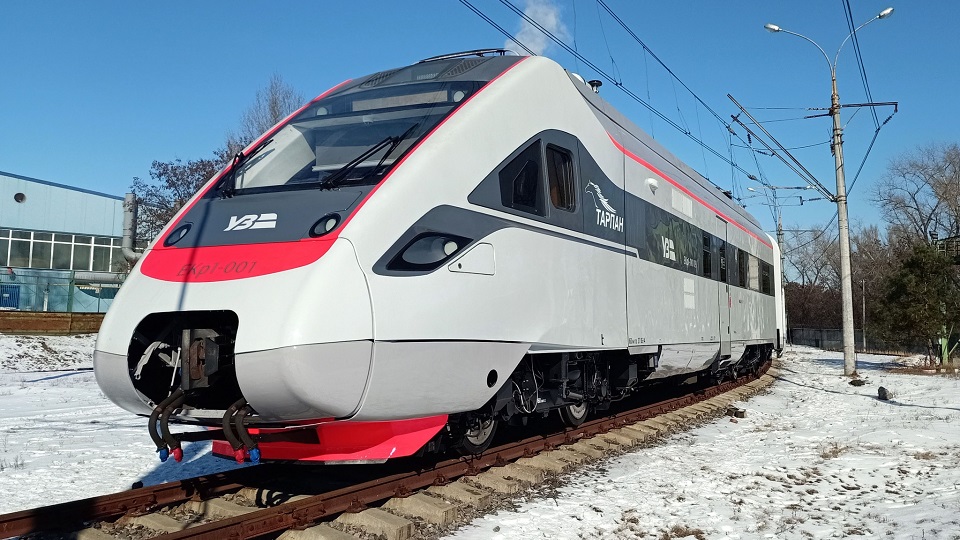
The Kryukiv Carriage Works (KVBZ) completed a major overhaul (KR-2) of the high-speed electric train EKr1-001 "Tarpan" after it had run about 3 million km. Following handover to Ukrzaliznytsia, the train returned to its regular route Kyiv—Dnipro on February 25, covering around 1,095 km daily.
What was done
The work was carried out under a contract with Ukrzaliznytsia and in accordance with overhaul instructions: the exterior and interior elements were updated, body parts and automatic couplers restored, sealed gangways between cars, braking and pneumatic systems repaired.
Doors and retractable platforms, sanitary and technical equipment were also repaired; damaged double-glazed windows and the windshield were replaced; the vestibule floors were renewed; life-support and electrical systems were restored. A capital overhaul of the bogies was conducted with replacement of necessary parts and components.
Who was involved
The repair involved Ukrainian companies — the Kharkiv engineering company «Хартрон-Експрес», the Mykolaiv machine-building enterprise «Екватор», the Khmelnytskyi electrical-equipment manufacturer «Укрелектроапарат» — as well as an international partner: the German corporation Knorr‑Bremse, one of the world leaders in the production of braking systems.
"After completion of the KR-2 the train was handed over to Ukrzaliznytsia — it is ready for regular service on the Kyiv—Dnipro route"
— Press Service of the Kryukiv Carriage Works
Why this matters
This is not only a technical fact. First, regular overhauls extend the service life of high-speed sets and reduce the risk of downtime, which directly affects the reliability of connections between regions. Second, the participation of Ukrainian manufacturers in the repair cycle means preservation of jobs and the development of supply chains that are critical during wartime.
Third, cooperation with international suppliers (such as Knorr‑Bremse) confirms that the Ukrainian maintenance market can meet global standards — an important signal to investors and partners.
Context and prospects
Ukrzaliznytsia also recently brought out of capital modernization the electric train EPL9T-011 — this is already the 13th refurbished electric train in 2025, which indicates systematic work to support rolling stock. But stability requires more than repairs: regular contracts for components, supply logistics and state industrial support policy are important.
Will there be enough resources and political will to make such overhauls the rule rather than the exception? The answer will determine how quickly Ukrainian transport infrastructure regains full operational capacity.







