Brief — the event and its essence
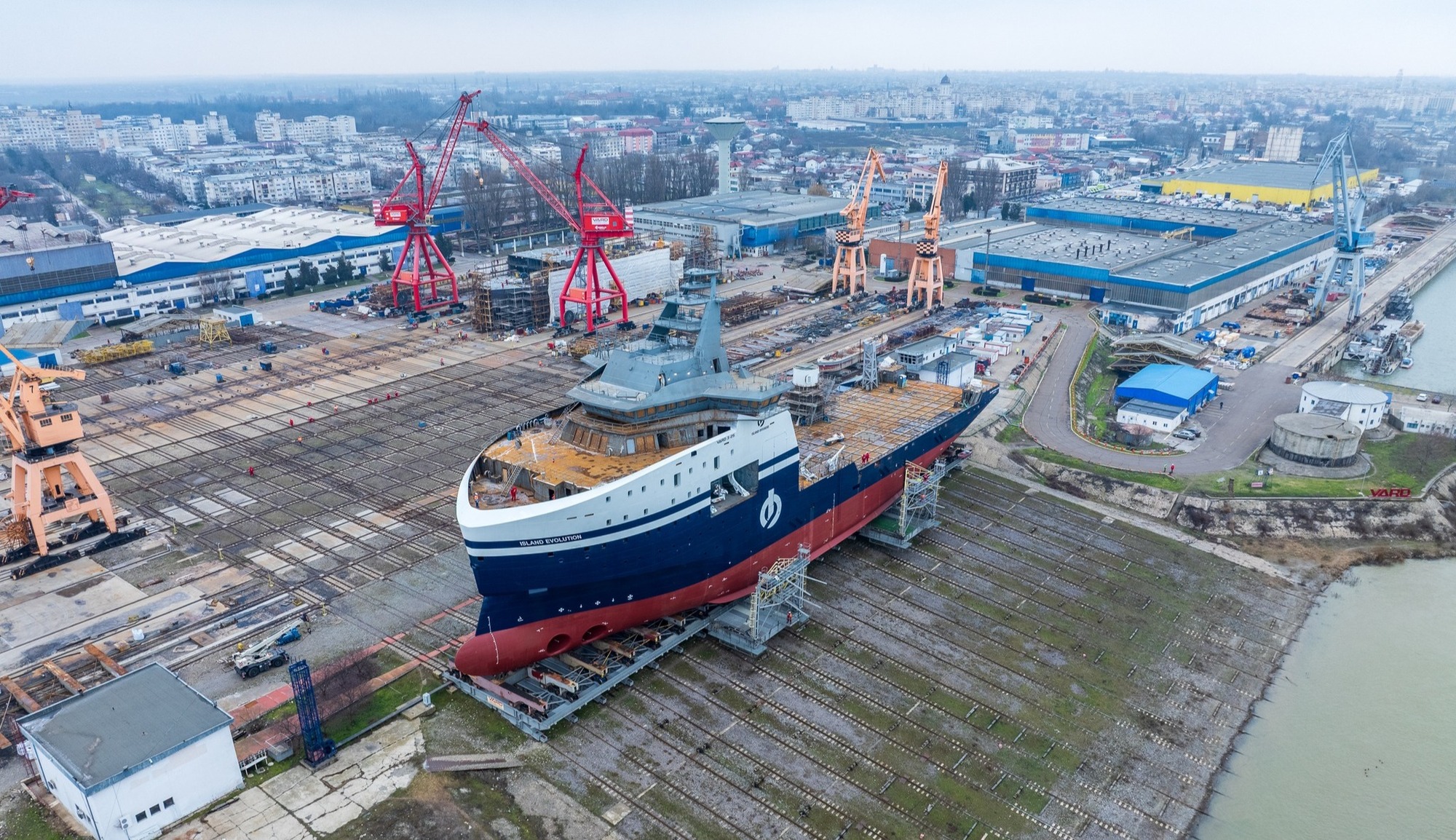
On 9 February, at the Vard Shipyards Romania — Brăila yard, hull NB 977 was launched under the name Island Evolution. This is the first of two hybrid Ocean Energy Construction Vessel (OECV) vessels being built for the Norwegian operator Island Offshore. The company itself reported the event on its LinkedIn.
Inside — technologies and purpose
The vessel is based on the VARD 3 25 design, intended to optimize operations and minimize environmental impact. Key technical characteristics: length — 120 m, a 250 t heave-compensated crane for subsea operations, DP2 dynamic positioning system, accommodation for 120 people.
A notable feature is the hybrid power plant with an energy storage system capacity of 1.7 MWh, a heat recovery system, and preparations for operation on alternative low-emission fuels. This combination reduces emissions and increases autonomy during complex offshore operations — from wind turbine installation to subsea work.
"Over the past twenty years Island Offshore has built many vessels at the Vard yards. All hulls were manufactured in the Romanian yards in Brăila and Tulcea, after which they were towed to Norway for final completion."
— Roy Viggo Fjortft, project manager, Island Offshore
Context: why this matters now
This launch is part of a broader trend: investment in infrastructure for offshore wind farms and the transition to low-emission technologies. Social proof — the pace of project delivery in the Baltic Sea: in July 2025 Orlen installed the first turbine at Baltic Power (planned capacity 1.2 GW), while some players, like Vestas, are adjusting production plans. Together this underlines that demand and supply chains in Europe are being reshuffled, and shipyards in the region are gaining strategic importance.
What’s next — schedule and regional consequences
Outfitting of Island Evolution continues in Romania; in June the vessel will head to Vard Langsten in Norway for final outfitting and commissioning. For regional economies this is more than a single hull — it means preserved jobs, development of engineering skills, and logistical links between yards across the Black Sea–Baltic region.
For Ukraine and its reconstruction of maritime infrastructure and energy independence, this trend has practical significance: the presence of modern shipyards and experience in building vessels for offshore wind creates opportunities for cooperation, technology transfer, and integration into regional supply chains when corresponding projects appear in the Black Sea.
Conclusion
The launch of Island Evolution is not just industrial news. It is a marker: the regional shipbuilding base can deliver modern platforms for low-emission offshore operations. The question for politicians and business is: how quickly and in what form can Ukraine take advantage of this wave of technologies and manufacturing opportunities in its recovery and energy transition?







