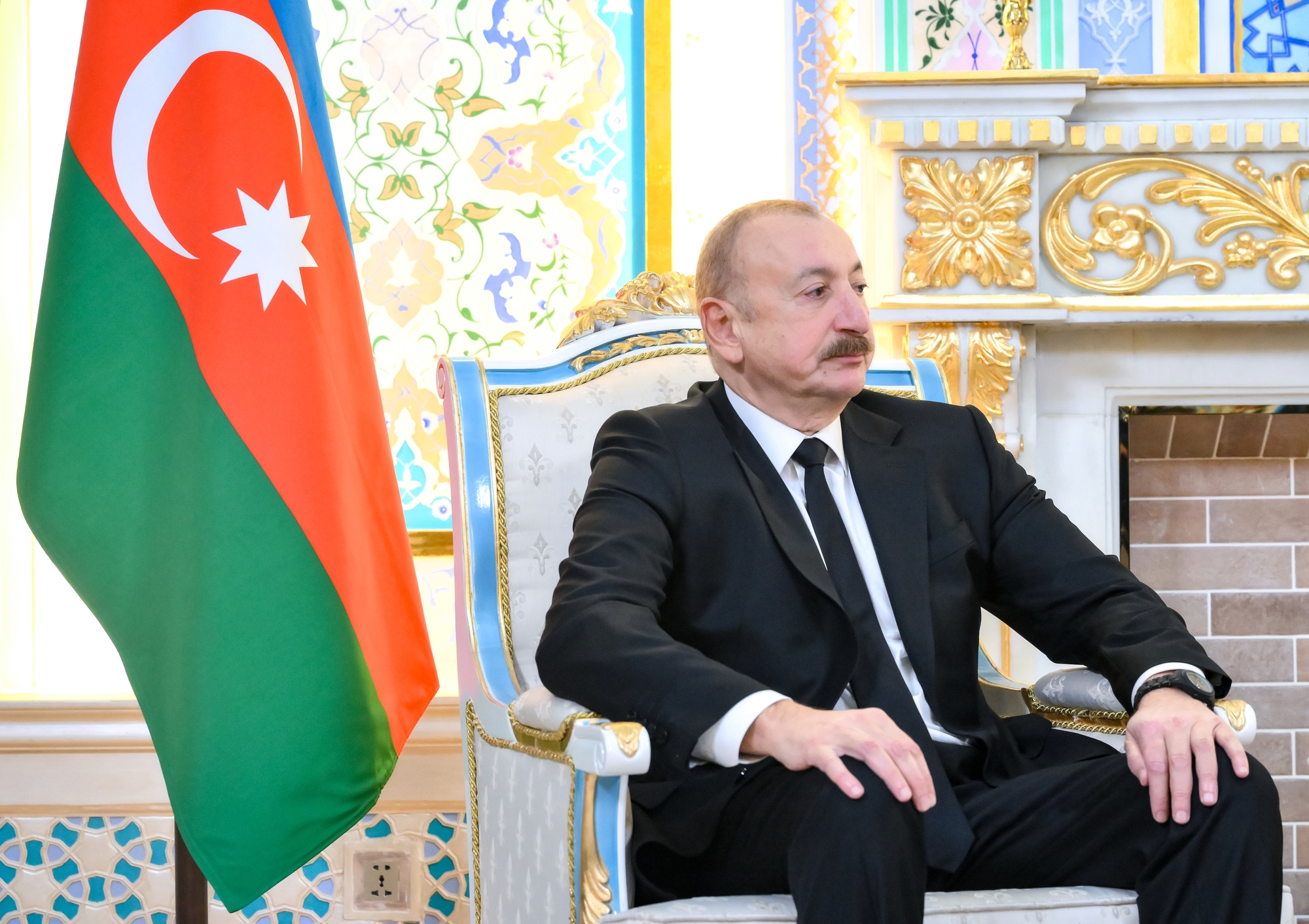
Azerbaijan’s position
At the Munich Security Conference, President Ilham Aliyev stated directly: Azerbaijan considers strikes against its diplomatic missions in Kyiv to be deliberate. According to him, the attacks occurred three times — and this happened even after Baku had provided Russia with the coordinates of its missions.
"There were three strikes on our embassy in Ukraine. After the first one we thought it might have been accidental. Then we provided the Russian side with the coordinates of our diplomatic representations – the consular section, the cultural center, the embassy. Despite this, there were two more strikes"
— Ilham Aliyev, President of Azerbaijan
Chronicle of the incident
On the night of 14 November 2025, Kyiv suffered a large-scale attack by drones and missiles. According to officials, among the struck targets was the Embassy of Azerbaijan. Ukrainian President Volodymyr Zelensky reported hundreds of attack drones and missiles, specifically mentioning "Zircon"; the shelling caused deaths and injuries.
In response, Azerbaijan’s Ministry of Foreign Affairs summoned the Russian ambassador and handed over a note of protest — a diplomatic step that underscores the seriousness of Baku’s complaints.
Why it matters
If Aliyev’s claims are confirmed, this would be not only a military action but also a political message. Providing the coordinates of diplomatic premises is standard practice intended to reduce the risk of accidental strikes. **Repeated strikes after such a disclosure strengthen the case for intentionality** and change the legal and political logic of the incident.
Attacks on diplomatic facilities are prohibited under international law and create a precedent in relations between Russia and third countries. For Baku, this is not only a question of staff security but also a signal for domestic politics and regional cooperation.
"We have acted exclusively through diplomatic channels. We cannot take further action"
— Ilham Aliyev, President of Azerbaijan
Consequences for Ukraine and the region
For Ukraine, the incident complicates the diplomatic architecture of support: if partners feel their missions are at risk, this could complicate the logistics of aid as well as educational and cultural cooperation. At the same time, Baku’s clear, public reaction (summoning the ambassador, the note) shows that the country is not winding down dialogue with Kyiv but is choosing instruments of pressure within the bounds of diplomacy.
Analysts point to another dimension: strikes on diplomatic facilities can be used as a tool of pressure on states that balance between Moscow and the West, with the aim of reducing their readiness to openly support Ukraine.
Summary: what to expect next
The incident raises a simple but important question: can international partners turn diplomatic statements into concrete security guarantees for diplomatic missions? The next move is for Baku and its partners — diplomacy must either respond more forcefully, or the risk of escalation of such practices will grow.
This case illustrates how, in major geopolitical contests, even strikes on a single target can have wide-ranging effects on security, cooperation, and countries’ willingness to act shoulder-to-shoulder with Ukraine.





