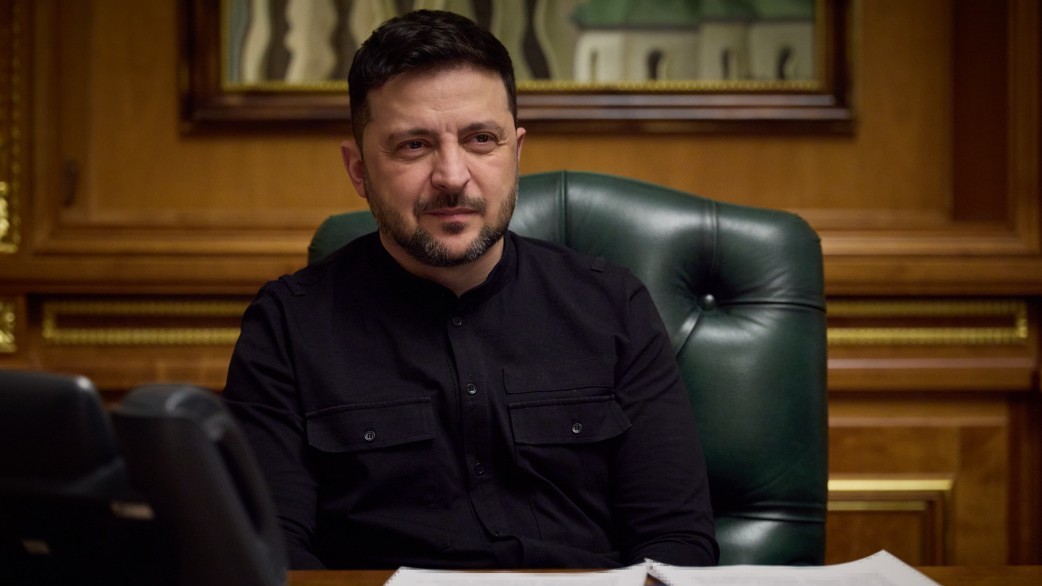
In high diplomacy, quiet agreements matter more than loud statements
President Volodymyr Zelenskyy signed two decrees implementing decisions of the National Security and Defense Council. The first — synchronization of sanctions with the United Kingdom: the restrictions concern 8 individuals and 40 legal entities. The second — support for the government’s proposals on sanctions in the context of UN Security Council resolutions and EU regulations regarding South Sudan.
What was adopted
The restrictions apply to both private individuals and companies registered in various jurisdictions — from Russia to Singapore and the UAE. The list includes participants in networks that help Russia circumvent restrictions and supply equipment and dual-use components for the production of missiles and drones.
"This includes, in particular, citizens of Russia, Azerbaijan, Singapore and New Zealand who are linked to the forced deportation and re‑education of Ukrainian children, as well as to the supply to the Russian Federation of electronics and dual‑use components that are used to manufacture missiles and drones with which Russia strikes Ukrainian cities and communities."
— Press Service of the Office of the President of Ukraine
Why this matters
Synchronizing sanctions with key partners increases their effectiveness: when transactional, logistical and legal "windows" are closed simultaneously, opportunities for circumvention narrow significantly. This is not just a political signal — it is about the real complication of supplying components for Shahed drones and other weaponry, and about disrupting networks involved in the forced deportation of Ukrainian children.
International context
This year Ukraine has already synchronized 14 sanction packages with partners: two each with the US and the United Kingdom, eight with the EU, and one each with Canada and Japan. On 23 October the EU adopted its 19th sanctions package, which included, among other things, Russian banks and crypto exchanges used to circumvent restrictions.
Consequences and risks
The positive effect of synchronization is visible, but not yet guaranteed. Some companies operate through complex corporate structures and jurisdictions with lax oversight. To fully block the flows, partners must not only impose sanctions but actively enforce them: asset seizures, transaction blocking and confiscation of equipment.
What next?
Ukraine is receiving more than declarations from partners — but now it is important to turn this into operational steps: strengthen monitoring of logistics, coordinate financial investigations and control the end use of dual‑use goods. Analysts point out that such coordinated packages raise the cost and time required to restore supplies to Russia, which reduces its capabilities in the short and medium term.
Conclusion: synchronization of sanctions is an instrument that works only through cooperation. The ball is now in the partners' court: declarations must be turned into coordinated actions at borders, in banks and ports.







