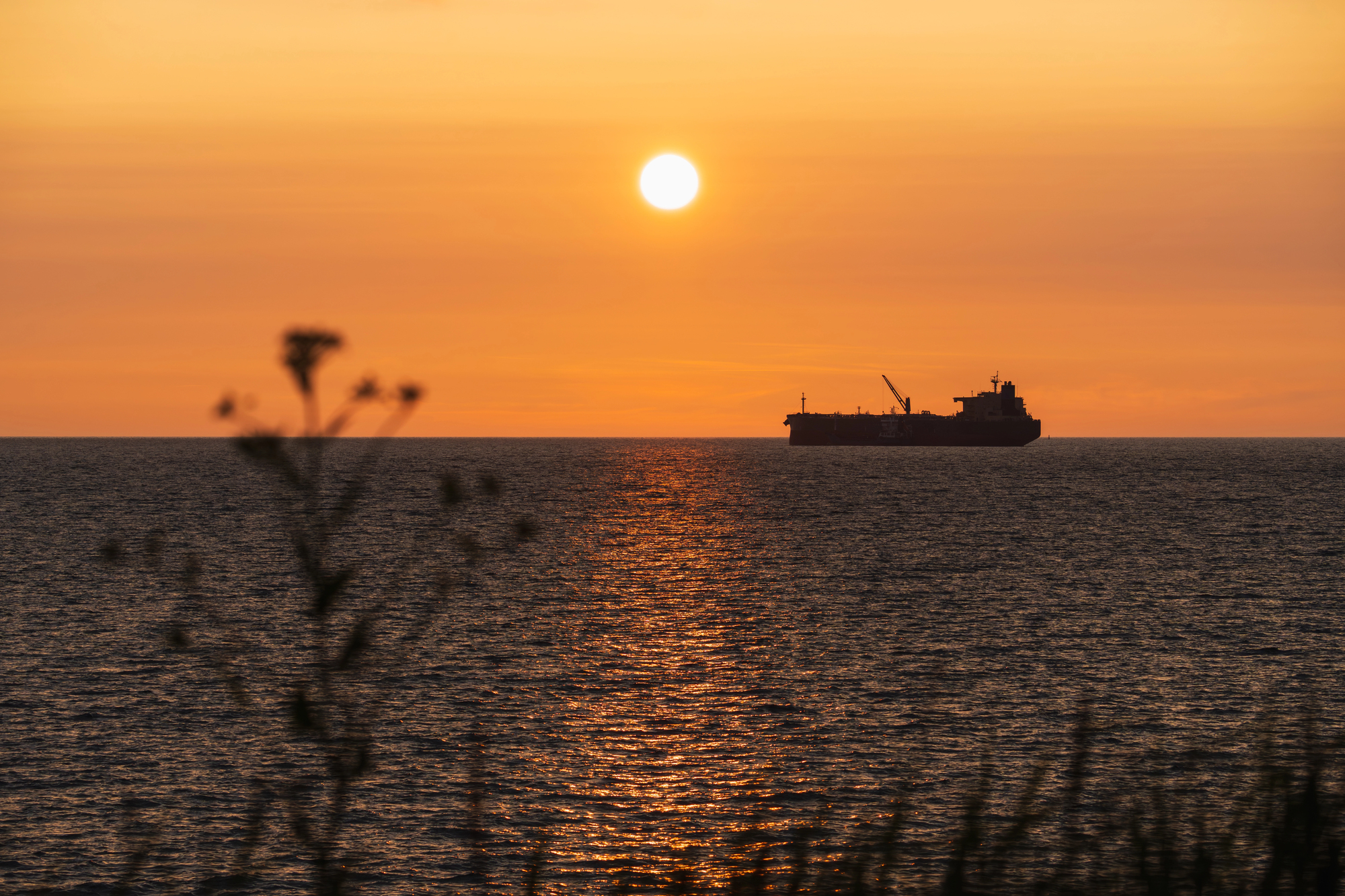
Near occupied Crimea in the Azov Sea waters on the night of July 10, the Unmanned Systems Forces (USF) conducted the largest operation in the current series against Russia's maritime logistics. USF Commander Colonel Robert Brovdi (callsign "Madyar") confirmed: 13 shadow fleet vessels were hit — 10 tankers, one dry cargo ship, one ferry and one marine tugboat.
The General Staff of the Armed Forces of Ukraine expanded this picture: in total that night, the Defense Forces struck 13 tankers, three dry cargo ships, a ferry and an enemy auxiliary vessel — along with the Ilsky oil refinery in Krasnodar Krai and a number of oil terminals and oil depots in Rostov Oblast.
What is this fleet and why is it going through the Azov Sea
According to Brovdi, all struck tankers have been officially identified and are under international sanctions. These are vessels with a deadweight of approximately 7,000 tons and a length of about 140 meters, built between 2006–2012. They were delivering fuel from Taganrog to occupied Crimea, where Putin himself acknowledged at the end of June a monthly fuel deficit of 70,000 tons and promised to increase maritime supplies.
"The battle for fuel for occupied Crimea in the Azov Sea has been ongoing for more than one day. But tonight, the air-sea operation has reached a new level"
Robert "Madyar" Brovdi, Commander of the Armed Forces of Ukraine's Unmanned Systems Forces
A series, not a one-time strike
The operation against the shadow fleet began on July 6. The chronology looks like this:
- July 6 — two tankers ("Captain Barmin" and "Sanar-4") hit in the Azov Sea while transporting gasoline
- July 7 — 8 tankers, a dry cargo ship and a ferry; 10 vessels total for the day
- July 8–9 — 9 more tankers and a series of strikes on 53 targets in Crimea, including 6 power substations as part of the "Crimean Switch Off" operation
- July 9 at night — 14 vessels (12 tankers, a dry cargo ship, a tugboat)
- July 10 at night — 18 vessels according to the General Staff
Over 96 hours, according to the USF, 35 units were struck — tankers, dry cargo ships and special vessels. Operations are conducted by pilots of the "Kairos" unit of the 414th Separate Brigade of the USF "Birds of Madyar," the 413th Separate Regiment "Raid" and the 1st Operational Center of the USF in cooperation with the Navy.
Ilsky Refinery — 17th strike
Parallel to maritime targets, on the night of July 10, drones struck the Ilsky oil refinery in Krasnodar Krai — one of the largest in southern Russia with a capacity of up to 6.6 million tons of oil per year. For it, this is at least the 17th strike since the beginning of the full-scale invasion: the plant has repeatedly temporarily halted operations after previous attacks. Strikes were also recorded on a port terminal and oil depot in Azov and an optical-mechanical plant in Rostov Oblast.
Sanctions bypass scheme under fire
The shadow fleet consists of vessels operating outside official registers or under flags of third countries to circumvent sanctions on Russian oil exports. The General Staff emphasizes the dual function of these vessels: they simultaneously supply fuel to Russian military groupings and transport petroleum products for sale, thus financing military operations. Strikes on identified and sanctioned vessels represent an attack not only on logistics but also on the financial circuit of the war.
If Russia does not find an alternative protected supply route to Crimea by the end of the month — and the land corridor is also under constant fire — the fuel deficit on the peninsula will cease to be Putin's statement and become a measurable factor in the combat capability of the Russian grouping in the south.







