Imagine you are French or German and looking at your electricity bill in the middle of summer. The price per megawatt-hour in the evening jumps to levels usually seen only in winter. The reason is not a single anomaly, but three that converged at one point: a heat wave, a total solar eclipse, and a jellyfish invasion at a nuclear power plant.
Heat that consumes its own energy
The logic of heat is cruel: the hotter it gets, the more people turn on air conditioners, and the less electricity can be generated. Bloomberg reports that electricity prices in Europe continue to surge due to a new heat wave that increases demand for cooling while reducing generation.
The most telling example is France, where nuclear generation is considered the foundation of the entire European energy system. Due to heat and low water levels in rivers, French nuclear power plants were forced to reduce electricity generation or shut down reactors because there was insufficient water for cooling. This was compounded by an almost comical, but costly problem: a jellyfish invasion at one of the facilities this week cost over 3 gigawatts of capacity.
The result is that intraday prices in France and Germany reach approximately 300 euros per megawatt-hour from 20:00 to 21:00 local time, and are forecast to rise even higher on Thursday.
On August 12, the sun will "turn off" for two hours
A thermal shock is joined by an astronomical one. On August 12, Western and Northern Europe will be covered by a total solar eclipse — the total phase will pass through parts of Portugal, northern Spain, Iceland and Greenland, with the best viewing conditions expected in Spain, where the phenomenon will coincide with sunset.
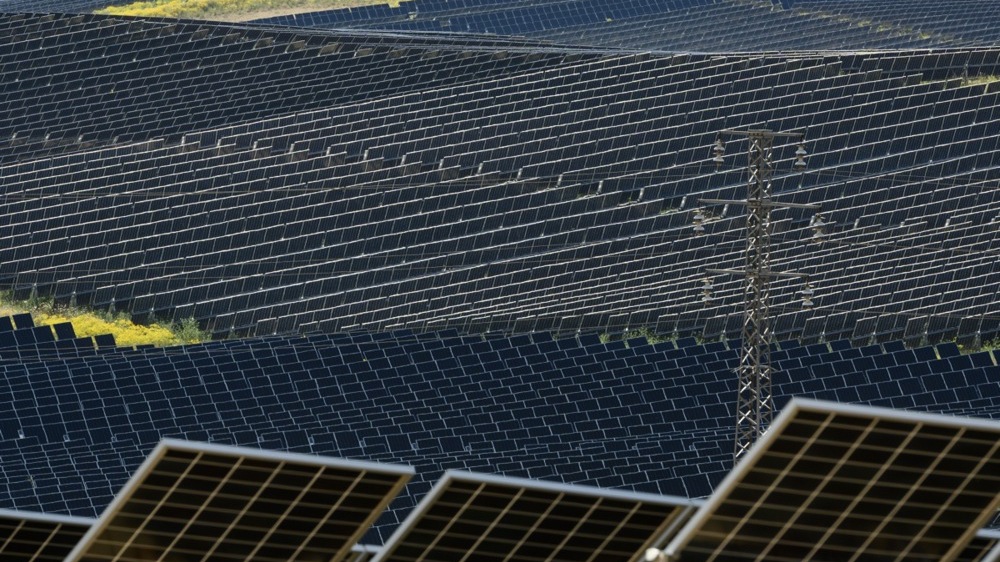
For the energy system, this is not a spectacle but a gap in the supply schedule. According to Entso-e's forecast — an association of European electricity grid operators — electricity generation in Europe could be reduced by approximately 9.7 gigawatts during the period from 19:15 to 21:30. In Britain alone, according to the national operator, the eclipse could cause a loss of just over 1 gigawatt of solar generation.
9.7 GW is roughly the consumption of several million European households at once. If this gap in the schedule coincides with the evening demand peak after a scorching day, prices at the moment of eclipse could even break current records.
Ukrainian contrast: when there is too much sun
While Europe counts lost gigawatts, Ukraine sometimes faces the opposite problem. Ukrenergo, the system transmission operator, on certain days is forced to limit solar generation to 2,000 MW due to its surplus, according to the company's board chairman Vitaliy Zaichenko.
Industrial batteries help balance this surplus: Ukraine currently has about 500 MW of storage capacity installed, and by the end of the year it could reach 1,000 MW.
The European case shows the flip side of the same coin: a system too dependent on weather — whether it's the sun or river water for cooling nuclear power plants — becomes vulnerable to any anomaly, natural or astronomical. The question for the coming years for everyone, including Ukraine, is: will battery storage and backup capacity development keep pace with the speed at which climate and natural cycles make energy systems fragile precisely when demand is highest?