The gist
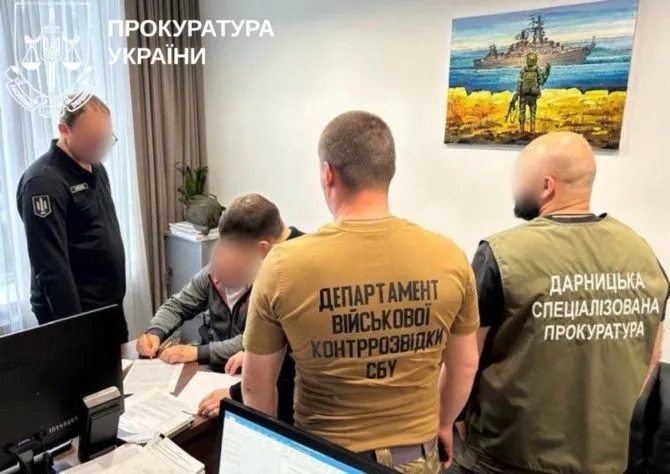
The Darnytsia Specialized Prosecutor's Office for Defense has sent indictment papers to court against an accountant of a National Guard military unit and six civilian accomplices. According to the Office of the Prosecutor General, an organized scheme was put in place to embezzle funds from the fund for monetary support of servicemembers — in total almost UAH 11.5 million.
How the scheme worked
According to investigators, between 2020 and 2024 the accountant systematically underreported payroll accruals by about UAH 30–35 for roughly 3,000 servicemembers. Payment statements contained the bank details of third parties, to whose accounts these “saved” amounts were transferred. The money was then converted into cash and divided among the members of the group.
This mechanism illustrates a simple rule: small systematic deviations across a large base of payees and over several years produce a sizable financial effect. Elements of laundering and the use of third-party bank accounts added financial resilience to the criminal chain.
“During 2020–2024, when preparing payment statements she systematically underreported monthly accruals for approximately 3,000 servicemembers by UAH 30–35. In addition, the statements included the bank details of third parties, to whose accounts the funds formed as a result of such underpayments were transferred.”
— Office of the Prosecutor General
Consequences for servicemembers and accountability
At first glance UAH 30–35 may seem insignificant, but when multiplied by thousands of people and dozens of pay periods the result becomes material for the budget and for soldiers’ trust in the payment system. Members of the group were notified of suspicion as early as June last year. They are accused of fraud on a large and especially large scale and of legalizing proceeds from crime (Parts 4 and 5 of Article 190, Part 2 of Article 209 of the Criminal Code of Ukraine). If convicted, the suspects face up to 12 years in prison with confiscation of property.
What this means for the support system
This case is not just a criminal episode. It raises questions about internal controls, payment digitization, and transparency of accounting in defense structures. Experts point out that to prevent such schemes from recurring, both technical measures (automated reconciliations, anomaly analytics) and organizational changes (division of duties, independent audits) are needed.
Now the ball is in the court: will the money be recovered, and will law enforcement and the supply system take the critical lessons needed to reduce risks for those defending the country?