In Brief
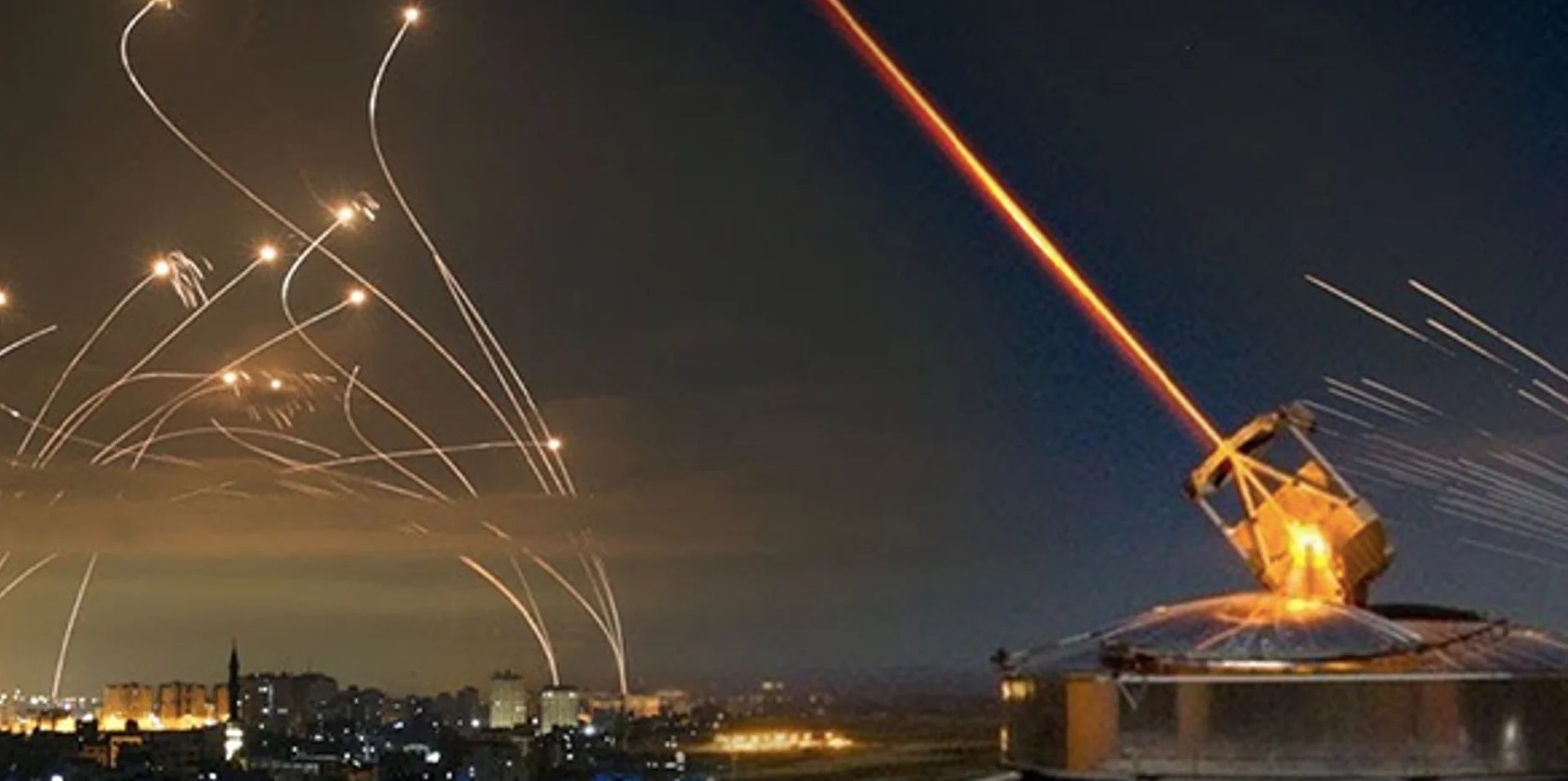
Laser weapons can indeed become an important tool for defending critical facilities, but their use in real conditions in Ukraine is limited by the climate, the need for high-power energy and quality radar systems. Military experts told LIGA.net this in comments, while commentators at Defence Express and international media (The Atlantic) add context: the technology is progressing but still "raw" to fully replace mass means in war.
Why climate matters
A laser beam is sensitive to the atmosphere: fog, snow, rain, aerosols and turbulence scatter and absorb the beam's energy. That is why systems that have proven themselves in Israel's dry climate do not guarantee the same effectiveness in a Ukrainian winter or during bad weather. Experts emphasize: without accounting for local weather conditions, the expected effect drops significantly.
Technological integration — the key to operation
Lasers do not work as autonomous "shields." To hit moving targets you need to combine a high-power beam with quality radar and real-time control systems. As Anatolii Khrapchynskyi, deputy general director for production of EW systems, explained:
"The Ukrainian laser is indeed effective, but against static targets at short range. To increase that range, you need to build up the power. And to improve hit probability, you need quality radar systems that allow you to recalculate the target's trajectory in real time and, accordingly, steer the beam to follow it."
— Anatolii Khrapchynskyi, Deputy General Director for EW Systems Production
Mass deployment versus high technology
The Ukrainian front today faces massed strikes. What matters here is not only the perfection of an individual device but also its availability and scalability. Ivan Kyrychevskyi (Defence Express) reminds us: you can have a few working lasers for important sites, but that will not replace the need for a large number of effective, even if simpler, systems in mass combat conditions.
"Even if our enthusiasts build a working laser system that will protect a certain important facility pointwise, that does not mean you can move all mobile fire groups from machine guns to lasers."
— Ivan Kyrychevskyi, Defence Express commentator
Where progress is confirmed — and what it actually delivers
Ukrainian developments have already been demonstrated: in April 2025 the command of the Unmanned Systems Forces showed a video of the Tryzub installation, and The Atlantic wrote in February 2026 about the Sunray system, after the use of which a drone caught fire "in seconds." These are important signals: the technology works in specific scenarios. Articles also note that the conditional cost of one laser "shot" can be low ($5), but that does not account for capital expenses on power generation, cooling, guidance systems and integration into air defense.
Conclusion: a pragmatic way forward
Lasers are not a magic replacement for conventional air defense, but they have their place: protecting static critical facilities, destroying light UAVs and serving as precision strike weapons in favorable weather conditions. The expert community agrees: investments in laser development must be combined with scaling up energy, radar/radiolocation and mass defensive means. The question for the state and partners is — are we ready to convert these prototypes into combat systems that will be useful in our conditions?
Sources: LIGA.net (expert comments), Defence Express (reviews), The Atlantic (report on Sunray), official demonstrations of Ukrainian systems (April 2025).





