What happened
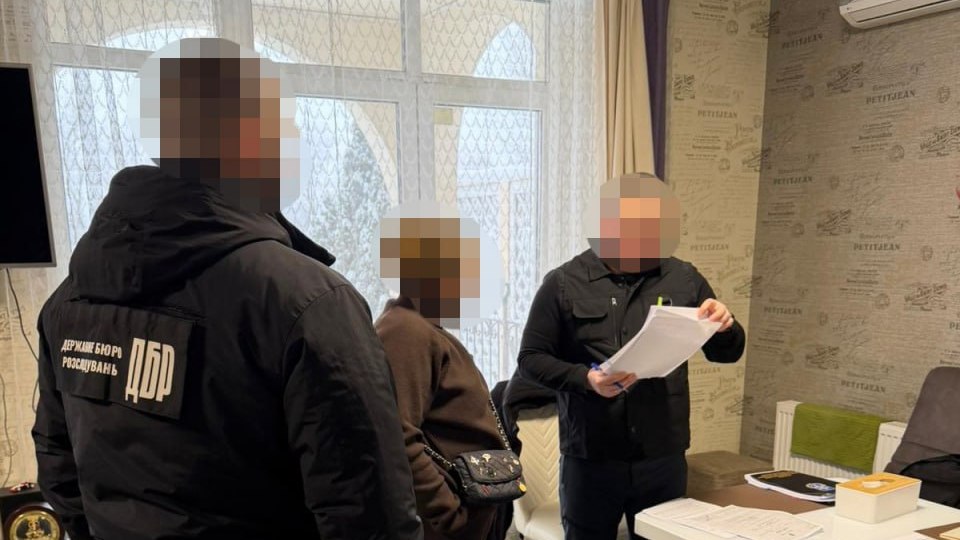
The State Bureau of Investigation announced suspicions against the former head of the legal department of one of the bankrupt Kharkiv banks. Investigators believe she was involved in the illegal removal of real estate from the bank's ownership worth more than 200 million UAH. The court ordered detention with an alternative in the form of bail — 25 million UAH.
How, according to investigators, the scheme worked
"To carry out the deal, the official involved a legal entity affiliated with the bank's owner, to which the real estate was re-registered. The representative of that company was another bank official who acted under the direction of the former head of the legal department"
— Press service of the State Bureau of Investigation
The suspicion was served under Part 5 of Article 191 of the Criminal Code — embezzlement of property on an especially large scale. The article's sanction provides for up to 12 years of imprisonment with confiscation of property.
Context and consequences
At first glance — this is a criminal case against a specific official. But there is a broader political and economic dimension: significant corruption schemes in the financial sector undermine the trust of clients and investors, complicate the recovery of banks after the wartime crisis, and may reduce resources that could be available for economic stabilization and even indirectly for supporting the country's defense capability.
Law-enforcement response framework
This case is not isolated. Law enforcement point to a number of parallel investigations aimed at blocking corruption mechanisms in supplies to state bodies:
- a scheme for supplying food to combat units of the Armed Forces in Dnipropetrovsk region has been blocked;
- on February 3, the DBR reported suspicions against the director of a company that supplied substandard protective suits to the State Emergency Service of Vinnytsia region.
What next
Now the case must be proven in court: a tangible result of the investigation is not only a conviction, but also the actual return of assets and bringing all those involved to account. For society and business it is important that the investigation does not remain merely a declaration, but becomes a mechanism for restoring justice and trust.
Questions for oversight: will it be possible to return the diverted assets, and will this lead to systemic changes in banking practices to protect Ukraine's resources during and after the war?







