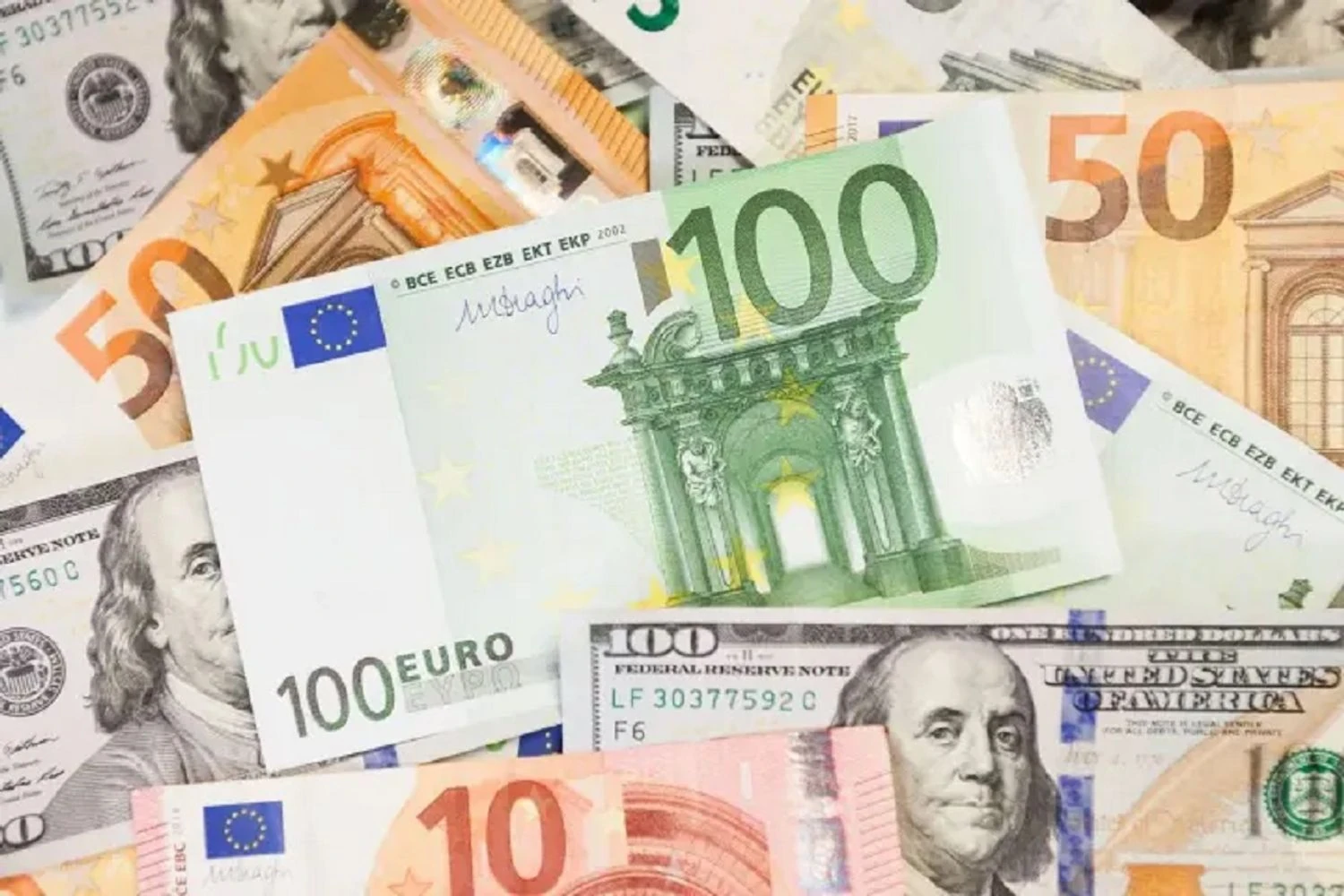
For families who have been saving hryvnias for a trip to Europe or waiting for money transfers from relatives abroad, Tuesday brought bad news: the euro is rising noticeably more than the dollar, and the difference is already noticeable at the nearest exchange point.
What changed specifically
The National Bank of Ukraine set the official exchange rate on August 4 at 44.79 hryvnias per dollar — 15 kopiykas higher than the previous day, when the rate was 44.64 hryvnias. The euro rose even more significantly — to 51.27 hryvnias. According to other NBU data, the exact values are 44.7876 hryvnias per dollar (+155 kopiykas) and 51.6423 hryvnias per euro (+37 kopiykas), while the zloty appreciated to 12.0006 hryvnias (+11 kopiykas).
In the cash segment on Tuesday morning, banks sold the dollar for 44.52–45.02 hryvnias, the euro for 51.20–51.90 hryvnias, and the zloty for 11.55–12.06 hryvnias. On the interbank market, quotes held at 44.80–44.85 hryvnias per dollar and 51.64–51.68 hryvnias per euro.
Why this matters for your wallet, not just traders
- A more expensive euro means costlier travel, education, and housing rentals in Europe for those maintaining ties with displaced relatives.
- The rising zloty rate will be felt by workers in Poland who send money home — currency conversion will become less favorable.
- The difference between cash and interbank rates (up to 20-30 kopiykas) means that the timing and location of currency exchange directly affect the amount people receive.
The second warning signal — inflation
Simultaneously with exchange rate fluctuations, the National Bank worsened its inflation forecast for the end of 2026 — to 10% instead of the previously expected 9.4%, and raised its assessment for 2027 to 6.9% from April's 6.5%. This means that store prices will decline more slowly than the regulator promised just a few months ago, and the purchasing power of wages and pensions will recover later than planned.
Currency speculation doesn't pay off — KIT Group analysts already warned that attempts to profit from hryvnia fluctuations more often lead to losses than gains.
What to do now
For most Ukrainians, a rational strategy remains unchanged: don't chase the exchange rate, but save in the currency in which future expenses are planned — hryvnias for current needs, foreign currency for major goals abroad. The question that remains open: will the NBU stabilize the rate by the end of the week, or will August become a month of slow but steady euro appreciation against the dollar.