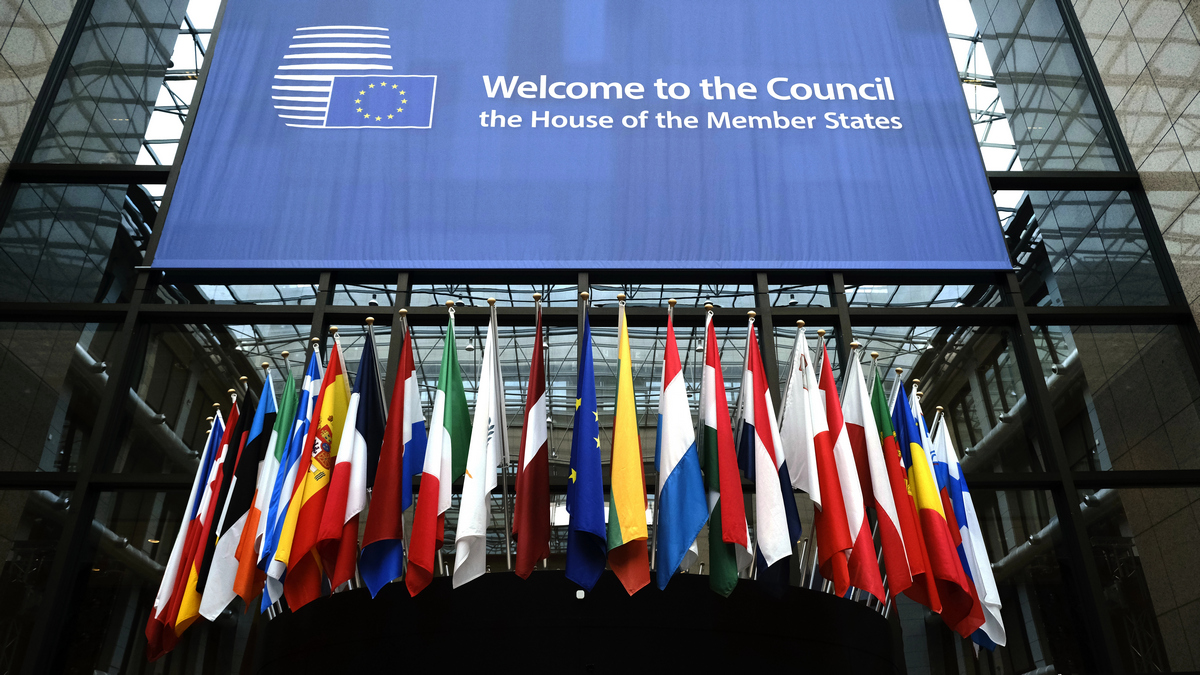
Imagine a family of 27 brothers and sisters who inherited a shared business. One of them — Germany — controls nearly a quarter of the assets. The youngest — Malta — owns a share that's hardly worth dividing on a calculator. This is exactly what the European Union's economy looks like after Eurostat published its fresh 2025 ranking.
Three countries — half of the bloc's economy
The combined gross domestic product of all European Union member states in 2025 was 18.8 trillion euros. But a lion's share of this sum is formed by just a handful of countries.
Germany remained the European Union's largest economy in 2025 with a GDP of 4.47 trillion euros. It was followed by France (2.99 trillion euros), Italy (2.26 trillion euros), Spain (1.69 trillion euros), and the Netherlands with an economy of 1.17 trillion euros. In other words, Germany, France, and Italy combined account for nearly half of the union's entire economic pie — 23.8% for Germany, 15.8% for France, 12% for Italy.
For millions of people, this is not an abstraction: these three economies determine how many jobs will be available for suppliers from Central and Eastern Europe, where investments will go, and how sensitively the EU will respond to a recession in one of its capitals.
Poland quietly rises, Malta remains a dwarf
What's more interesting is what happens beyond the top 5. Poland found itself right after the Netherlands, strengthening its position among the EU's largest economies — a result of years of industrial growth and investments that many in Western Europe underestimated not long ago.
At the opposite end of the list are countries whose weight in the combined GDP is measured in tenths of a percent. Malta has the smallest economy in the EU — it accounts for only 0.1% of the total. Next to it are Cyprus, Estonia, and Latvia: each of these countries accounts for 0.2% of the EU's total GDP.
This doesn't mean that people in these countries live worse than the average Pole or German — it's simply that the economies themselves are small relative to population and market size.
Where the count is different: wealth per capita
This is where the story turns 180 degrees. The leaders in the ranking for GDP per capita adjusted for purchasing power parity standards are Luxembourg and Ireland: the indicator in these countries was 238.7% and 237.3% of the EU average, respectively — approximately 2.4 times higher than the European average.
But this is more of a statistical trick than actual prosperity for each resident. In Ireland, a significant contribution to GDP is made by foreign companies that later take their profits abroad to their owners. In Luxembourg, the high indicator is formed partly thanks to cross-border workers: they come to work every day and create the country's GDP, but live outside its borders and are not counted in the official population. So the "richest person in the EU" on average — is partly a bookkeeping illusion, not money that actually ends up in the pockets of local families.
The lowest welfare indicators were recorded in Bulgaria (68.1% of the EU average) and Greece (68.4% of the EU average) — here the difference is not statistical but quite tangible in bread prices, rent, and teachers' salaries.
And where is Ukraine in this picture
Ukraine's nominal GDP in 2025 was 8.93 trillion hryvnias, with the country's economy growing by 1.8% year-on-year. Converted to euros, this is approximately 180–190 billion — a sum that would place Ukraine between the medium and smaller economies of the union, somewhere in the company of Slovakia or Bulgaria, but with a population that significantly exceeds both countries combined.
The difference is obvious: a wartime economy that has lost part of its territories, industry, and people still generates a GDP comparable to peaceful EU countries many times smaller in area. The question that remains open is how quickly this figure will start to grow if military operations cease and reconstruction becomes not a slogan but a real investment flow.