Why it matters
The destruction of the Kakhovka Reservoir is a blow to the water, agricultural and energy systems of the south. According to government estimates, direct damages from the destruction amount to $2.79 billion, while total losses exceed $11 billion. In this context, the issue is no longer just the restoration of a single structure, but the entire regional model of water use — from supplying water to cities and farms to a long-term strategy for adapting to climate change.
What the government proposes
The Ministry of Economy, Environment and Agriculture has announced the development of an alternative water-use model for the southern oblasts. The government has already adopted the first practical steps: the launch of construction of water pipelines in Dnipropetrovsk and Mykolaiv oblasts, which are expected to partially offset the water deficit in the coming years.
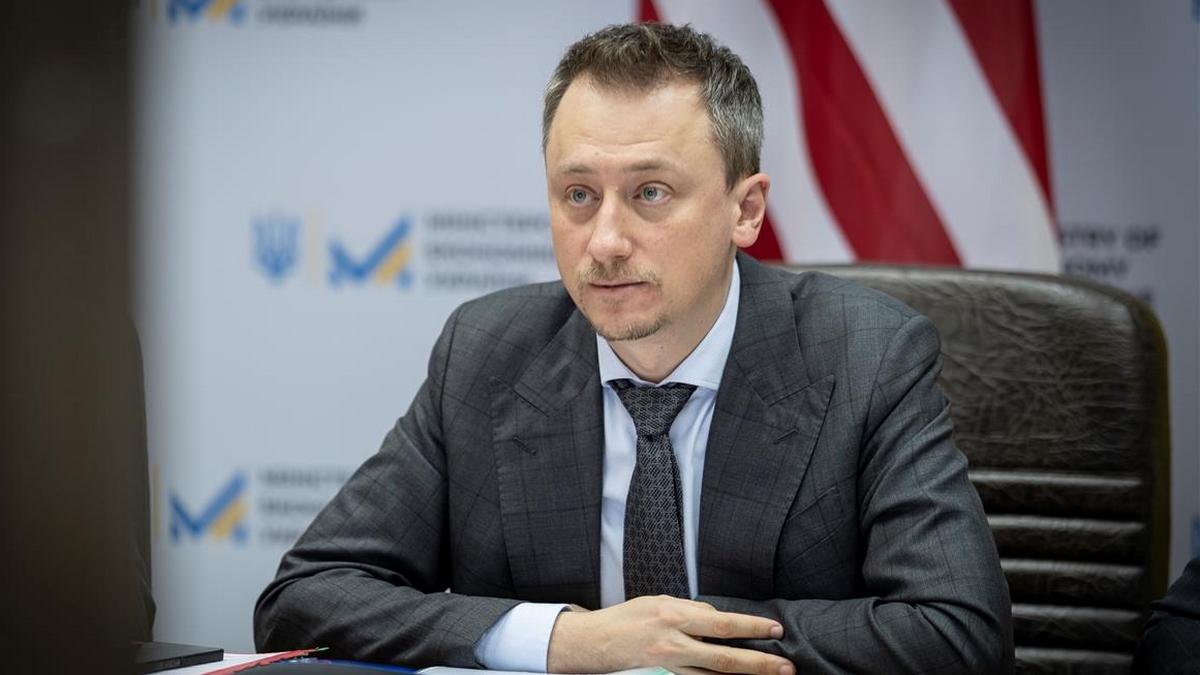
"Therefore we are considering not only the question of possible restoration, but also a new model of water use for southern Ukraine, one more adapted to climate change and the real needs of the region"
— Oleksii Sobolev, Minister of Economy, Environment and Agriculture (interview with "Interfax-Ukraine")
The key logic is diversification of sources and delivery routes: less dependence on a single large hydraulic structure, more local and interregional networks, systems for retaining moisture in soils, and modernization of irrigation networks. This approach aligns with global practices, where after critical events the priority becomes network flexibility and resilience to climate risks.
Limitations and risks
Full restoration of the Kakhovka HPP is currently complicated not by technical details, but by questions of security — due to the temporary occupation of the left bank of the Dnipro. As the minister explained, implementation of capital-intensive projects is impossible until control and security guarantees are restored.
"Under such conditions, the implementation of projects to rebuild hydraulic structures or create new capital-intensive facilities cannot be considered until Ukraine restores control over all adjacent territory and an adequate level of security is ensured"
— Oleksii Sobolev, Minister of Economy, Environment and Agriculture (interview with "Interfax-Ukraine")
At the same time, President Volodymyr Zelenskyy said that the draft negotiated peace agreement provides for the restoration of the reservoir, but this is a political decision that requires the return of control over the territories and funding.
What will change for people and the agricultural sector
For residents of the south — it is a matter of access to drinking water and the stability of city water supplies. For farmers — the ability to plan spring fieldwork and to invest in crop rotations and land reclamation. For the state — a test of its ability to mobilize partner funds and to transform urgent aid into a long-term infrastructure strategy.
Conclusion
The government is choosing the path of adaptation: building local water pipelines and revising the water-use model where restoring a large hydraulic structure today is risky. This is a practical response to the combination of military and climate challenges. The next question is how quickly partners will turn declarations and technical solutions into funding and contracts that will actually improve the lives of people in the south.