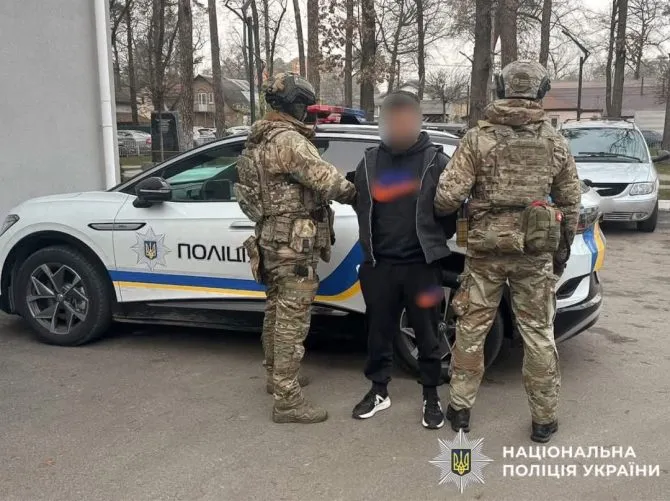
A forty-year-old man entered a supermarket in Sofiivska Borshchahivka wearing a mask and carrying an object resembling a pistol. The saleswoman handed over the cash from the register. The man left and probably thought he had gotten away.
He was wrong.
Police in Bucha district analyzed surveillance footage, reconstructed the assailant's route and identified him. The local resident has been detained. According to the police, he faces up to fifteen years in prison for robbery.
Meanwhile in Mykhailivka-Rubezhivka, video recordings became a key tool in solving a murder. Law enforcement used cameras to track the suspects' movements and confirm their involvement in the crime. As a result, the police identified three people — all have been detained.
One thing unites both cases: it was not informant work or witnesses, but video footage itself that became the starting point for the investigation.
This is not a coincidence. After 2022, Kyiv region significantly expanded its network of surveillance cameras — partly in response to community requests, partly for defense needs. A side effect: law enforcement gained a tool that was previously available mainly in large cities. Bucha district is one of the areas where this infrastructure is already delivering practical results.
However, between "the camera recorded it" and "the crime is solved" there still exists a chain that depends entirely on human factors: who reviews the footage, how quickly, and whether there is a response protocol. In these two cases the system worked. But being systematic is not the same as two successful cases.
The question is not whether the cameras work. The question is whether the Kyiv region police have a unified standard for handling video evidence — and whether it is documented anywhere beyond polished press releases.