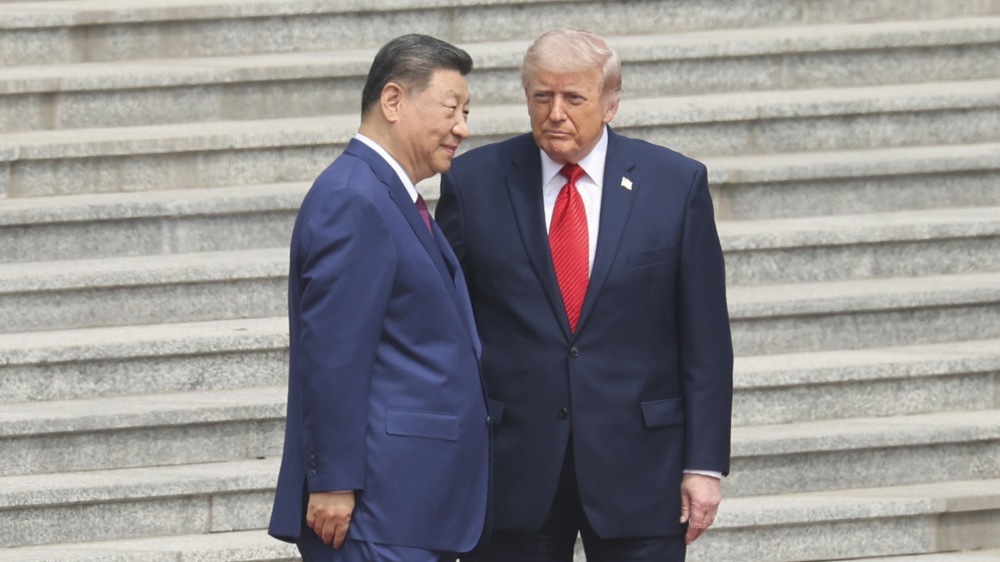
Aboard Air Force One after a two-day summit in Beijing, Donald Trump told journalists tersely: "We didn't discuss tariffs. They pay significant tariffs, but we didn't discuss that". According to Bloomberg, the discussion concerned a possible extension of the "tariff truce," which expires in November 2026.
What was promised before the meeting
The gap between the rhetoric of Trump's team and the president's own words is telling. U.S. Trade Representative Jamieson Greer called the creation of a so-called "Board of Trade" a key "deliverable" of the summit back in March. According to Greer, the mechanism provides for reducing tariffs on non-critical goods by at least $30 billion on each side—without touching sensitive sectors such as semiconductors and rare earth metals.
"This is not a situation where we're forcing China to change how it manages its economy. But there is space where we can optimize trade to achieve greater balance."
Jamieson Greer, U.S. Trade Representative, Fox Business Network
Treasury Secretary Scott Bessent confirmed in comments to CNBC that the parties also discussed an "Investment Board." But Greer himself cautioned against excessive expectations: "I don't think we're at the level of relationship with China where we can talk about major investment programs".
Context: where the "truce" came from
The current pause in the trade war is the result of a Trump-Xi meeting in October 2025 on the sidelines of APEC in Busan. Then, according to Reuters, overall tariffs on Chinese goods were reduced from 57% to 47%—primarily through cutting the 20% "fentanyl" tariff in half in exchange for Beijing's commitment to strengthen control over precursors. Before that, in August 2025, Trump signed an executive order extending the truce for another 90 days—without it, tariffs on Chinese goods would have skyrocketed back to 145%.
What actually happened in Beijing
The Beijing summit brought "stabilization"—but not a breakthrough. According to Euronews, both sides agreed to maintain the truce and discussed mechanisms for managing future disputes, but made no specific tariff commitments. Xi called the meeting "historic" and "landmark," Trump—"fantastic."
Analysts assess the results cautiously. Harvard professor Graham Allison predicted in comments to CNBC that the informal truce "I suspect will become a formal agreement"—but that's still ahead. Atlantic Council analyst John Lipsky was more pointed: most "victories" merely return relations to the point before the trade war in spring 2025, and the most complex issues are postponed for later.
- Taiwan: Trump said "no commitments in any direction"—Beijing publicly warned that this issue could lead to direct confrontation.
- Rare earth metals: Trump claimed the issue was "resolved," China confirmed a one-year pause in export restrictions—details remain unclear.
- Nvidia: CEO Jensen Huang joined the delegation at the last minute, but no breakthrough on chips occurred.
- Iran: Both leaders stated similar positions on the Strait of Hormuz—this is the only publicly confirmed substantive result.
Why "didn't discuss"—is also a position
Trump's public removal of tariffs from the summit's purview reads in two ways. On one hand—it's a signal to Beijing: pressure to reduce tariffs is not Washington's priority right now. On the other—it removes responsibility from the president for any concrete result: if the truce is not extended in November, formally "no agreements were made."
As CBS News notes, the summit took place against the backdrop of a trade war that in 2025 raised mutual tariffs above 100% for several weeks—and both economies want to avoid a repeat. But current 47% tariffs on Chinese goods are still higher than during Trump's first presidency.
If the "Trade Board" does not receive legal form with clear commitments from both sides by the end of summer—the November deadline will turn into another public auction, where stakes will be higher each time.