Saint Nicholas Day remains one of the most beloved winter holidays for both children and adults. After the Orthodox Church in Ukraine switched to the New Julian calendar, it is celebrated on December 6. The celebration combines elements of church veneration and folk rituals focused on caring for others.
Origins of the holiday
The prototype of the saint is considered to be Nicholas of Myra, who was born in Patara on the Lycian peninsula sometime between 270 and 286. He came from a devout family, later moved to Myra where he was ordained, and is primarily known for his charity. After his parents’ deaths he bequeathed his inheritance to help the poor, sometimes leaving clothing and food in the homes of those in need and giving toys to children secretly.
According to hagiography, Nicholas rescued prisoners, defended the innocent from the death penalty, and assisted travelers. The faithful also attribute miracles to him, including healings after death. In Christian tradition he became a symbol of mercy and guardianship over those in need of support.
Regional customs of celebration
One of the most widespread traditions is giving gifts to children. In Western Europe gifts are often placed in stockings, while in Ukraine they are usually left under the pillow. Well-behaved children received sweets, toys and small presents, while naughty ones were sometimes given a symbolic "rod" or a lump of coal.
Celebrations had local particularities. In the Kyiv region homes and livestock could be sprinkled with holy water for protection from misfortune. In Podolia the head of the household was supposed to be the first to enter the yard after returning from church. In the Kharkiv region there was a practice of three-day celebrations with the preparation of kutia (a sweet grain pudding) and uzvar (dried-fruit compote) for commemorations.
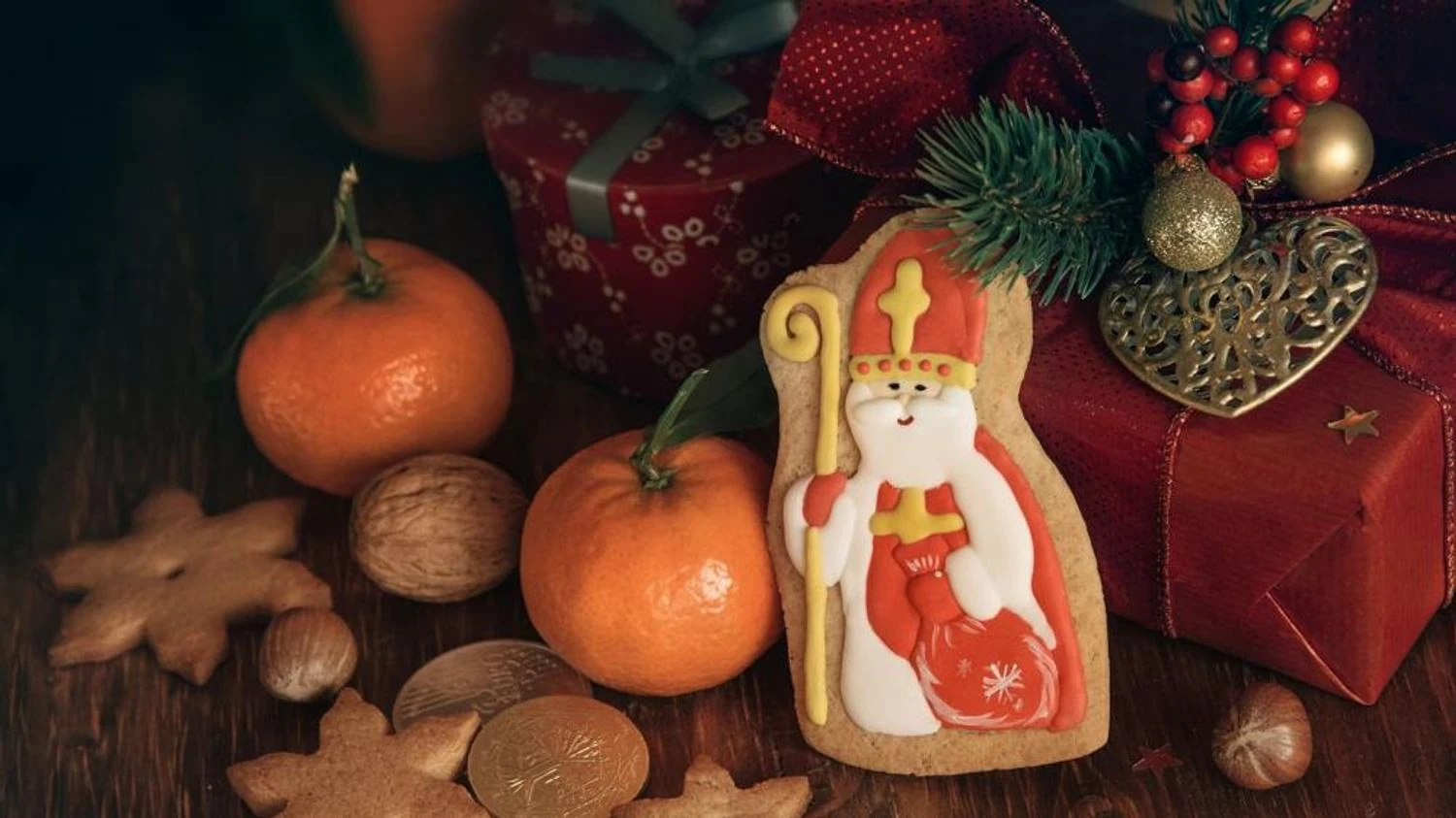
For the day people also prepared the traditional honey cookies "mykolaychyky", which more often took the form of a star or an angel. Today such treats come in various shapes and decorations — icing and sprinkles — and are often used as part of gifts.
Restrictions and advice
The holiday is associated with reconciliation, so it is not customary to hold grudges or refuse help to those who ask. Long journeys were avoided on this day. It was traditionally believed that settling debts on the last day of the year would ensure the family's prosperity thereafter.
The main principle of the celebration is sincerity in showing kindness and attention to those in need, as well as care for family and loved ones.