In brief
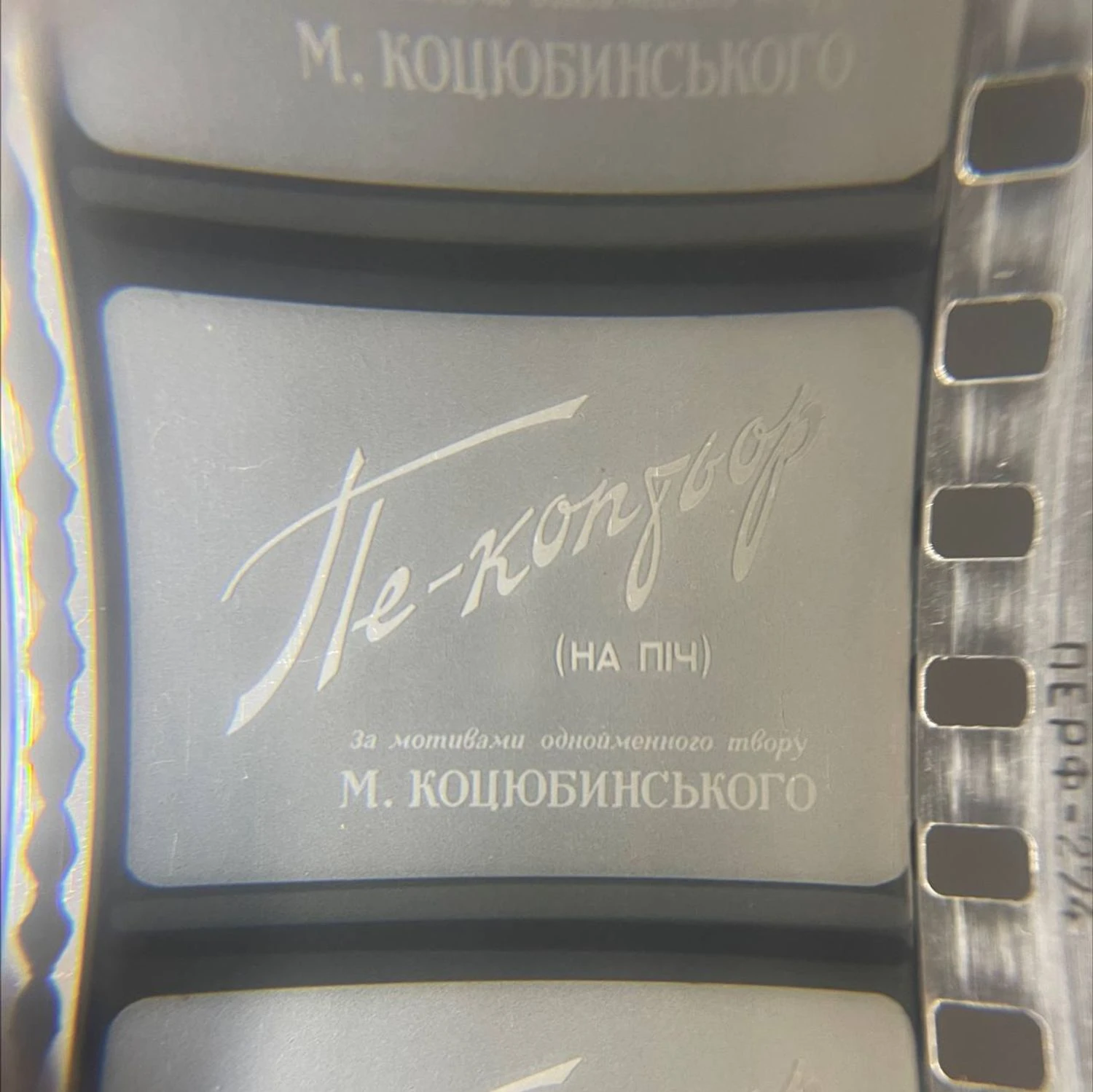
At the Mykhailo Kotsiubynskyi Literary and Memorial Museum-Reserve in Chernihiv, rare Ukrainian-language versions of film adaptations of the writer's works were discovered. The information was shared by UNN and the Dovzhenko Center, which will process the find.
What exactly was found
The find was recorded by chief collections keeper Kateryna Fedko and Dovzhenko Center film scholar Oleh Olifer. Among the artifacts discovered are film copies from the 1950s:
- 35 mm film copies of the short films «Пе-коптьор (На піч)» (1956, dir. Volodymyr Karasiov) and «Коні не винні» (1956, dir. Stanislav Komar) — Odesa Film Studio;
- 16 mm film copies of the feature films «Кривавий світанок» (1956, dir. Oleksii Shvachko) and «Дорогою ціною» (1957, dir. Mark Donskoy) — Dovzhenko Film Studio (Kyiv).
According to the Dovzhenko Center, after assessing the physical condition of the films they will be transferred to the Center's Film Laboratory for digitization and preservation.
"The find in Chernihiv is rare and a great piece of luck. Most Ukrainian films of the 1950s–1960s had Ukrainian-language versions, but a large portion of them are currently considered lost. After examining the condition of the films and carrying out the necessary preparation, the films will be digitized by the Dovzhenko Center's Film Laboratory."
— Dovzhenko Center
Why it matters
These films are more than mere cinematic exhibits. They recreate the Ukrainian-language presence in the cultural field of the past century and allow researchers, educators, and audiences to recover the local linguistic and aesthetic context of the adaptations. For the study of film history, language policy in the arts, and educational programs, the find has practical value.
Moreover, restoration and digitization of such artifacts increases the chances of their long-term preservation and public access — an important element of cultural resilience at a time when archives face risks and underfunding.
What happens next
The next stage is a technical assessment of the films' condition and conservation. Then the Dovzhenko Center's Film Laboratory is to carry out digitization for restoration and future public screenings. This will make it possible to study the material in professional settings and return it to cultural circulation — in museums, at festivals, and in educational projects.
Now it is up to restorers and cultural institutions: whether these films can be made accessible to the public is a question of resources and priorities. But the very fact of the find is a signal: our cinematic voice is preserved and awaits restoration.