In 2010, UNESCO's intergovernmental committee gathered in Nairobi and made a decision that remains unprecedented: for the first time, the gastronomic arts of a single country were added to the list of intangible cultural heritage of mankind. French traditions of food preparation and dining were placed in the same registry as Spanish flamenco and Chinese acupuncture. But what exactly does UNESCO protect — recipes or something else?
Not dishes, but ritual
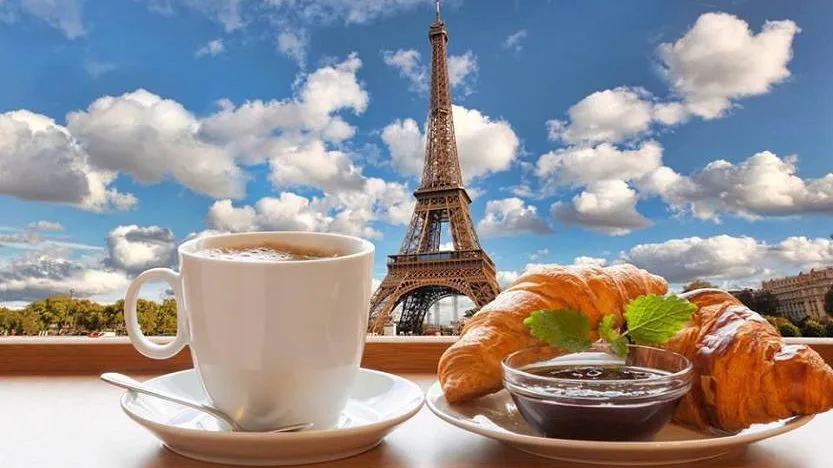
The key point often lost in retellings: UNESCO did not add specific recipes or products to the list, but rather a gastronomic ritual — a shared meal with a certain structure, from aperitif to digestif, with selection of dishes, wine, and conversation. It is this table culture, not the baguette itself, that is recognized as a unique cultural phenomenon.
This distinction is important: France did not legally "monopolize" recipes. It documented a way of eating — and it is this that became the subject of protection.
How five sauces became the language of world cuisine
At the foundation of French culinary system lies the concept of "mother sauces," systematized by chef Auguste Escoffier in his book Le guide culinaire from 1903. Five basic sauces — béchamel, velouté, espagnole, tomato, and hollandaise — became a kind of grammar through which French chefs construct hundreds of derivative variations.
"These five mother sauces spawn hundreds of others — add meat, vegetables, herbs, and you get endless variation in dishes."
The International Wine and Food Society (IWFS) on Escoffier's system
Escoffier did not invent the sauces — he standardized and classified what had existed for years. This is precisely what transformed French cuisine from a regional set of traditions into a single reproducible system that could be taught and exported.
Regions: not one cuisine, but a federation of flavors
"French cuisine" as a monolithic concept is, to some extent, a myth. In reality, it is a federation of very different regional traditions, where geography dictates taste.
- Alsace — sauerkraut with sausages and thin tarte flambée: German influence is evident in every dish.
- Brittany — seafood, salted butter, and buckwheat galettes instead of wheat crêpes.
- Provence — olive oil, herbs, ratatouille, and dishes that remind one more of neighboring Italy than Paris.
- Bordeaux and Burgundy — wine here is not a side dish but the foundation of the recipe: boeuf bourguignon and coq au vin are literally cooked "in wine."
Paris in this system is not the center of a single style, but a "melting pot" of regional influences where haute cuisine — high cuisine for aristocracy and restaurants — emerged.
Cheese as a mirror of diversity
Charles de Gaulle once complained that it was impossible to govern a country with over 246 varieties of cheese. Today there are more than 1,000. Each region has its own microclimate, its own breed of cattle, its own aging method. Camembert from Normandy, Brie from Île-de-France, Roquefort from the caves of Combalou in the south — all are protected by separate AOC (Appellation d'Origine Contrôlée) certificates, which forbid calling a product by this name if it is made elsewhere.
This system of geographical designations is another element of the same project: to tie taste to place and make it legally protected.
Why this matters beyond France
French culinary terminology — soufflé, roux, sauté, julienne, mise en place — has become standard in culinary schools from Tokyo to New York. Not because the French are "the best," but because Escoffier and his predecessors were the first to create a reproducible, codified system that could be transmitted through education, not merely through family tradition.
This is the true reason for global influence: not taste, but method.
If other cuisines — Japanese, Peruvian, Mexican — have already received or are actively seeking similar UNESCO recognition, the question becomes practical: is the status of heritage enough to protect regional traditions from standardization by fast food — or does it only fix what is already disappearing?