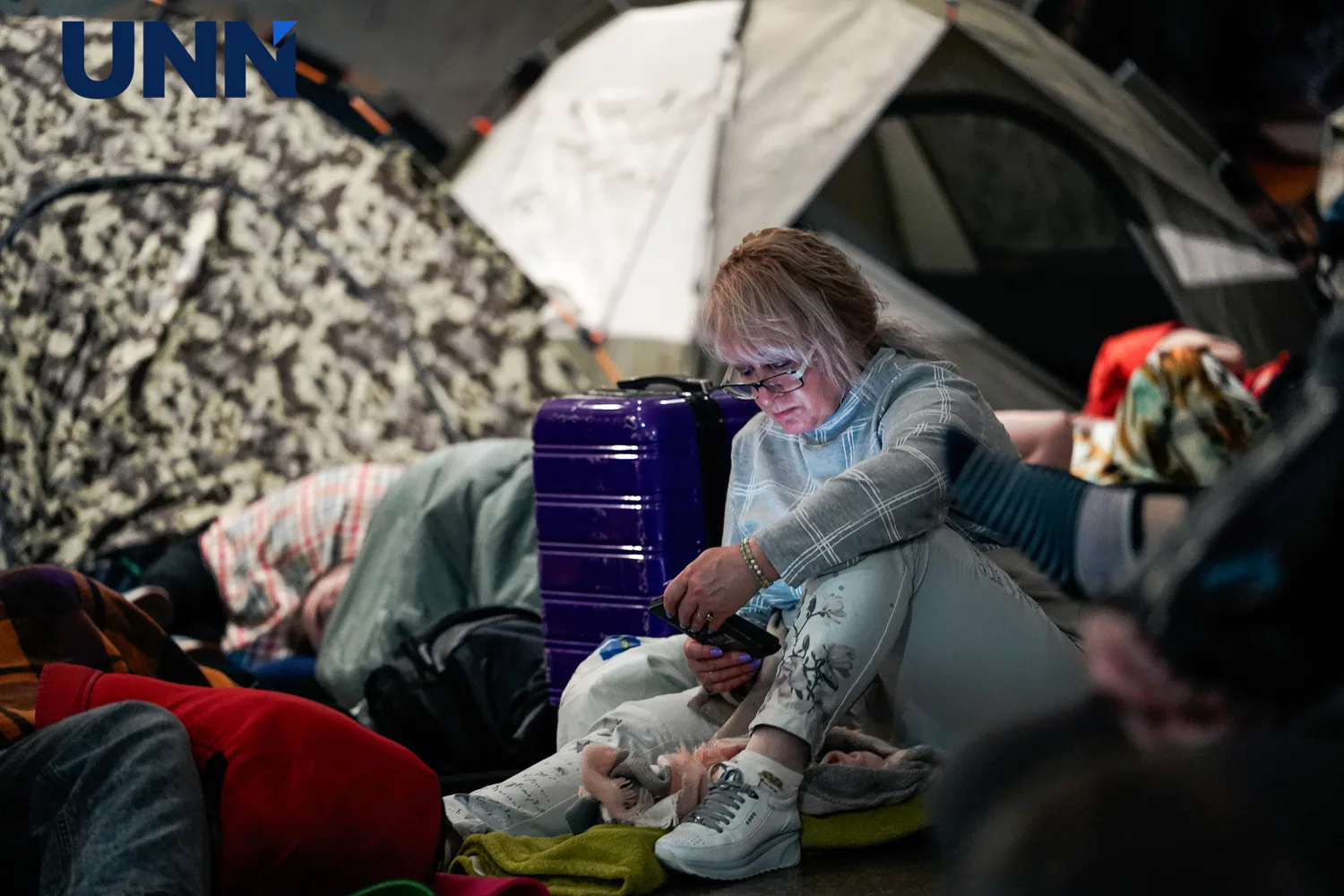
On the night of June 15, during a massive attack on Kyiv, someone brought a double inflatable bed into the metro. Social media exploded — some people laughed, others were outraged. But while the discussion about shelter etiquette continued, something else remained off-screen: the capital's shelter system was never designed for actual needs.
What was banned and what was allowed
KP "Kyiv Metro" updated its recommendations: large tourist tents and inflatable mattresses are undesirable because they take up too much space. Instead, passengers are advised to use yoga mats and sleeping bags. 46 underground stations officially operate in round-the-clock shelter mode.
"We urge you to refrain from using bulky items, in particular tents and inflatable mattresses, which may interfere with others"
— press service of KP "Kyiv Metro"
Kyiv City State Administration supported the metro's position: bulky items reduce shelter capacity. A petition for a formal ban on such items has already been registered on the Kyiv City Council website. Deputy Head of Metro Dmytro Pinchuk said he was "ready to discuss" the issue — without specific timelines or decisions.
The problem is not the mattresses
According to the Court and Legal Gazette, Ukraine has approximately 62,000 civil protection facilities — but their capacity is sufficient for only about half the country's population. There is no direct legal ban on tents or mattresses: a Cabinet of Ministers resolution only requires not blocking passages and evacuation routes and ensuring maximum occupancy.
Separately, there is the quality of the shelters themselves. As Slidstvo.Info discovered, only 32 of 52 underground stations in Kyiv's metro actually protect against shelling and radiation. The rest — including stations in Obolonsky and Podilsky districts and on the left bank — were built at depths of up to 10 meters and legally do not belong to civil protection structures.
At the peak of night bombardments in 2025, tens of thousands of people were hiding in the underground. According to the metro, on the night of July 21, about 25,000 people were there — less than 1% of Kyiv residents. This means the vast majority of residents either stay at home or have nowhere to go.
A councilwoman who called things by their names
Kyiv City Council deputy Semenova publicly noted: in the situation with tents, those who brought them are not to blame, but Kyiv's authorities — who, in the fifth year of full-scale invasion, have not arranged comfortable and safe shelters. In her view, the metro's leadership has not improved the situation either.
- Underground parking lots and business premises are gradually being added to the shelter network — but require approval from the State Emergency Service
- The use of metro cars as additional space is hindered by staff shortages and technological limitations of overnight "windows"
- Some shelters identified during the ombudsman's monitoring were found to be flooded or closed
The discussion about tents is convenient: it shifts responsibility to citizens themselves and distracts from a question that refuses to go away. If Kyiv continues to expand its shelter network more slowly than the frequency of night alerts increases — by next summer a double bed in the metro will no longer surprise anyone. The question is whether alternatives will appear by then, or whether the authorities will again limit themselves to recommending taking a yoga mat.







