Why 30 Seconds Matter
Critical bleeding is one of the most common and fastest causes of death on the battlefield and during terrorist attacks. According to tactical medicine standards (TCCC), early and correct control of arterial bleeding significantly increases the chances of survival. That is why training the civilian population in basic techniques — from simple wound compression to the use of a tourniquet — has practical, not symbolic, value.
What the Courses Teach
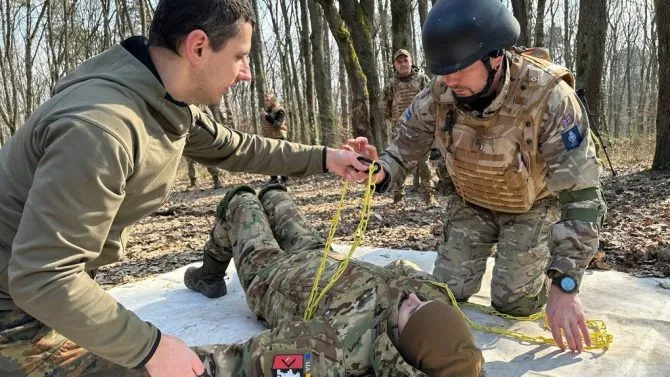
The National Resistance has introduced free programs for civilians, where participants are taught the basics of pre-hospital care: how to recognize life-threatening bleeding, how to apply a tourniquet and a ligature, how to make a temporary dressing, and how to prepare the injured person for evacuation. The courses combine practice on simulators with drills that simulate real incidents.
Communication and Training Materials
In addition to in-person classes, a social advertising campaign has produced instructional videos that show the step-by-step actions for bleeding control. The videos are available for sharing on social media — this allows the knowledge to be scaled and makes basic skills accessible even to those who cannot attend in-person training.
"Clear and rapid action at the scene is not heroism, it is technique. By learning to apply a tourniquet, you give the wounded person a chance to wait for help"
— Course instructor, National Resistance
What This Means for Society
This initiative is an example of how simple and practical skills can change the outcome in a critical moment. If such courses reach more citizens and are accompanied by accessible video materials, we gain not only greater public readiness but a real reduction in the number of lives lost. Now the question for society and local authorities is: how do we make this training a routine part of preparing citizens in every city and village?