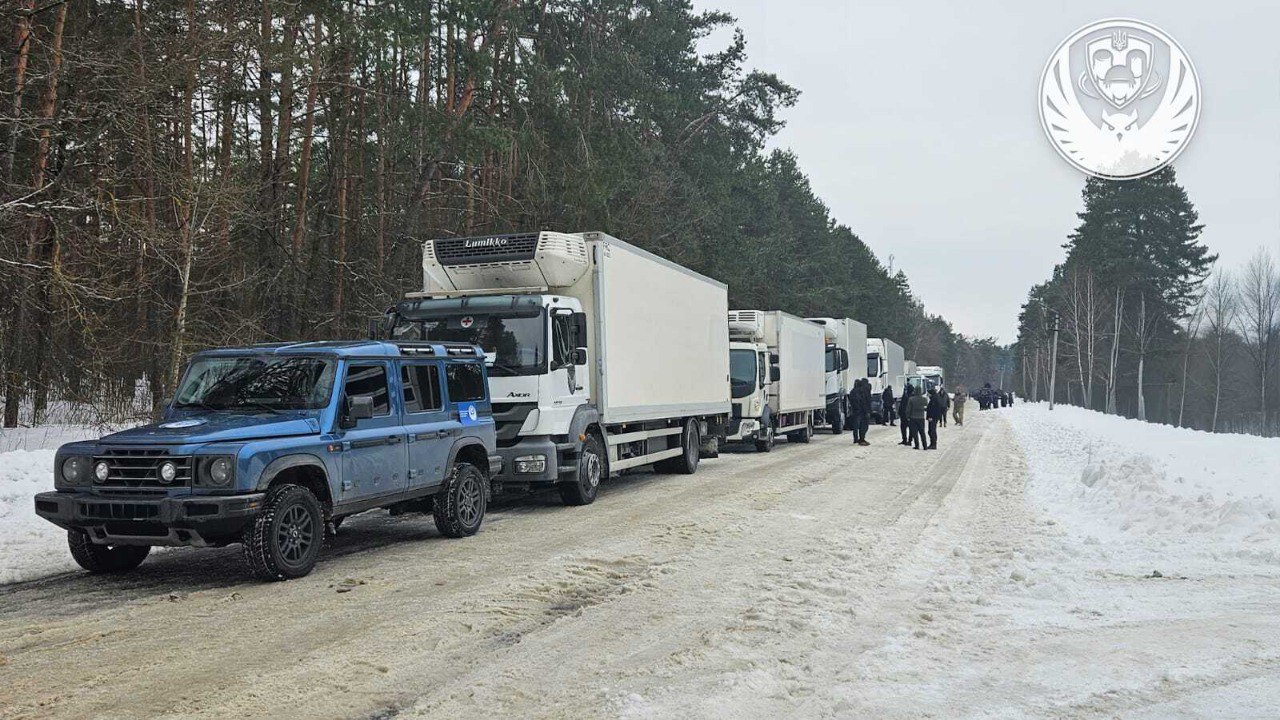
Facts within the repatriation
On Thursday, February 26, Russia handed over to Ukraine 1,000 bodies (remains). The operation was officially announced by the Coordination Headquarters on the Treatment of Prisoners of War — this is the second such transfer in 2026. The repatriation was carried out with the involvement of representatives from the Security Service of Ukraine (SBU), the Armed Forces, the Ministry of Internal Affairs, the Office of the Verkhovna Rada Commissioner for Human Rights and other security and defense structures; the International Committee of the Red Cross assisted the process.
Identification process: what happens next
From now on, investigators and experts will move on to comprehensive work: examination of the transfer site, forensic medical examination, collection of biological samples and comparison with DNA databases. This stage is not a formality but the key to two practical outcomes: identifying the deceased for families and securing an evidentiary base for subsequent criminal proceedings.
"The Russian Federation handed over to Ukraine the bodies of 1,000 people who, according to the Russians' claims, may belong to Ukrainian defenders."
— Coordination Headquarters on the Treatment of Prisoners of War
"Subsequently, investigators of law enforcement agencies together with representatives of expert institutions will carry out all necessary measures aimed at identifying the deceased."
— Coordination Headquarters on the Treatment of Prisoners of War
Context and consequences for the state and families
First, this is a humanitarian matter: for hundreds of families, politics are irrelevant — what matters is the answer to who exactly died and where they are buried. Second, this is a matter of jurisprudence: properly conducted examinations strengthen Ukraine's position in international institutions and help document potential crimes. Third, this is a logistical and personnel test — forensic medical services must process a large volume of material in terms of resources and organization.
Reminder: on January 29 the first repatriation of the year already took place — at that time Ukraine had 1,000 bodies (remains) returned. That day a mutual transfer also took place: Ukraine handed over to the Russian Federation the body of its serviceman, referred to as Valentin Bozikov.
What comes next — a few specific risks and tasks
The expert community points to three key issues: 1) the need for rapid access to modern DNA laboratories and coordinated cooperation among law enforcement agencies; 2) the necessity of transparent documentation of the process with the participation of international observers so that the results carry legal weight abroad; 3) providing psychological and legal support for families during the identification process.
In short: this is not only the return of remains — it is the beginning of large-scale expert work that touches on security, justice and the country's humanitarian response.
Conclusion
The repatriation of 1,000 bodies opens a chain of technical and legal procedures: from laboratories to courtrooms. Whether we have sufficient resources and international coordination to turn these remains into names, facts and evidence is a question for the systematic work of the state and its partners.





