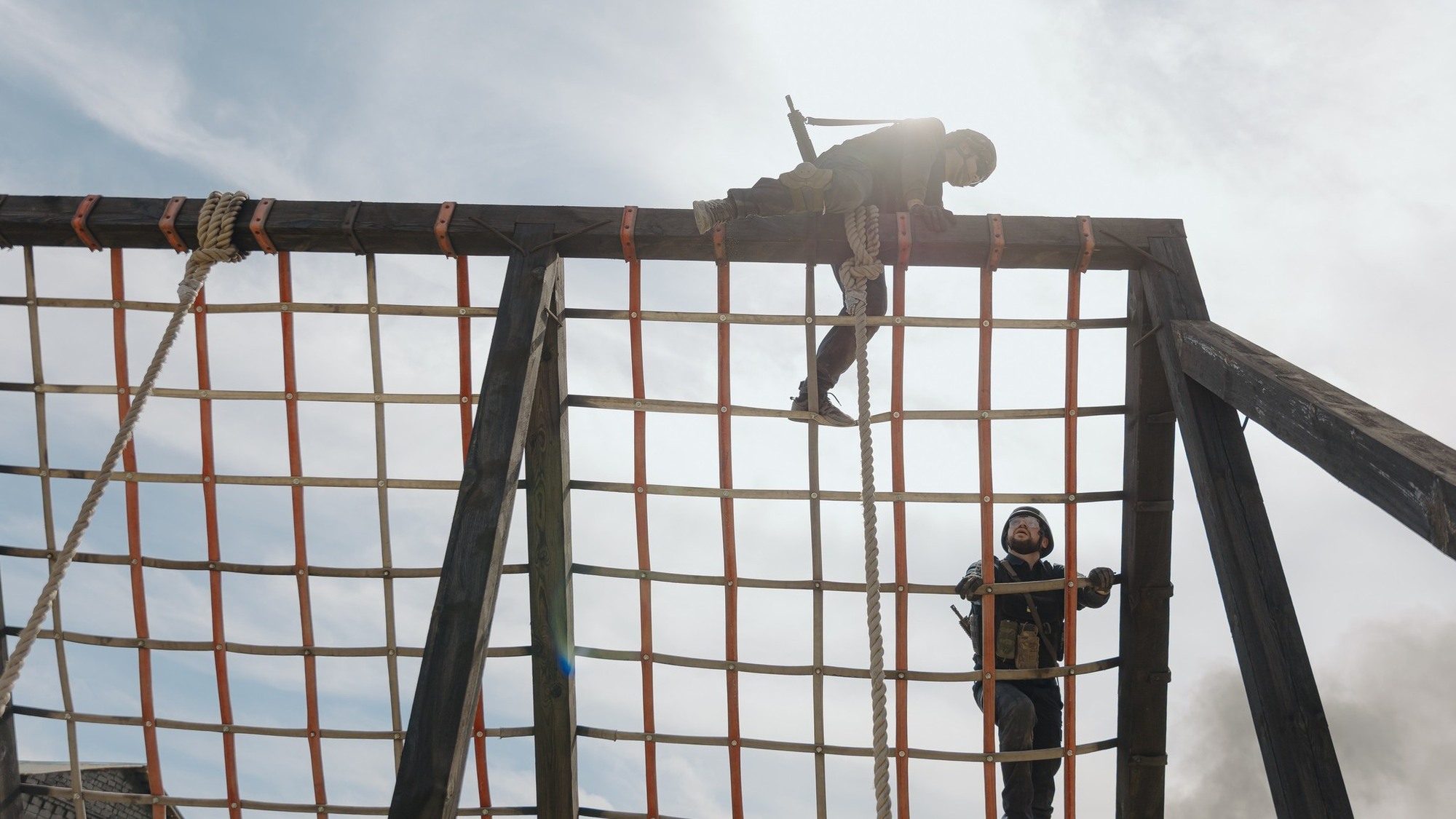
On May 11, the Ministry of Internal Affairs confirmed: the first 200 patrol police officers began two-week training at a training ground. This is not routine training — it is a direct response to the terrorist attack on April 18 in Holosiyivskyi district of Kyiv, where an armed attacker killed seven people, wounded five others, and took hostages in a supermarket.
Who and How Are Training
The first intake consisted of commanders — platoon leaders, company commanders, and battalion commanders from all regions of the country. Some of them are serving in front-line communities. The logic is straightforward: first retrain those who command, and then they will pass the skills on to their subordinates.
The program complies with military standards: firearms training, tactical medicine, psychological obstacle course, teamwork under stress conditions. According to Patrol Police Chief Oleksandr Fatsevych, the emphasis is on quick decision-making — the kind that failed in Holosiyivskyi.
«This will be psychological training related to readiness for such situations: a psychological obstacle course, weapons use, tactical elements. This should help them learn to act in stressful situations and make quick decisions».
Oleksandr Fatsevych, Chief of the Patrol Police of Ukraine
Where Instructors Come From
Minister Ihor Klymenko clarified on April 27: instructors are selected from combat brigades, special units of the National Police, the 1st and 2nd Corps of the National Guard, and the State Border Guard Service. In other words, people with real experience — not those who read regulations, but those who acted under fire.
In parallel with the training, the National Police of Ukraine's «Liut» brigade is involved — but with police instructors rather than military ones: countering an active shooter, situational tactics in a civilian environment. This is the second, police block, which will last another two weeks after the military training.
What Changed After Holosiyivskyi
Two patrol officers who left the scene during the shooting have already appeared before the Pechersk District Court — on suspicion of official negligence with grave consequences. This is the judicial dimension. Training ground preparation is the organizational one.
Klymenko openly acknowledged: new programs were developed «taking into account the mistakes made». The Ministry of Internal Affairs also announced a goal — to put all patrol officers through the training ground, not just commanders. Monthly skills maintenance — one full day per month after the basic course.
Currently, 8,800 police officers serve directly in combat units at the front. The rest serve in cities where «there is a lot of weapons and ammunition», as Klymenko put it, and where the civilian threat demands the same reflexes.
The real question is not whether 200 commanders will complete the two-week course — they are already at the training ground. The question is whether the Ministry of Internal Affairs will manage to scale up training for all personnel before the next incident occurs, where seconds will again determine who survives.





